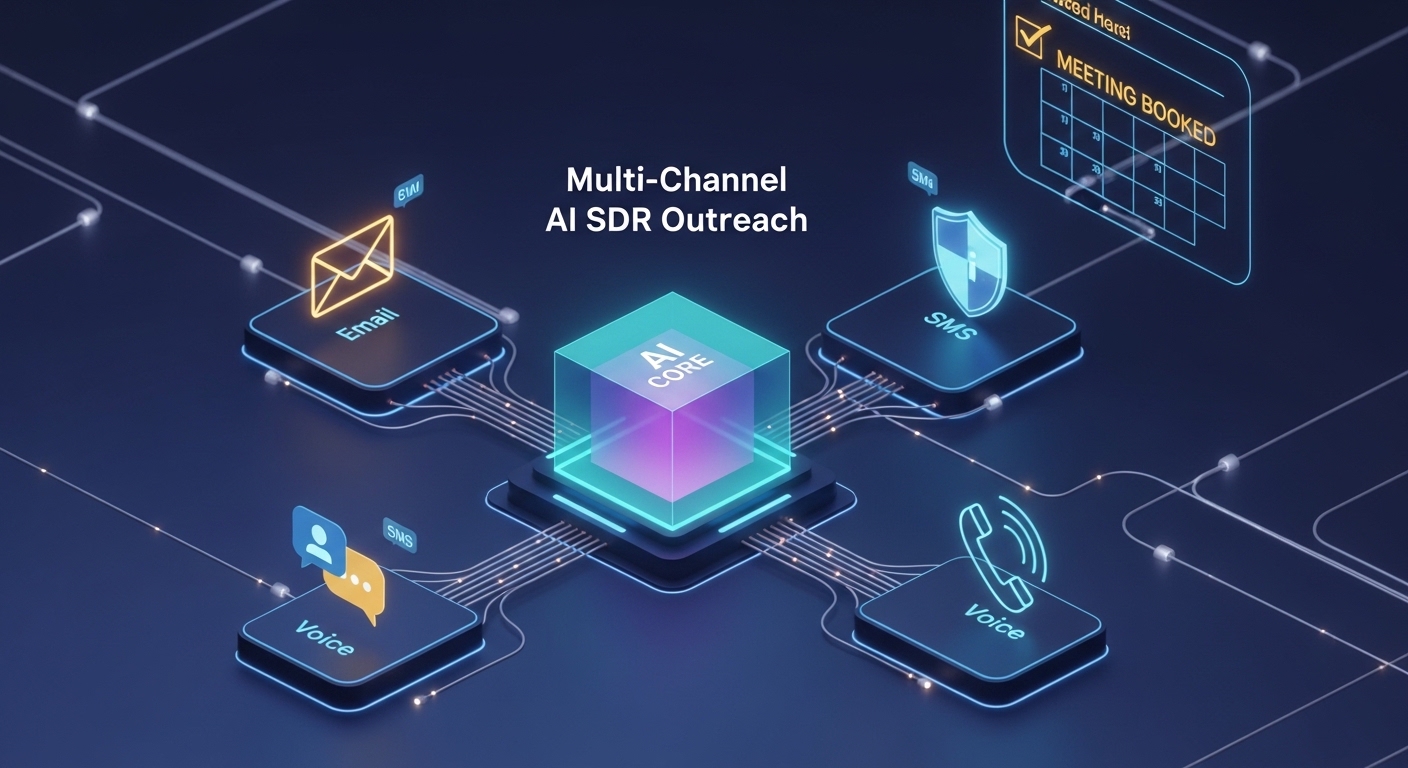
Why Single-Channel Outreach Is No Longer Enough in B2B Sales
B2B buyers today do not live in one place. They check email in the morning, scroll LinkedIn during lunch, glance at SMS between meetings, and occasionally pick up a call from a number they recognise.
If your SDR team is reaching out on only one channel, you are missing the vast majority of potential contact moments. According to Forrester research, 70% of B2B sales interactions now occur through digital channels, and companies using coordinated multi-channel strategies report conversion rates up to 300% higher than those using email alone. These results are supported by real data in AI SDR benefits, where performance improvements are measured across industries.
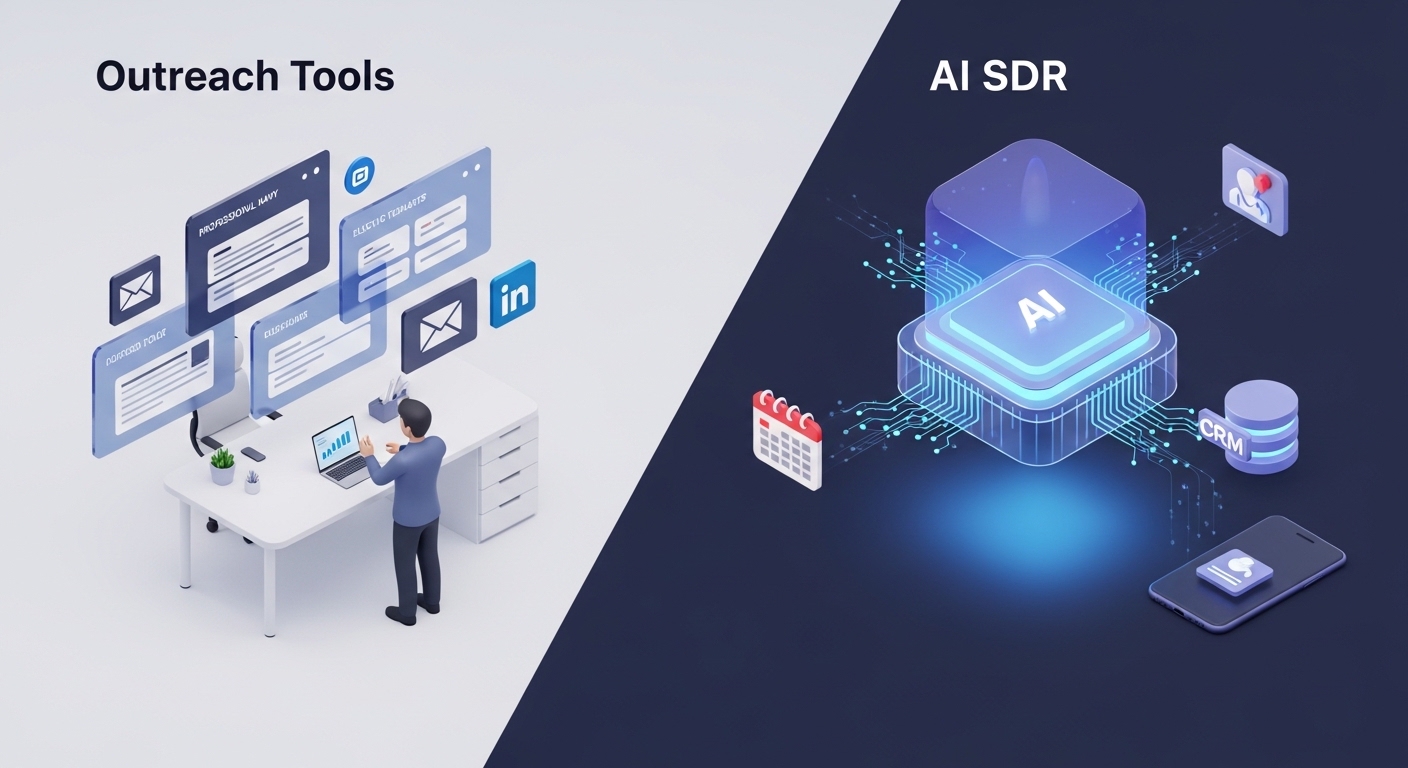
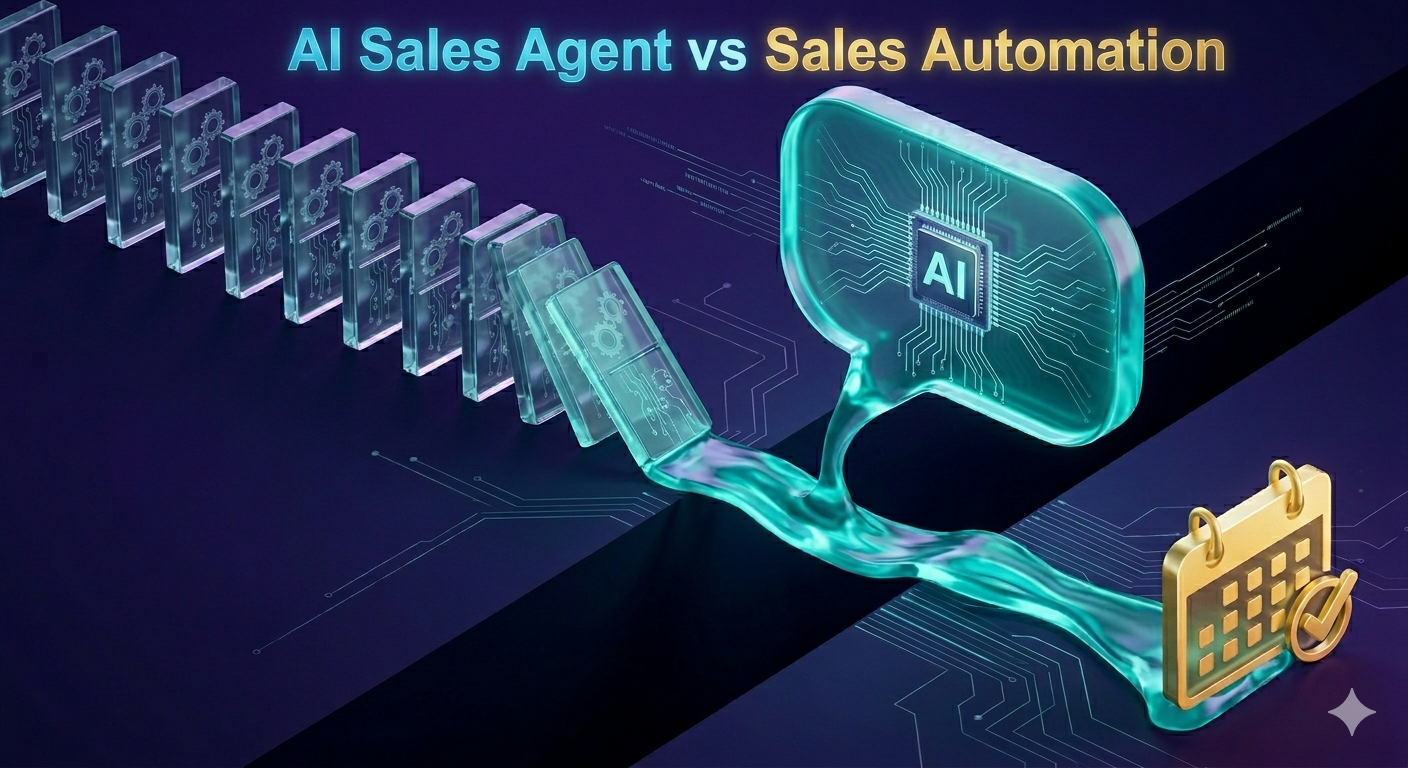
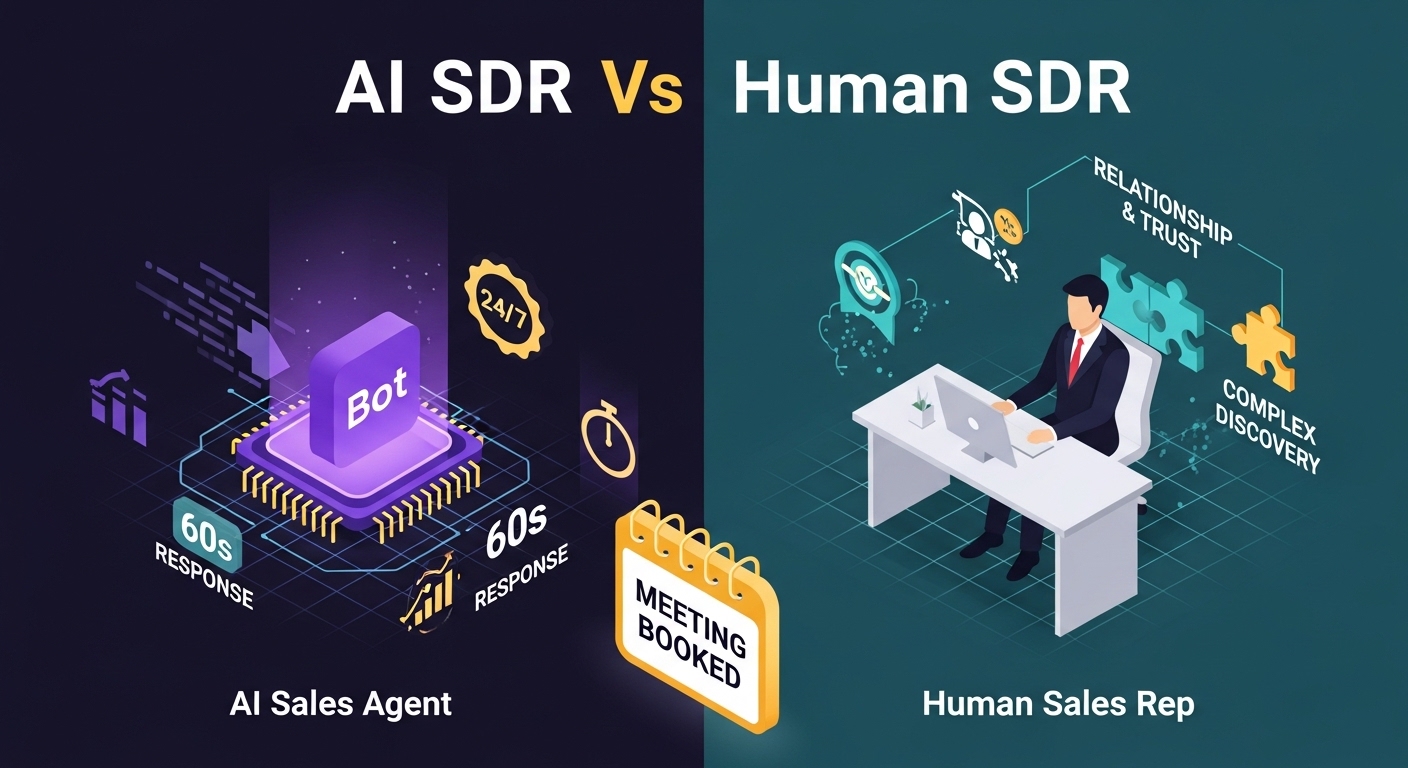
An AI SDR makes multi-channel outreach operationally possible at scale. Businesses often combine this with AI appointment booking to maximise conversions. It coordinates timing, personalises each message, and adjusts its approach based on how a prospect responds across every touchpoint. This article covers what that looks like in practice: which channels work best, when to use each one, how to sequence them, and how to measure what is working.
What Multi-Channel AI SDR Outreach Actually Means
Multi-channel outreach means reaching the same prospect through more than one communication method during the same campaign. This approach works best when paired with an AI phone assistant for real-time engagement. An AI SDR does this automatically by running coordinated sequences across email, LinkedIn, phone, and SMS based on pre-set rules and real-time prospect behaviour.
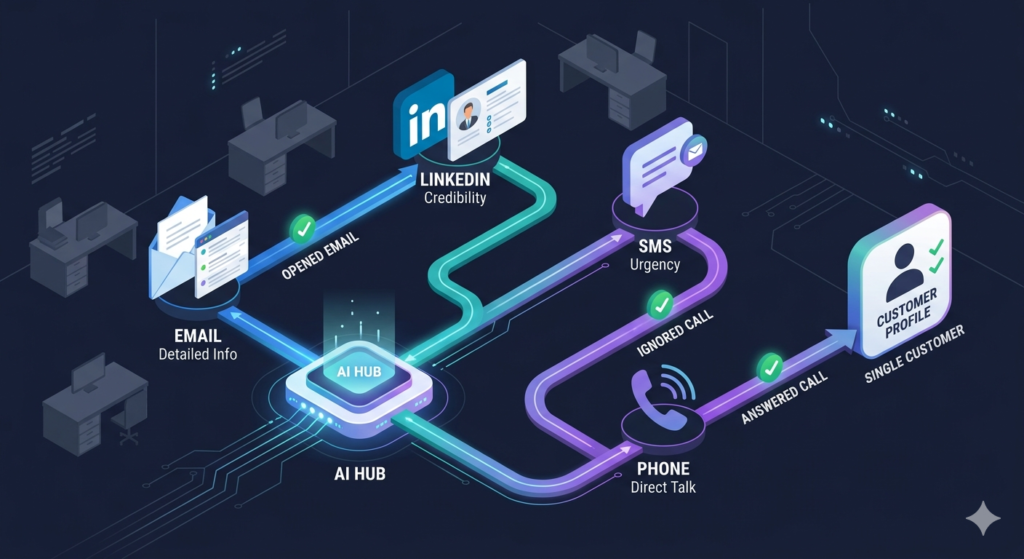
This is not the same as spamming someone on every platform at once. A properly structured system, as explained in AI sales agent workflows, ensures each interaction feels natural and relevant. The goal is strategic presence: being available on the channels the prospect prefers, at the right times, with messaging that feels relevant to their situation.
A well-built multi-channel AI SDR sequence does four things:
- It contacts the prospect on the platform most likely to get a response first
- It uses each channel for what it does best (email for detailed information, LinkedIn for credibility, SMS for urgency, calls for direct conversation)
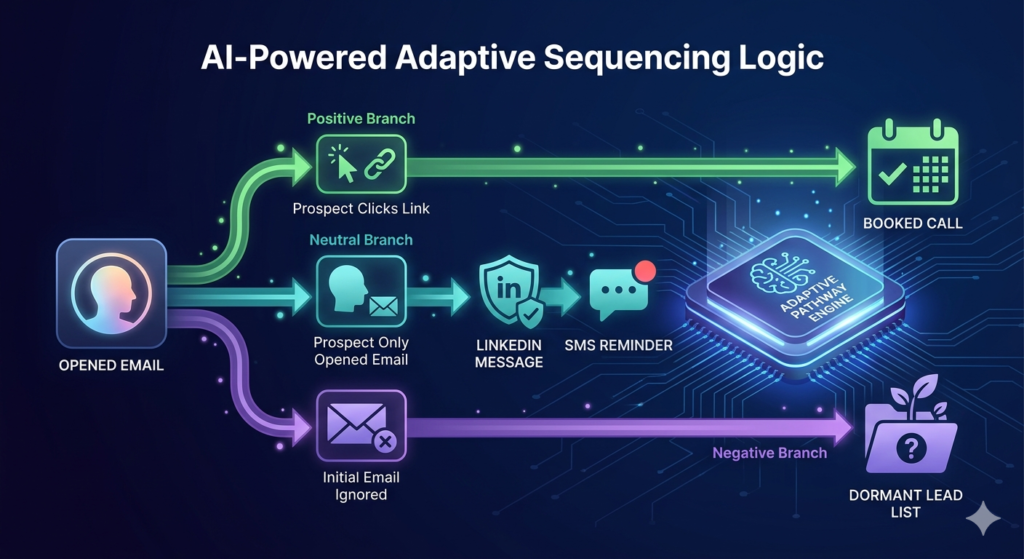
- It adapts the next touchpoint based on whether the previous one was opened, clicked, or ignored. This behaviour is driven by logic explained in AI lead qualification frameworks.
- It knows when to stop and move the prospect to a re-engagement list rather than burning the relationship
Many teams refine this using AI appointment benefits insights.
Channel Comparison: What Each One Does Best in AI SDR Outreach
Understanding where each channel is strongest is the foundation of building effective sequences. Here is how the four main outreach channels compare.
Email: The Primary Channel for Information Delivery
Email remains the backbone of B2B outreach. This is often supported by Automated Call Answering systems. It is the right channel for longer messages, detailed value propositions, case study links, and follow-up content after a prospect has shown interest. The average B2B professional receives over 120 emails per day, which means deliverability and subject line quality have become critical factors.
Well-personalised AI-generated emails that reference a specific trigger (a funding announcement, a job change, a new product launch) consistently outperform generic templates. Similar improvements are shown in AI appointment case studies. Research from Salesforce indicates that personalised emails generate transaction rates six times higher than non-personalised ones.
Email works best for:
- First outreach when the prospect is entirely cold
- Sending detailed content such as case studies, data sheets, or pricing summaries
- Following up after a call or LinkedIn conversation with a written summary
- Re-engagement campaigns for dormant leads
Email limitations: Open rates for cold B2B email average 20 to 28%. Inbox saturation is real, and spam filter sensitivity has increased significantly since 2023.
LinkedIn: The Trust-Building Channel
LinkedIn is the only outreach channel where the prospect can immediately verify who you are, check your company’s credibility, see mutual connections, and read your content before deciding to engage. Many businesses also explore AI receptionist benefits for outreach automation. This makes it uniquely powerful for building trust before a direct message is sent.
AI SDR tools that integrate with LinkedIn can send connection requests, follow-up messages after acceptance, comment on a prospect’s posts, and coordinate LinkedIn activity with email sequences. These systems often connect with an AI business phone system. Platforms like HeyReach and Valley report LinkedIn connection acceptance rates of 35 to 55% for well-targeted sequences with personalised notes.
LinkedIn works best for:
- Mid-funnel touchpoints after initial email contact
- Reaching prospects who are active on LinkedIn but have low email open rates
- Senior decision-makers and C-suite contacts who use LinkedIn as their primary professional communication channel
- Accounts where you can reference shared connections, groups, or content
LinkedIn limitations: LinkedIn imposes daily and weekly message limits. Automation must respect these to avoid account restrictions. It is less effective for operational-level contacts who may not check LinkedIn regularly.
SMS: The High-Urgency Channel
SMS has the highest open rate of any outreach channel at 98%, with most messages read within three minutes of receipt. This makes it effective when combined with 24/7 call Answering. This makes it the most effective channel for time-sensitive follow-ups, event reminders, and re-engagement attempts when other channels have not generated a response.
For B2B AI SDR use, SMS works best as a later-stage touchpoint after email and LinkedIn have established some familiarity. Sending a cold SMS as a first contact is generally perceived as intrusive and generates negative responses, particularly in regulated markets like the UK and EU, where explicit consent for marketing SMS is legally required.
SMS works best for:
- Following up after a prospect has opened an email but has not replied
- Confirming a meeting time or sending a reminder before a scheduled call
- Re-engaging prospects who have gone silent after two or three email attempts
- Sending a direct, brief message with a clear single call to action
SMS limitations: In the UK and EU, SMS for marketing purposes requires explicit opt-in consent under PECR and GDPR. In the US, the Telephone Consumer Protection Act (TCPA) applies to automated SMS marketing. Always verify the legal framework for each region before deploying SMS in an AI SDR sequence.
Cold Calls: The Highest-Conversion Direct Channel
Phone calls have the highest conversion rate to booked meeting of any single touchpoint when the call is answered. This is why many teams use Automated call routing. Research from InsideSales found that calls made within five minutes of a prospect showing intent (opening an email, visiting a pricing page, clicking a link) convert at up to 21 times the rate of calls made 30 minutes later.
AI SDRs can automate call scheduling. Combined with Online Answering Service systems, trigger calls based on engagement signals, play initial AI voice introductions, and route live calls to human SDRs when the prospect is ready for a real conversation. The most effective use of calls in an AI SDR sequence is as a mid-to-late sequence touchpoint after email and LinkedIn have warmed the prospect.
Cold calls work best for:
- Following up on a prospect who opened an email but did not respond
- Same-day follow-up on high-intent signals such as pricing page visits or demo form submissions
- Re-engaging a warm prospect who has previously engaged but gone quiet
- High-value accounts where a personal touch justifies the time investment
Cold call limitations: Call connect rates average 5 to 10% for cold outbound. Most prospects do not answer unknown numbers. Voicemail response rates are under 5%. Calls are most effective as a complement to other channels rather than as a standalone outreach method.
Channel Effectiveness Comparison Table
| Channel | Avg Open or Answer Rate | Avg Response Rate | Best Sequence Position | Legal Requirement (UK/EU) |
| 20 to 28% | 3 to 8% | Touchpoints 1, 2, 4, 7 | Legitimate interest (B2B) | |
| 35 to 55% acceptance | 15 to 25% reply | Touchpoints 2, 3, 6 | GDPR data processing rules | |
| SMS | 98% open rate | 10 to 20% reply | Touchpoints 5, 8 | Explicit consent required |
| Cold call | 5 to 10% connect | 20 to 35% to booked meeting if connected | Touchpoints 4, 6, 9 | TPS screening required (UK) |
The 10-Touchpoint Multi-Channel AI SDR Sequence
A well-structured multi-channel sequence spaces touchpoints strategically, uses each channel for its specific strength, and adapts based on engagement signals. This structure aligns with AI vs human setters strategies. Here is a proven 10-touchpoint structure that covers 30 days of outreach.
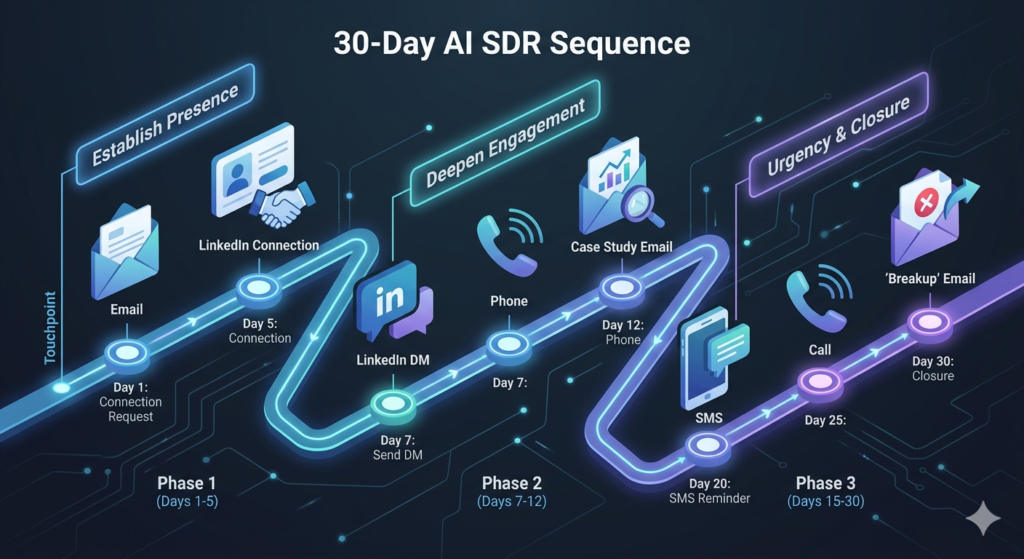
Touchpoints 1 to 3: Establish Presence (Days 1 to 5)
Day 1, Touchpoint 1 (Email): Send the first personalised cold email. Many teams compare tools using an AI vs Calendly comparison. Reference a specific trigger if one exists (recent funding, new product launch, company expansion, shared connection). Keep it under 100 words. One clear call to action.
Day 3, Touchpoint 2 (LinkedIn connection request): Send a personalised connection request on LinkedIn. Do not pitch in the request note. Reference something specific about their company or role. Keep the note to 50 words or fewer.
Day 5, Touchpoint 3 (Email follow-up): If the first email was opened but not replied to, send a short follow-up referencing the first message. This can be improved with AI booking automation. If it was not opened, resend with a different subject line.
Touchpoints 4 to 6: Deepen Engagement (Days 7 to 12)
Day 7, Touchpoint 4 (LinkedIn DM): If the connection request was accepted, send a direct message on LinkedIn. Keep it brief, helpful, and relevant. Reference something from their recent activity if possible.
Day 9, Touchpoint 5 (Cold call attempt): Make a call attempt. Often powered by an AI scheduling assistant. If the prospect answers, use a concise 20-second opening that references your email and asks for 30 seconds of their time. If no answer, leave a brief voicemail that references the email and mentions you will follow up by SMS.
Day 12, Touchpoint 6 (Email): Send a third email with a different angle. Share a short, relevant case study, stat, or customer result that relates to a specific challenge in their industry. Backed by AI customer service improvements.
Touchpoints 7 to 10: Create Urgency and Closure (Days 15 to 30)
Day 15, Touchpoint 7 (SMS): Send a concise SMS. This helps Reduce appointment no-shows. Keep it under 160 characters. Reference a specific value point. Include a direct link to a booking page. Only use SMS if the prospect has shown some prior engagement (opened an email or accepted a LinkedIn connection).
Day 18, Touchpoint 8 (Call attempt): A second call attempt. If the first call was answered but did not convert, reference that conversation. If not answered, leave no voicemail this time.
Day 22, Touchpoint 9 (LinkedIn interaction): Engage with a piece of the prospect’s content on LinkedIn (a comment, a like). This keeps your name visible without a direct message and demonstrates genuine interest in their work.
Day 30, Touchpoint 10 (Breakup email): Send a final email that acknowledges this may not be the right time and offers to reconnect in the future. Breakup emails have some of the highest response rates in a sequence because they create a sense of finality that prompts a reply.
Personalisation at Scale: How AI SDRs Make Messages Feel Human
The most common criticism of AI SDR outreach is that it feels generic. Advanced systems use AI-led qualification to improve relevance. The solution is using AI enrichment signals to generate context-specific opening lines for each prospect rather than using template variables like first name or company name.
The following signal types generate the most effective personalisation in AI SDR campaigns:
- Funding announcement: “Congratulations on the Series B raise last month. I imagine scaling the sales team is front of mind right now.”
- Job change: “I noticed you recently moved into the VP of Sales role at [Company]. Congratulations. The first 90 days in that position usually come with some interesting pipeline challenges.”
- New product launch: “I saw [Company] launched [Product] last week. Teams scaling quickly often find that their outbound motion needs to keep pace.”
- LinkedIn post engagement: “Your post about outbound conversion rates resonated. You mentioned that follow-up consistency is the biggest gap. That is exactly what I wanted to discuss.”
- Tech stack signal: “I can see [Company] uses HubSpot and Apollo. We work with a number of teams using that stack who wanted to add AI-driven voice outreach without replacing their existing setup.”
Each of these openings is specific enough to feel personally researched but can be generated by AI tools using data from LinkedIn, Crunchbase, G2, and web scraping. The key is that the first sentence of every message should reference something that only applies to that specific prospect.
Recommended Cadence Timing by Prospect Type
Not all prospects should follow the same sequence timing. Many teams also integrate CRM automation for tracking. Here is how to adjust your cadence based on prospect characteristics.
| Prospect Type | Recommended Touchpoints | Cadence Length | Priority Channel |
| Cold inbound (form submission) | 5 to 6 touches | 14 days | Call within 5 minutes, then email |
| Cold outbound (no prior contact) | 8 to 10 touches | 30 days | Email first, then LinkedIn |
| Warm re-engagement (previously engaged) | 4 to 5 touches | 10 days | SMS + email |
| Event or webinar attendee | 4 to 5 touches | 7 days | LinkedIn + email |
| High-value enterprise account | 12 to 15 touches | 45 to 60 days | All channels, high personalisation |
KPI Benchmarks for Multi-Channel AI SDR Campaigns
Measuring the performance of a multi-channel AI SDR sequence requires tracking metrics at both the channel level and the campaign level. Insights are similar to an AI receptionist system performance tracking. These are the targets to aim for.
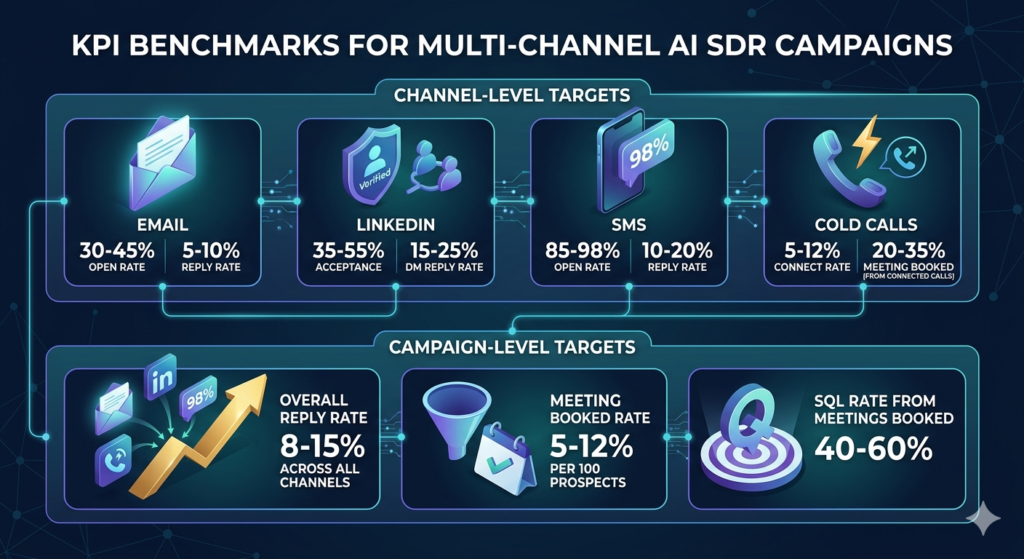
Channel-level targets:
- Email open rate: 30 to 45% (personalised sequences)
- Email reply rate: 5 to 10%
- LinkedIn connection acceptance: 35 to 55%
- LinkedIn DM reply rate: 15 to 25%
- SMS open rate: 85 to 98%
- SMS reply rate: 10 to 20%
- Cold call connect rate: 5 to 12%
- Meeting booked from call: 20 to 35% of connected calls
Campaign-level targets:
- Overall reply rate across all channels: 8 to 15%
- Meeting booked rate per 100 prospects entered into sequence: 5 to 12%
- SQL rate from meetings booked: 40 to 60%
If your numbers are below these benchmarks, the most common causes are: poor list targeting, generic messaging without personalisation, incorrect sequence timing, or email deliverability issues causing messages to land in spam rather than the inbox.
Compliance Rules for Multi-Channel AI SDR Outreach
Legal requirements vary by region and channel. Businesses often rely on Virtual receptionist service platforms for compliance. Deploying AI SDR outreach without understanding these rules can result in regulatory action, fines, and reputational damage.
Email (Global): In the US, the CAN-SPAM Act requires a clear opt-out mechanism in every commercial email. In the EU and UK, GDPR permits cold B2B email under legitimate interest, provided the message is relevant to the recipient’s professional role and an opt-out is clearly available. In Canada, CASL requires express or implied consent before sending commercial email.
SMS (Global): SMS for direct marketing requires explicit opt-in consent in the UK (PECR), the EU (GDPR and ePrivacy), and the US (TCPA). SMS is generally not suitable for cold outreach to prospects who have not previously opted in. It should be reserved for prospects who have engaged with your outreach in another channel first.
Cold calling (Global): In the UK, numbers registered with the Telephone Preference Service (TPS) must not be called for marketing purposes. In the US, the National Do Not Call Registry applies. In the EU, rules vary by country. AI voice calls used for outbound marketing require specific consent in most jurisdictions.
LinkedIn: LinkedIn’s terms of service prohibit scraping and automated messaging that violates their automation policies. All AI SDR tools operating on LinkedIn must comply with LinkedIn’s usage limits to avoid account restrictions.
Frequently Asked Questions About Multi-Channel AI SDR Outreach
What is a multi-channel AI SDR?
A multi-channel AI SDR is an AI-powered sales development system that coordinates outreach across multiple platforms, including email, LinkedIn, SMS, and phone. It sequences each touchpoint based on prospect behaviour and timing rules, personalises messaging using real-time data, and routes engaged prospects to human sales reps when they are ready for a conversation.
How many touchpoints should a multi-channel AI SDR sequence include?
Research from InsideSales suggests that 80% of leads that eventually convert require at least six follow-up attempts. A standard cold outbound sequence should include 8 to 10 touchpoints spread over 25 to 30 days. Warm leads and inbound enquiries can be converted with 4 to 6 touchpoints over 10 to 14 days.
Which channel has the highest response rate in B2B outreach?
Cold calls have the highest conversion to booked meeting when the call is answered, but connect rates are low (5 to 10%). LinkedIn has the highest engagement rate for senior decision-makers. Email is the most scalable. SMS has the highest open rate (98%) but is legally restricted in many markets. The combination of all four channels consistently outperforms any single channel by a significant margin.
How does AI SDR personalisation work?
AI SDR personalisation uses data enrichment signals such as LinkedIn activity, company funding events, job changes, tech stack data, and website behaviour to generate prospect-specific opening lines and relevant value propositions. Rather than inserting a first name into a template, the AI generates a message that references something specific about the prospect’s current situation.
Is multi-channel AI SDR outreach legal?
Yes, with conditions. Email to business contacts is generally permitted under legitimate interest in the EU and UK, provided an opt-out is available. SMS and automated voice calls require explicit consent in most jurisdictions. Cold calling is legal in most markets but is subject to do-not-call registry requirements. Always verify the specific rules for each channel in each country before deploying an automated sequence.
Conclusion: Build the Right Sequence for Your Prospects
Multi-channel AI SDR outreach is not about reaching prospects on every platform simultaneously. Choosing the Best AI answering solution improves results. It is about coordinating the right channel at the right moment in a sequence that builds familiarity, demonstrates relevance, and makes it easy for the prospect to say yes.
Start with email and LinkedIn to establish a presence. Add calls at the mid-sequence stage when engagement signals have warmed the prospect. Use SMS sparingly and only when legal consent requirements are met. Personalise every first line using real enrichment signals rather than generic templates.
Measure contact rate, reply rate, and meeting-booked rate per channel monthly. Adjust your sequence timing and channel mix based on what the data shows. A multi-channel AI SDR campaign that is monitored and refined consistently outperforms a static sequence by a measurable margin within the first 60 to 90 days.