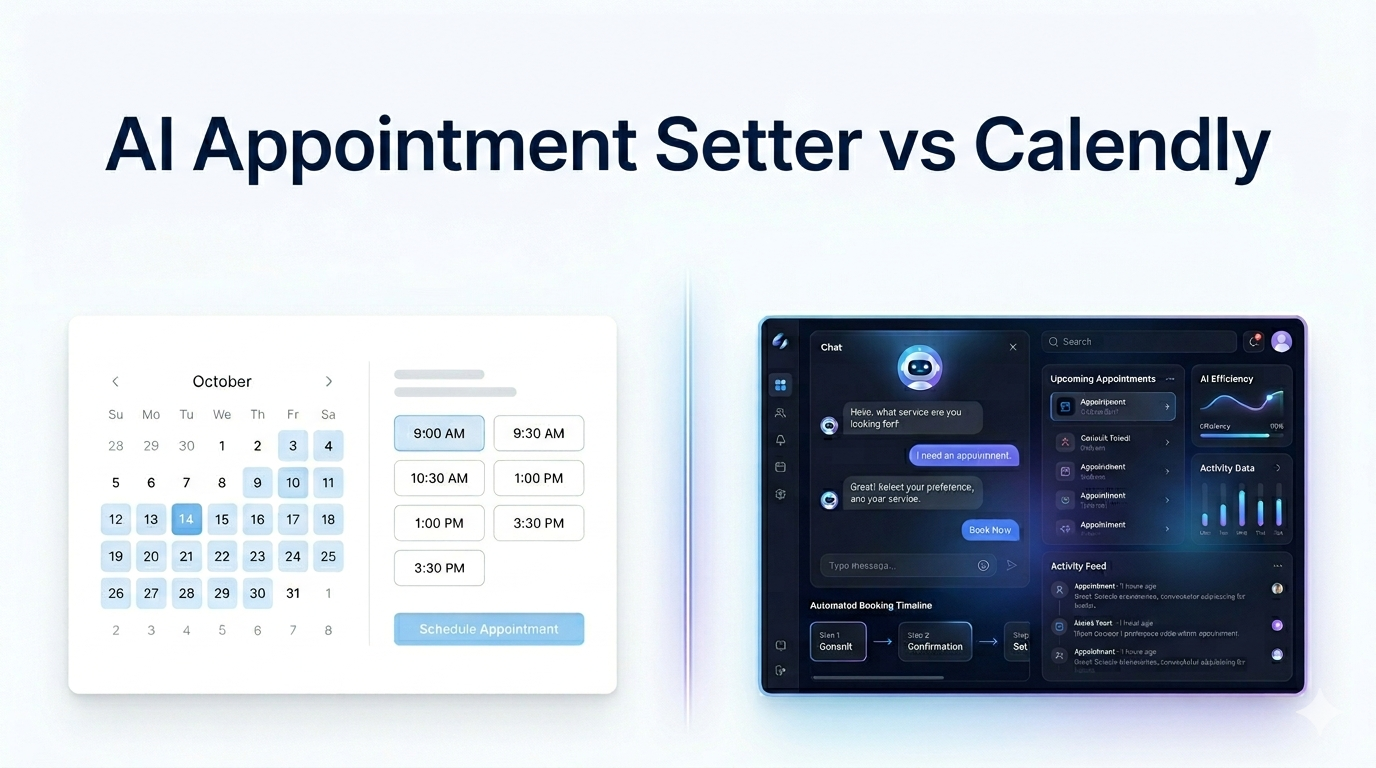
| Quick Answer Calendly is a self-service scheduling link that someone must find, open, and book on their own. An AI appointment setter proactively calls leads, qualifies them through conversation, and books meetings directly into your calendar without any manual effort. For UK businesses that rely on fast lead response and high booking rates, an AI appointment Scheduler consistently outperforms Calendly across every key metric. |
If you run a business, whether you are a marketing agency, estate agent, clinic, or coaching service, you know one thing for certain: slow lead response costs you money. A study by Harvard Business Review found that businesses which respond to leads within one hour are nearly 7 times more likely to qualify that lead than those that wait even 60 minutes.
Calendly has been a popular name in online scheduling for years. It is simple, clean, and useful for letting people pick a time from your calendar. Many also combine this with AI Phone Answering for better engagement. But it is a passive tool. It sits and waits. It cannot call a lead, qualify their needs, or recover a missed appointment.
That is exactly what an AI appointment setter does and why so many businesses are making the switch. A complete AI receptionist system ensures no opportunity is missed. This article compares both tools side by side, covers what your competitors are not telling you, and helps you make the right decision for your specific business.
What Is Calendly and What Does It Actually Do Well?
Calendly is an online scheduling platform that lets you share a booking link. Some businesses pair it with Online Phone Answering for better response handling. When a prospect clicks it, they see your available time slots and pick one. The appointment gets added to both calendars automatically.
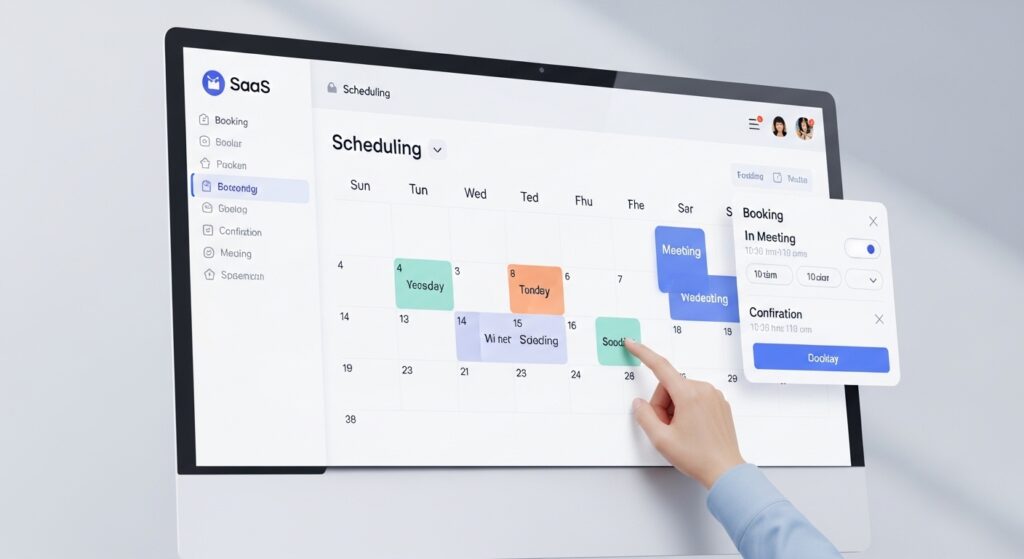
It is genuinely useful in specific situations. If you are a consultant who sends a booking link after an initial conversation, or a coach who needs clients to self-schedule their sessions, Calendly handles that smoothly. More advanced setups use AI Scheduling Assistant tools.
Where Calendly Performs Best
- Scheduling calls after an initial email or conversation has already happened
- Team scheduling with round-robin or collective booking features
- Embedding a calendar widget on a website for inbound leads who are already ready to book
- Low-volume businesses where most leads arrive warm and already interested
- When combined with a Zapier workflow to trigger follow-up actions
Calendly also integrates with Google Calendar, Outlook, HubSpot, Salesforce, and over 100 other tools. Its free plan is functional, and its paid plans start at around £8–£12 per user per month, which makes it an affordable option.
What Calendly Cannot Do and Why That Matters for Businesses
Here is where the gap becomes significant. Calendly is entirely reactive. This is where Automated Call Answering becomes critical. It cannot:
- Make outbound phone calls to leads who have not yet booked
- Qualify a lead through a real conversation before booking
- Answer questions a caller has before they commit to an appointment
- Reactivate leads who went cold three weeks ago
- Cover your business outside of working hours with a human-like response
- Reduce no-shows through intelligent voice reminders
According to research from InsideSales.com, 35–50% of sales go to the vendor that responds first. If a business closes at 6 pm and a lead submits a form at 8 pm, Calendly just has an unclicked link sitting in an email. Businesses avoid this using 24/7 call answering. An AI appointment setter would have already called that lead and booked the meeting.
What Is an AI Appointment Setter and How Does It Work Differently?
An AI Scheduling Setter is an intelligent system that takes action on your behalf without you needing to be present. It uses natural language processing and automation to contact leads, understand their needs, qualify them against your criteria, and place a confirmed booking directly in your calendar. Most systems include an AI phone assistant.
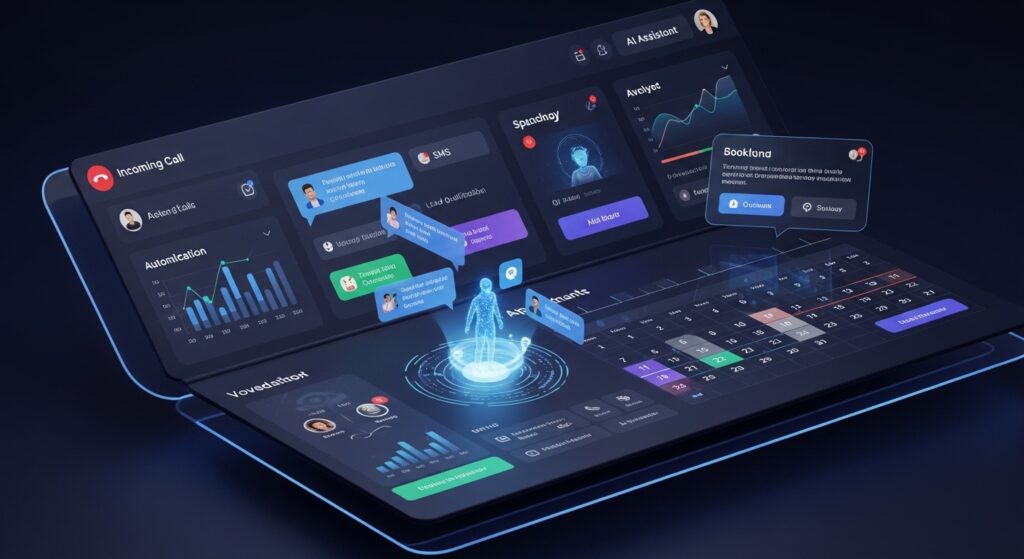
Think of it as a 24/7 sales team member who never gets tired, never forgets to follow up, and never lets a lead go cold.
The 4 Core Things an AI Appointment Setter Does That Calendly Cannot
1. Proactive Outbound Calling and SMS
When a new lead comes in from your website, a Facebook ad, or a referral, an AI appointment setter contacts them within seconds. Not minutes, not the next day. Within seconds. It calls the lead, introduces your business, and moves the conversation toward booking a meeting.
Research shows that calling a lead within the first 5 minutes increases contact rates by 100 times compared to waiting 30 minutes. Calendly relies on the lead taking that first step themselves. AI systems rely on AI Lead Qualification to improve conversion.
2. Conversational Lead Qualification
Before booking, a good AI setter asks the right questions. It learns whether the lead matches your ideal customer profile, budget, timeline, needs, location, and only books a meeting if they qualify. This means your calendar fills with serious prospects, not time-wasters.
Calendly’s version of qualification is a basic intake form with a few text fields. There is no real conversation, no follow-up question if an answer is vague, and no logic that adapts based on responses.
3. No-Show Reduction Through Dynamic Reminders
No-shows are one of the highest hidden costs for businesses. Industry data shows that no-show rates for sales meetings average between 20–30% without active follow-up. An AI appointment setter reduces this by 25–40% through automated voice reminders, SMS confirmations, and re-confirmation calls before the appointment.
Calendly sends a standard email reminder. That is the extent of its no-show prevention. This is supported by AI to reduce no-shows insights.
4. Real-Time CRM Sync With Enriched Lead Data
When an AI appointment setter books a meeting, it logs the full conversation, the lead’s answers, their contact details, and their qualification status directly into your CRM in real time. CRM syncing improves with AI System Integration. Your sales team walks into every call already knowing who they are speaking to and why.
Calendly creates a calendar event and sends basic contact details. There is no enrichment, no qualification data, and often a delay before information reaches your CRM.
Full Head-to-Head Comparison: AI Appointment Setter vs Calendly vs Acuity Scheduling
The table below compares Calendly, Acuity Scheduling (another popular scheduling tool), and a modern AI appointment setter across the metrics that matter most for lead conversion and business growth. Many businesses also explore the benefits of AI scheduling.

| Feature / Metric | Calendly | Acuity Scheduling | AI Appointment Setter | The DBT AI |
| Proactive Outreach (Calls/SMS) | No | No | Yes | Yes – 24/7 |
| Lead Qualification | Form fields only | Form fields only | Conversational AI | Full AI qualification |
| Conversion Rate Uplift | Baseline | Baseline | +20–40% | +20–40% |
| No-Show Reduction | Basic reminders | Basic reminders | 25–40% reduction | 25–40% reduction |
| CRM Integration (Real-Time) | Delayed / partial | Delayed / partial | Real-time sync | Real-time sync |
| 24/7 Availability | Link only | Link only | Full AI coverage | Full AI coverage |
| Handles Phone Calls | No | No | Yes | Yes |
| Lead Reactivation | No | No | Some tools | Yes |
| Business Hours Gap Coverage | No | No | Yes | Yes |
| Payment Collection | No | Yes | Limited | No |
| Pricing (Approx. Monthly) | Free–£12/user | £14–£45/user | £50–£350+ | Custom (Agency-grade) |
Note: Acuity Scheduling (owned by Squarespace) is popular among service businesses, particularly those needing payment collection at the point of booking. It shares the same fundamental limitation as Calendly: it is passive and cannot initiate contact with a lead. This limitation is discussed in AI vs Chatbots comparisons.
The Conversion Rate Reality: What the Data Shows
One of the most important questions any business asks is: which tool actually converts more leads into booked meetings?
Conversational Booking Increases Conversion by 20–40%
Static scheduling forms suffer from drop-off. A lead visits your Calendly page, sees 14 available slots for next week, gets distracted, and never comes back. Conversational AI booking, where the system guides the lead through availability in real time, reduces that drop-off significantly.
Internal data from AI scheduling deployments consistently shows conversion rate uplifts of 20–40% compared to passive form-based scheduling. Businesses improve results using AI Platform Features. This is because the AI handles objections, answers questions, and creates urgency all in the same interaction.
Speed to Lead Is the Defining Factor for UK Businesses
A financial advisory firm in Leeds was using Calendly for all new client bookings. Their average lead-to-meeting time was 4.2 days, the time it took for a lead to receive the link, open it, and choose a time. After switching to an AI appointment setter, that number dropped to under 6 hours. Their booked consultation rate increased by 31% in the first two months.
This is not unusual. Speed to lead is the single biggest variable in appointment booking rates, and AI appointment setters are built around it. Many follow the AI System Workflow.
No-Show Rates Drop When Reminders Go Beyond Email
A medical aesthetics clinic in Manchester reported a 24% no-show rate using standard Calendly email reminders. After introducing an AI system that sent a voice reminder 24 hours before and an SMS confirmation 2 hours before each appointment, their no-show rate fell to under 9%. That translated to over £3,200 in recovered revenue in the first month alone.
When Should a Business Choose Calendly Over an AI Appointment Setter?
It is important to be honest here. Calendly is the right choice in specific situations, and recommending AI for every business would be inaccurate.
Calendly Is a Strong Fit If You Match These 4 Criteria
- Your leads are warm and self-motivated. They have already expressed a strong interest and just need a simple way to book a time with you.
- Your booking volume is low; you handle fewer than 20 bookings per month and do not require outbound calling or qualification.
- Budget is your primary constraint. Calendly’s free and low-cost plans are significantly more affordable than AI systems.
- You are a solo operator or freelancer, where the administrative overhead is minimal, and a scheduling link handles 90% of your needs.
If your business fits these four points, there is no need to invest in an AI appointment setter immediately. Calendly, especially on its Teams or Professional plan, will serve you well.
When a Business Genuinely Needs an AI Appointment Setter Instead
For the majority of growth-focused businesses, however, Calendly leaves significant revenue on the table. Industries like Real Estate AI rely heavily on fast response. You need an AI appointment setter when:
- You are running paid advertising (Google Ads, Facebook Ads, LinkedIn) and need to respond to leads within minutes, not hours
- Your team misses calls during the day or has no coverage outside standard working hours
- You experience high no-show rates, and email reminders alone are not solving the problem
- Your sales team wastes time chasing leads instead of closing qualified opportunities
- You have a database of old or cold leads that have never been properly followed up on
- You operate in a competitive industry such as real estate, healthcare, legal services, or home services, where speed to lead is the deciding factor. Service providers use Home Services Automation to capture leads.
- You want every lead conversation logged and synced to your CRM without manual data entry
The After-Hours Lead Problem Is Larger Than Most Businesses Realise
Research by Drift found that 56% of website visitors expect an immediate response when submitting an enquiry.
Globally, a significant portion of online lead activity happens outside standard business hours, often in the evening when most teams are unavailable. This creates a major gap in response time.
An AI appointment setter fills this gap by responding instantly, regardless of the time of day. In contrast, a Calendly link remains inactive, relying on the lead to take action later instead of receiving a prompt and personalised response when interest is highest.
Can You Use Calendly and an AI Appointment Setter Together?
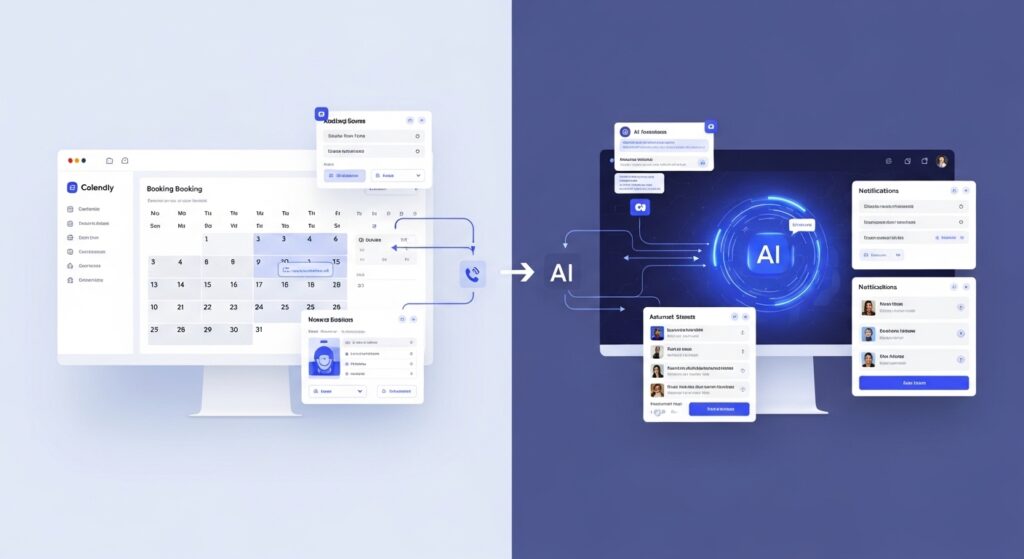
Yes, and this is actually the setup many businesses use. The two tools are complementary rather than mutually exclusive.
A Practical Two-Tool Setup That Works Well
- Use Calendly on your website and in email campaigns for warm, inbound traffic that is ready to book without guidance
- Use an AI appointment setter for all new leads from paid ads, cold outreach, or form submissions that require qualification and follow-up
- Use the AI system for lead reactivation, contacting old leads from your CRM who never converted
- Let the AI handle all after-hours enquiries, so no lead is lost outside business hours
This combination gives you the simplicity of Calendly, where it works well and the power of AI where it matters most at the point of first contact with a new, unqualified lead.
The Real Cost Comparison: Calendly vs an AI Appointment Setter
Cost is a genuine consideration, and it is worth looking at the numbers honestly.
Calendly Pricing
- Free plan: 1 event type, 1 calendar connection, unlimited bookings
- Standard plan: approximately $10–$12 per user per month
- Teams plan: approximately $15–$20 per user per month
- Enterprise: custom pricing
AI Appointment Setter Pricing
- Entry-level tools: $50–$120 per month
- Mid-range platforms with calling and CRM sync: $120–$250 per month
- Agency-grade systems with full automation, outbound calls, and lead reactivation: $300+ per month
The ROI Calculation Most Businesses Miss
A business generating 100 new leads per month with a 15% booking rate using Calendly books 15 meetings. At a 20% conversion uplift from AI, that same lead volume produces 18 meetings. If each meeting is worth $500 in revenue, that is an additional $1,500 per month, enough to cover the cost of most AI appointment setter plans twice over.
Add no-show reduction, lead reactivation revenue, and staff time saved, and the ROI case for an AI appointment setter becomes clear for any business generating meaningful lead volume.
Frequently Asked Questions: AI Appointment Setter vs Calendly
Is Calendly good enough for UK businesses in 2026?
Calendly is still a useful tool for many UK businesses, especially those that need a simple way to let people book meetings online. It works best when your leads are already interested and ready to choose a time without needing extra guidance. For example, consultants, freelancers, or small teams often find Calendly enough for their daily scheduling needs.
However, the limitation becomes clear when your business depends on fast responses or handling a high number of leads. Calendly does not actively engage with users, follow up with them, or respond outside working hours. In competitive UK markets where speed and responsiveness matter, this can lead to missed opportunities. For businesses focused on growth, lead conversion, and automation, AI appointment setters provide a more advanced and effective solution.
What is the difference between Calendly and an AI appointment setter?
The main difference lies in how each tool interacts with potential customers. Calendly is a passive scheduling platform that provides a booking link. It depends entirely on the user to click the link, choose a time, and confirm the meeting. This works well when the user is already motivated to book.
An AI appointment setter, on the other hand, takes an active role. It reaches out to leads, starts a conversation, understands their needs, and guides them through the booking process. It can also qualify leads before scheduling, ensuring that only relevant appointments are booked. In simple terms, Calendly waits for action, while AI drives action. This difference has a direct impact on booking rates, lead quality, and overall efficiency.
Can I use an AI appointment setter with Calendly?
Yes, and in many cases, using both together creates a more effective system. Calendly is useful for users who already know they want to book and just need a quick way to select a time. For example, someone visiting your website after reading about your service may prefer a simple booking link.
At the same time, an AI appointment setter can handle situations where users need guidance or follow-up. It can contact new leads from ads, respond instantly to enquiries, and re-engage people who did not book initially. It can also manage after-hours communication, which is especially important for UK businesses that receive leads outside normal working times. Combining both tools allows you to cover all types of user behaviour, from ready-to-book visitors to undecided prospects.
How much does an AI appointment setter cost in the UK?
The cost of an AI appointment setter depends on the features and level of automation provided. Basic tools may start at around £50 per month, while more advanced platforms with full automation, conversational AI, and CRM integration can go beyond £300 per month.
Although this is higher than the cost of Calendly, the value comes from improved performance. AI tools can increase booking rates, reduce no-shows, and save time by automating repetitive tasks. For many businesses, even a small increase in conversions can cover the cost of the tool. This makes AI appointment setters a worthwhile investment, especially for businesses that rely on consistent lead generation and appointment booking. Cost efficiency is explained in affordable AI receptionist guides.
Does AI appointment setting work for small businesses?
AI appointment setting can be highly effective for small businesses, particularly those that do not have dedicated staff for handling calls or managing leads. Instead of hiring additional employees, businesses can use AI to respond to enquiries, book appointments, and follow up with potential customers automatically.
This is especially helpful for local service providers, clinics, and consultants who need to manage their time efficiently. AI systems work continuously, ensuring that no lead is missed, even outside business hours. By improving response time and maintaining consistent communication, small businesses can compete more effectively without increasing operational costs.
Does AI scheduling actually increase booking rates?
Yes, AI scheduling has been shown to increase booking rates compared to traditional form-based systems. This is mainly because AI interacts with users in real time, guiding them through the process instead of leaving them to complete it on their own. When users receive immediate responses and clear guidance, they are more likely to complete the booking.
Traditional scheduling tools often suffer from drop-offs, where users open the booking page but do not finish the process. AI reduces this issue by keeping users engaged and helping them make decisions quickly. As a result, many businesses see a noticeable improvement in the number of confirmed appointments.
How does an AI appointment setter reduce no-shows?
AI appointment setters reduce no-shows by using more effective and personalised communication methods. Instead of relying only on standard email reminders, they send timely messages through multiple channels, such as SMS or automated calls, to confirm appointments.
They can also follow up with users before the scheduled time to ensure they still plan to attend. If a user needs to reschedule, the AI can handle that instantly, reducing the chance of a missed appointment. This proactive approach keeps users engaged and aware of their commitments, leading to fewer no-shows and better use of business time.
Is AI appointment setting difficult to set up or manage?
Most modern AI appointment setters are designed to be easy to use, even for beginners. The setup process usually involves connecting your calendar, defining your availability, and setting a few basic preferences for how bookings should be handled.
Many platforms provide guided instructions, templates, and support to help users get started quickly. Once the system is set up, it runs automatically in the background, handling conversations, bookings, and follow-ups without requiring constant attention. This makes it a practical solution for businesses that want to save time while improving efficiency.
Final Verdict: Which Tool Should UK Businesses Choose
Calendly is a solid, reliable scheduling tool. It does exactly what it says: it lets people book time with you. If your leads are warm, your volume is low, and your budget is tight, it is a perfectly sensible choice.
But if you are running a growth-focused UK business that depends on converting leads quickly, covering enquiries outside business hours, qualifying prospects before your team speaks to them, and reducing no-shows to protect your revenue, an AI appointment setter is not just an upgrade; it is a strategic necessity.
The core difference is this: Calendly waits for your leads to come to you. An AI appointment setter goes to your leads. In a competitive UK market in 2025, that difference determines whether you win or lose the sale. The best results come from a full AI Receptionist System.
| Ready to See the Difference? Book a Live Demo with The DBT AI →The DBT AI is an AI appointment setter built specifically for UK agencies, clinics, estate agents, coaches, and service businesses. It calls your leads within seconds, qualifies them through conversation, and books confirmed meetings directly to your calendar 24 hours a day, 7 days a week. No manual effort required. |