A missed call is often a missed revenue opportunity. In an era where consumer patience is measured in milliseconds, businesses can no longer afford to let voicemail handle their most valuable asset: the customer. The shift toward automation isn’t just about cutting costs; it is about rewriting the rules of accessibility. AI powered customer engagement has moved beyond simple text chatbots into sophisticated, voice-first interactions that feel fundamentally human.
For business owners and operations managers, the question is no longer if they should adopt automation, but how it functions practically to drive growth. This isn’t science fiction. It is a tangible workflow involving large language models (LLMs), natural language processing (NLP), and instant data synchronization. When implemented correctly, this technology eliminates operational overhead and turns every interaction into actionable data.
What Is AI Powered Customer Engagement?
At its core, AI powered customer engagement refers to the use of artificial intelligence—specifically, machine learning and conversational AI—to automate and personalize interactions between a business and its customers. Unlike static IVR systems (“Press 1 for Sales”), these systems utilize natural language processing (NLP) to understand user intent rather than just recognizing keywords.
This technology allows businesses to handle inquiries, book appointments, and resolve issues 24/7 without human intervention. While early iterations were limited to text, modern solutions have evolved into voice-native platforms. If you are wondering how deep this technology goes, understanding what is an ai receptionist provides a clear baseline for how these voice models operate as the frontline of your business.
AI Engagement vs. Traditional Methods
To understand the value proposition, we must compare the metrics of AI solutions against traditional human-centric workflows.
| Feature | Traditional Human Receptionist | AI Powered Engagement |
| Availability | 8-9 hours/day (Mon-Fri) | 24/7/365 |
| Concurrency | 1 call at a time | Infinite simultaneous calls |
| Response Time | High (hold times, voicemails) | Instant (sub-second latency) |
| Data Entry | Manual (prone to error) | Automated & Instant CRM Sync |
| Cost | High (Salary + Benefits) | Low (Subscription/Usage-based) |
| Scalability | Slow (hiring/training required) | Instant |
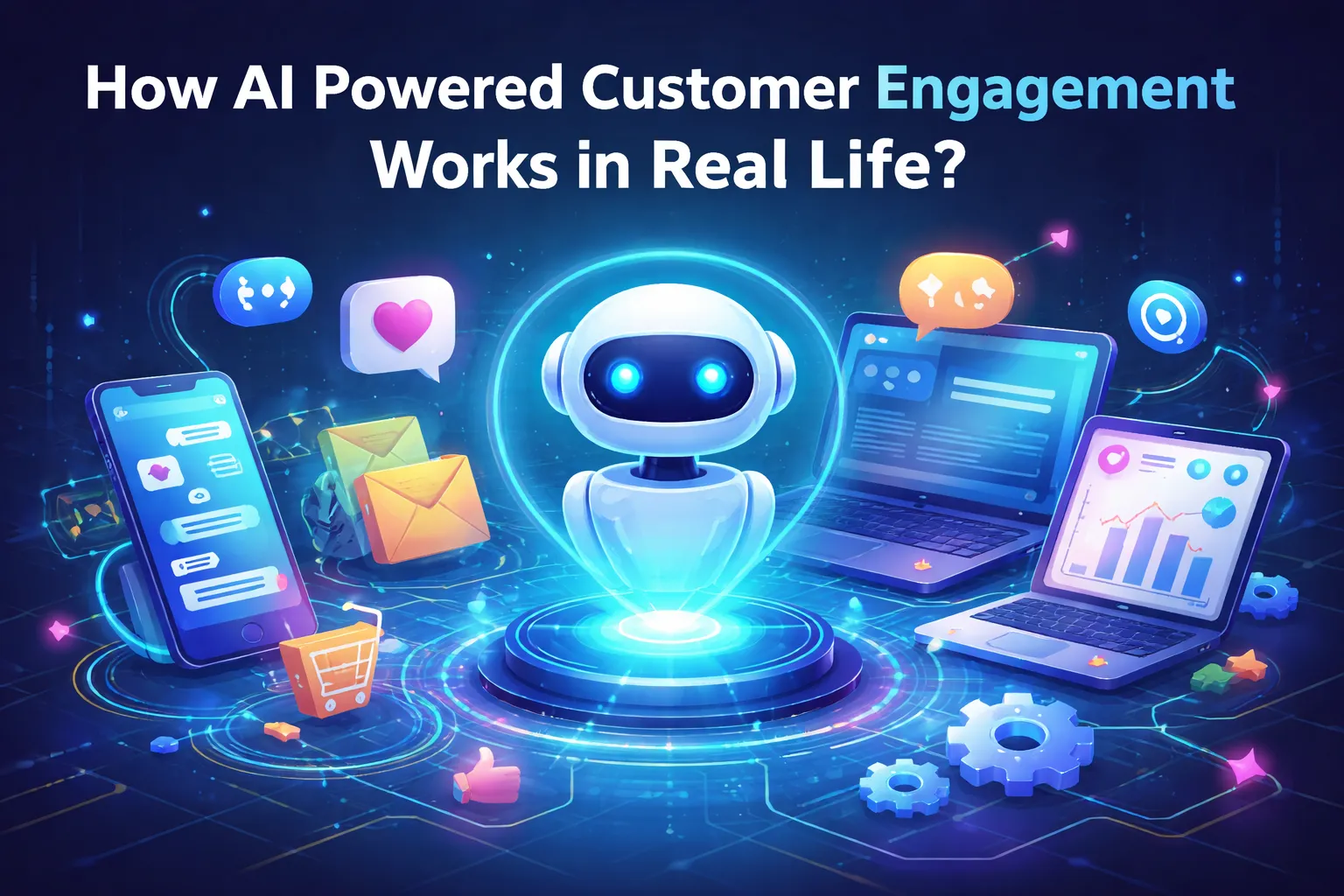
How AI-Powered Customer Engagement Works in Real Life?
The theoretical concept of AI is attractive, but the practical execution is where the ROI lives. Real-life application involves a complex stack of technologies working in unison to create a friction-free experience. When a customer calls your business or when your system reaches out to a lead, a specific chain of events occurs to ensure the interaction is successful.
Here is a detailed breakdown of the 12 core mechanisms that drive this technology.
1. Instantaneous Lead Response and Zero Latency
The most critical factor in conversion is speed. When a lead submits a form or dials a number, the AI powered customer engagement system activates immediately. Unlike human agents who may be distracted or on another line, the AI answers instantly. This capability relies on minimizing “human-like latency”—the pause between listening and speaking—so the conversation flows naturally. A robust 24/7 call answering service ensures that whether a call comes in at 2 PM or 2 AM, the engagement quality remains consistent and immediate.
2. Intelligent Call Routing and Intent Recognition
Once the call connects, the system does not blindly read a script. It listens. Using NLP, the AI analyzes the caller’s speech to determine why they are calling. Is it a billing issue? A new sales inquiry? An emergency? Based on this analysis, the system executes intelligent call routing. It can handle the query entirely or, if configured, pass the call to a specific human specialist. Implementing an automated call routing system prevents the frustration of bouncing customers between departments, solving the issue at the first point of contact.
3. Neural Text-to-Speech and Voice Synthesis
The “robotic” voices of the past killed conversion rates. Modern engagement uses neural text-to-speech technology to generate audio that is indistinguishable from a human. This includes pauses, breath intakes, and intonation changes. The goal is to make the caller feel heard and understood. A high-quality ai voice receptionist uses these advanced voice models to build rapport, ensuring the customer feels they are speaking to a professional representative of your brand, not a machine.
4. Real-Time Sentiment Analysis
Humans are emotional, and effective sales require empathy. AI engagement tools now possess sentiment analysis capabilities. The system monitors the caller’s tone, volume, and word choice in real-time. If a customer sounds frustrated, the AI adapts its responses to be more apologetic and concise. Conversely, if a lead sounds enthusiastic, the AI can pivot to closing the deal. This level of emotional intelligence is a key reason why an ai-powered receptionist can often de-escalate potential conflicts better than a stressed human agent.
5. Bi-Directional Calendar Synchronization
For service-based businesses, the end goal is often a booked meeting. The AI connects directly to your team’s digital calendars (Google, Outlook, iCloud) via bi-directional calendar sync. This means the AI knows your real-time availability. It negotiates a time with the caller (“Does Tuesday at 3 PM work?”) and, once confirmed, instantly places the meeting on your calendar while removing that slot from availability. This automated logic is the engine behind ai appointment booking, removing the back-and-forth email tag that usually kills momentum.
6. Automated CRM Integration and Data Hygiene
Customer engagement generates data, but data is useless if it isn’t stored correctly. As the conversation happens, the AI transcribes the audio and extracts key details—names, dates, preferences, and budget constraints. It then pushes this data directly into your CRM (Salesforce, HubSpot, GoHighLevel). By using The DBT AI features that support deep integration, businesses eliminate manual data entry errors and ensure that every lead inside the database is rich with context for the sales team.
7. Advanced Lead Qualification
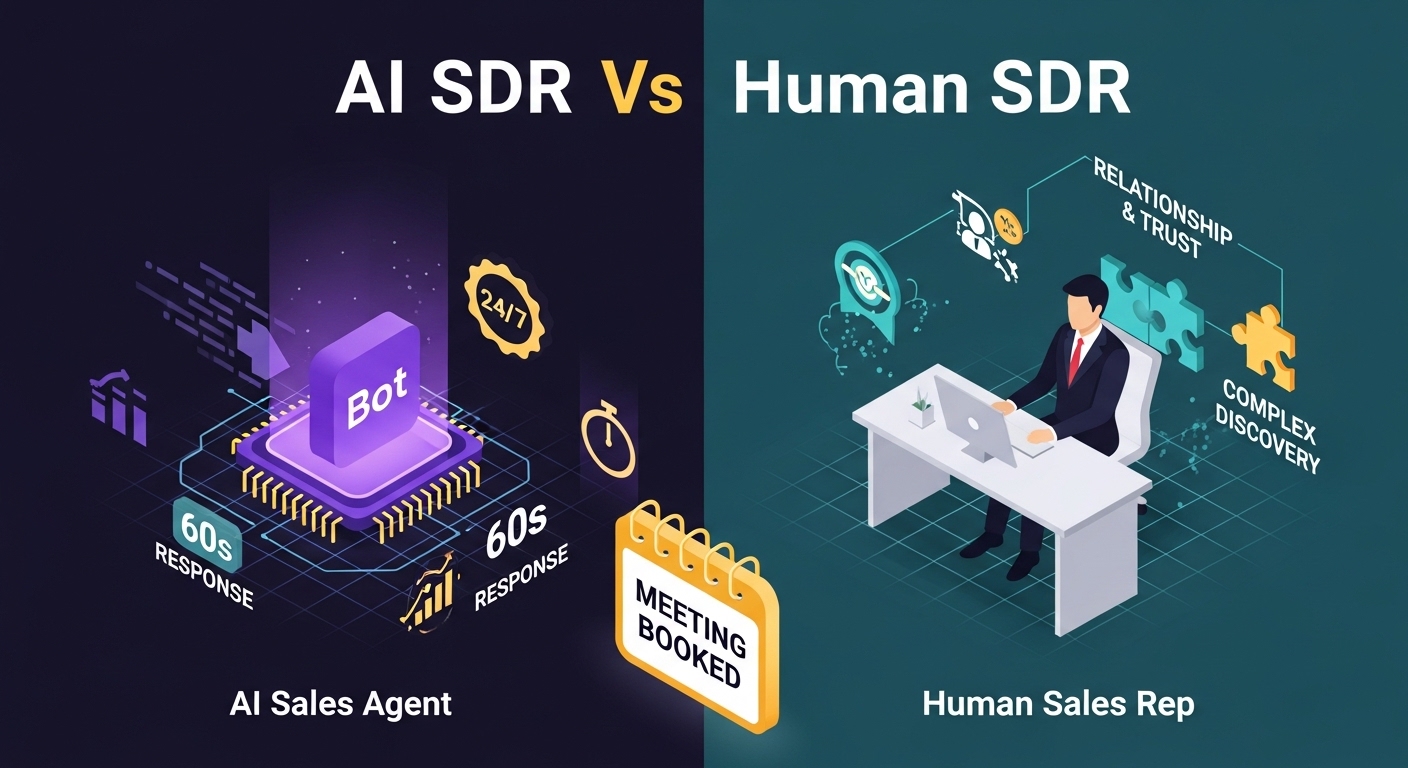
Not every caller is a qualified prospect. Some are tire kickers; others are outside your service area. AI powered customer engagement acts as a filter. Through a series of natural questions, the AI qualifies the lead based on your specific criteria (budget, timeline, location). This ensures that your human sales team only spends time on high-value opportunities. An ai phone assistant functions as an SDR (Sales Development Representative), rigorously vetting contacts before they ever reach a closing agent.
8. Outbound Reactivation and Follow-Up
Engagement isn’t just about answering inbound calls; it is about chasing revenue. AI systems can initiate outbound calls to leads who have gone cold or to existing customers due for a service renewal. This proactive approach uses predictive analytics to determine the best time to call. By deploying an ai scheduling assistant for outbound campaigns, businesses can reactivate dead leads at scale without burning out their human staff on repetitive dialing tasks.
9. Multilingual Support and Global Reach
In a globalized market, language barriers restrict revenue. AI models can instantly switch languages based on the caller’s input. If a caller starts speaking Spanish, the AI detects the linguistic shift and responds fluently in Spanish. This capability allows local businesses to serve diverse communities and global companies to centralize operations. Utilizing a bilingual ai receptionist immediately expands your total addressable market without the cost of hiring specialized bilingual staff for every shift.
10. Omnichannel Handovers
Voice is powerful, but sometimes a customer needs a link, a diagram, or a confirmation text. Real-life AI engagement works across channels. During a voice call, the AI can trigger an SMS or email with relevant information. If a caller asks for pricing, the AI can say, “I have sent our pricing guide to your mobile number.” This functionality relies on strong app integration to ensure the voice platform can communicate fluently with SMS and email marketing platforms.
11. Data Privacy and Compliance
Trust is the currency of customer interaction. When AI handles sensitive information, data privacy is paramount. Leading systems operate under strict GDPR and HIPAA compliance standards, ensuring that call recordings and personal data are encrypted and stored securely. This is particularly vital for healthcare and legal sectors. When selecting a provider, ensuring they offer a secure white label answering service capability helps maintain brand integrity while adhering to legal standards.
12. Continuous Learning and Optimization
The “Intelligence” in AI implies growth. These systems utilize machine learning to improve over time. Every conversation contributes to a dataset that refines the AI’s understanding of objections, accents, and phrasing. Dashboard analytics allow business owners to see call outcomes and tweak the AI’s instructions. A reliable ai business phone system provides transparency into these metrics, allowing you to optimize the script and logic for higher conversion rates week over week.
What Industries Benefited By AI Receptionists?
While almost any business with a phone line can benefit, certain industries see an immediate impact on their bottom line due to high call volumes and the high cost of missed leads.
Real Estate
Agents are often in showings or closings, making them unavailable to take calls. However, a missed call from a motivated buyer is a lost commission. AI manages these inquiries, qualifies buyer intent, and schedules property viewings directly. Experienced real estate agents use AI to ensure they never miss a listing opportunity while they are out in the field.
Healthcare and Medical Clinics
Patient experience (CX) is critical in healthcare. Administrative staff are often overwhelmed by appointment scheduling and FAQs about hours or insurance. AI ensures HIPAA-compliant handling of patient data while managing the calendar. Private healthcare clinics utilize these systems to reduce no-shows through automated reminders and instant rescheduling capabilities.
Legal Services
Lawyers bill by the hour, and interruptions kill productivity. Yet, empathy is required for intake calls. AI can handle the initial intake, gathering case details and conflict-of-interest data before a lawyer ever picks up the phone. Many virtual receptionist for law firms solutions are specifically tuned to handle the sensitive and professional tone required in legal environments.
Home Services
Plumbers, electricians, and HVAC technicians work with their hands, not phones. If a pipe has burst, the customer will call the next number on Google if you don’t answer. AI answers immediately, quotes generic pricing, and dispatches the job. For home services companies, this immediate response is the primary differentiator between winning a job and losing it to a competitor.
Which AI Receptionist Provider Should You Choose?
The market is flooded with automation tools, but not all are created equal. When selecting a provider, you must look for human-like latency, robust CRM integration, and the ability to handle complex logic. Many basic tools are simply “interactive voicemails” that cannot navigate a nuanced conversation.
You need a partner that prioritizes lead conversion and operational stability.
The DBT AI stands out by offering a solution engineered for ROI. We don’t just answer calls; we replicate your best sales agent. With proprietary logic for objection handling, seamless calendar syncing, and neural voice technology that captures the nuances of human speech, The DBT AI is the best AI answering service for businesses serious about growth.
Our system integrates with over 5,000 apps, ensuring that your customer engagement data flows exactly where it needs to go, instantly. Whether you need a simple after-hours receptionist or a complex outbound sales team, The DBT AI scales with you.
Conclusion
AI powered customer engagement is not a futuristic concept; it is the current standard for high-growth businesses. By leveraging conversational AI, predictive analytics, and digital interaction workflows, companies can break free from the limitations of human bandwidth. The result is a business that never sleeps, never misses a lead, and consistently delivers a superior customer experience.
As we look toward the future, the gap between businesses that automate and those that rely solely on manual labor will widen. The efficiency gains—calculated as:
Efficiency Gain = (Automated Task Volume × Human Hourly Rate) ÷ AI Operational Cost
—are simply too large to ignore.
Don’t let another lead go to voicemail. Take the first step toward total automation and revenue optimization today.
Ready to transform your communication stack? Take DBT AI free trial.
Frequently Asked Questions (FAQS)
How much does AI powered customer engagement cost compared to hiring staff?
AI solutions typically cost a fraction of a full-time employee’s salary. While a receptionist may cost $3,000+ per month plus benefits, an AI solution usually operates on a subscription or usage model, often reducing costs by 70-80% while providing 24/7 coverage.
Can the AI system integrate with my existing CRM?
Yes, most advanced platforms are designed for connectivity. Through webhooks and native integrations, the AI can push data to Salesforce, HubSpot, Zoho, and countless other platforms. You can check our app integration capabilities to see how we fit into your stack.
Will my customers know they are talking to a robot?
Modern conversational AI uses neural text-to-speech and low-latency processing to create an experience that is nearly indistinguishable from a human. While you can choose to disclose that it is an AI, the flow and tone are designed to be natural and empathetic.
How long does it take to set up an AI receptionist?
Setup time varies by complexity, but many systems can be operational within a few hours. Basic call forwarding and script setup are fast, while complex integrations and custom logic trees might take a few days to refine perfectly. You can schedule a trial to see how quickly we can get you live.
Is my customer data safe with AI?
Yes, reputable providers adhere to strict data privacy standards, including GDPR and HIPAA compliance. Data is encrypted during transmission and storage, ensuring that your business and customer information remains secure.