A ringing phone that goes unanswered at a veterinary clinic is not just a missed connection; it is a potential medical risk for a pet and lost revenue for the practice. Front desk staff are often overwhelmed, juggling check-ins, processing payments, and managing emotional pet owners, which forces incoming calls to voicemail. An AI receptionist for veterinary clinics solves this bottleneck by managing communication instantly, ensuring that every query is addressed regardless of staff availability.
What Is AI Receptionist for Veterinary Clinics?
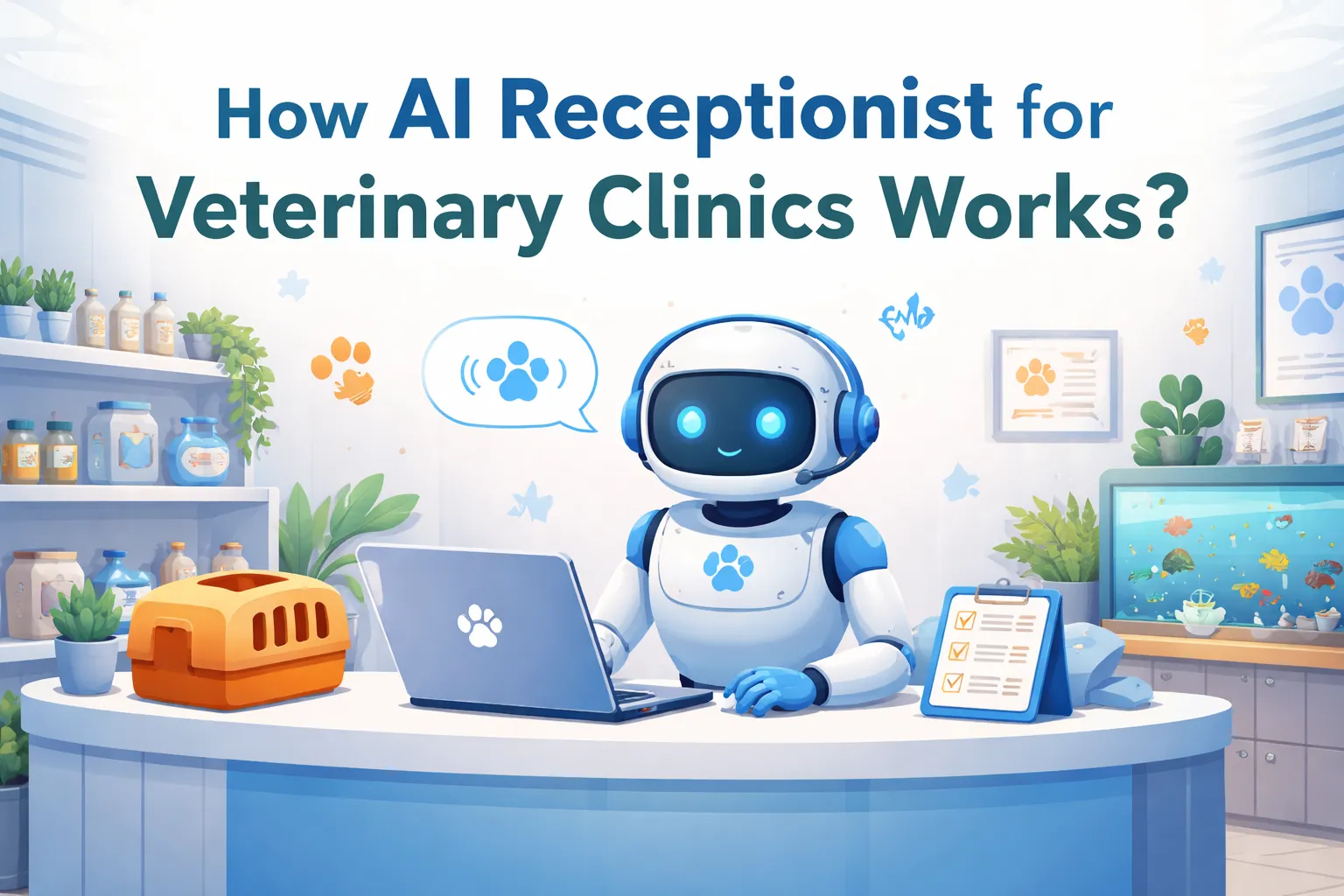
An AI receptionist for veterinary clinics is an advanced voice AI system designed to manage inbound and outbound communications with the nuance of a human staff member. Unlike basic IVR menus that frustrate callers with robotic options, these systems utilize natural language processing (NLP) and large language models (LLMs) to understand context, urgency, and user intent. The system operates as a tireless front-desk assistant, capable of engaging in fluid conversations, executing pet appointment scheduling, and answering complex questions about clinic hours or procedures.
The technology relies on neural text-to-speech to deliver responses with human-like latency, making the interaction feel personal rather than mechanical. By integrating directly with veterinary practice management systems, the AI creates a unified workflow where calls, scheduling, and data entry happen automatically. This reduces operational overhead significantly while maintaining high standards of veterinary customer service.
AI vs. Traditional Receptionist Comparison
To understand the impact of animal healthcare automation, it is helpful to compare the capabilities of an AI solution against traditional staffing limitations.
| Feature | Traditional Receptionist | AI Receptionist for Veterinary Clinics |
|---|---|---|
| Availability | 8-10 hours/day (Business Hours) | 24/7/365 Coverage |
| Concurrency | 1 call at a time per person | Unlimited simultaneous calls |
| Response Time | Varies (often holds or voicemails) | Instant (0-2 seconds) |
| Cost Efficiency | High (Salaries, Benefits, Training) | Low (Fixed monthly subscription) |
| Data Entry | Prone to human error | 100% Accurate (CRM Integration) |
| Tone Consistency | Varies with stress/fatigue | Always professional and empathetic |
14 Ways AI Receptionist for Veterinary Clinics Works
Integrating an AI solution goes beyond simply answering phones; it fundamentally restructures how a clinic manages its workflow and client interactions. Below are 14 specific mechanisms through which an AI receptionist for veterinary clinics functions to improve efficiency and revenue.
1. Instant Lead Response and Call Answering
The primary function of the system is to eliminate the concept of “hold time.” When a pet owner calls, the voice AI picks up immediately, greeting the caller professionally. This instant gratification is crucial for pet owner engagement tools, as modern clients expect immediate assistance. By deploying an automated call answering service vaccinations, wellness checks, or surgeries. It understands the duration differences between appointment types—allocating 15 minutes for a shot but 45 minutes for an exam—effectively functioning as high-level clinic appointment software.
3. Emergency Triage and Routing
Veterinary calls often involve medical emergencies where time is critical. The AI utilizes sentiment analysis and keyword detection to identify urgent words like “bleeding,” “poison,” or “breathing.” Through an automated call routing system, the AI can bypass standard booking flows and immediately alert an on-call veterinarian or direct the caller to the nearest emergency hospital if the clinic is closed.
4. Integration with Practice Management Software
Veterinary practice management systems (PIMS) like IDEXX Cornerstone/Neo, ezy, Covetrus Pulse, Provet Cloud, and Digitail run the core of your clinic—appointments, patient records, billing, inventory, and client communications. The problem is that phone calls often sit outside that workflow, forcing staff to re-type details from conversations into the system, creating delays, missed callbacks, and data-entry mistakes.
An AI receptionist closes that by integrating directly with PIMS using real-time, bi-directional syncing. of calls becoming scattered notes each conversation is converted into structured intakeowner info, pet, appointment reason, urgency, and preferred times—and routed into the place inside your PIMS (patient record updates, appointment entries, tasks, or follow-ups). The result: less admin work, fewer errors, and faster service for clients.
5. Automated Pre-Appointment Reminders
No-shows are a significant drain on clinic revenue. The AI proactively manages automated client reminders via voice or SMS to confirm attendance 24 to 48 hours in advance. If a client needs to reschedule, the AI handles the change immediately, freeing up the slot for another patient and maintaining high calendar density, which is a core benefit of a virtual receptionist service.
6. Handling General Inquiries
A large volume of front-desk traffic consists of repetitive questions regarding hours, parking, or pricing for standard procedures. The AI acts as a knowledge base, delivering accurate answers derived from the clinic’s specific policies. This filters out non-revenue generating calls from the staff’s workload, allowing them to focus on in-clinic ** pet health records digitalization systems, alerting a vet only if the answers indicate a complication.
8. Multi-Lingual Client Support
In diverse communities, language barriers can prevent pets from getting the care they need. Advanced voice AI can detect and switch between languages instantly, allowing a clinic to serve Spanish, French, or Mandarin-speaking clients fluently. This inclusivity expands the clinic’s market reach and functions as a bilingual ai receptionist without hiring specialized staff.
9. Waitlist Management and Backfilling
When a cancellation occurs, the revenue for that slot is usually lost. The AI can actively scan a waitlist and automatically reach out to clients who wanted an earlier appointment. This proactive approach ensures the schedule remains full and maximizes the utility of the ai scheduling assistant.
10. Medication Refill Requests
Clients frequently call to request refills for flea prevention or chronic medications. The AI collects the necessary details—patient name, medication name, and dosage—and creates a task for the veterinarian to approve. This creates a structured ai phone assistant workflow that speeds up pharmacy dispensing.
11. Sentiment Analysis for Compassionate Care
Pet owners calling a vet are often stressed or grieving. The AI analyzes vocal tones to detect distress and adjusts its response style to be softer and more empathetic. If the caller is irate, the system can escalate the call to a human manager, proving that an ai voice receptionist can handle emotional nuance.
12. After-Hours Call Capture
Medical issues do not adhere to business hours. Instead of a passive voicemail, the AI provides active support 24/7, booking appointments for the next morning or providing emergency contacts. This 24/7 call answering service capability captures revenue that would otherwise go to competitors open on weekends or evenings.
13. Marketing and Recall Campaigns
Clinics rely on recalls (vaccine reminders, dental checks) for recurring revenue. The AI can execute outbound voice campaigns to remind owners that their pet is due for service, facilitating immediate vet clinic online booking. This turns client communication software into an active revenue generator rather than a passive tool.
14. Analytics and Operational Insights
Every interaction is recorded and transcribed, providing data on call volume peaks, common client complaints, and conversion rates. Clinic owners can review these analytics to make informed decisions about staffing and services. Understanding these metrics is essential when evaluating an ai receptionist system for long-term growth.
What Industries Benefited By AI Receptionist?
While veterinary medicine has unique needs, the core technology of AI receptionists drives efficiency across various service-based sectors.
- Private Healthcare: Similar to veterinary clinics, private healthcare clinics utilize AI to manage patient intake, handle HIPAA-compliant appointment setting, and reduce administrative drag.
- Home Services: Plumbers and electricians rarely have time to answer phones while working. Home services businesses use AI to capture emergency leads and schedule dispatch times instantly.
- Legal Services: Law firms require precise intake and qualification. Legal services & law firms leverage AI to screen potential clients and schedule consultations without billable hours being wasted on administrative tasks.
- Med Spas: High-ticket aesthetic appointments require immediate booking to prevent lead drop-off. Med spas & aesthetic clinics use AI to answer pricing questions and secure deposits for treatments.
Which AI Receptionist Provider Should You Choose?
Selecting the right provider is critical for maintaining your clinic’s reputation. You require a solution that offers robust CRM integration (Salesforce, HubSpot, GoHighLevel), reliable data privacy compliance, and natural-sounding voice capabilities.
The DBT AI excels in this space by offering a specialized AI Appointment Setter and 24/7 AI Receptionist designed for high-touch industries like veterinary care. Our platform supports features such as intelligent call routing and bi-directional calendar sync, ensuring your schedule is always accurate. With our focus on natural language processing, we provide the best AI answering service technology fits your specific clinic workflow.
Conclusion
The adoption of an AI receptionist for veterinary clinics is shifting from a luxury to a necessity. Future trends indicate deeper integration with diagnostic tools and predictive health analytics, allowing the AI to suggest appointments based on medical history automatically. By automating pet appointment scheduling and client communication software tasks, veterinarians can return their focus to what matters most: animal care.
To see the impact on your bottom line and staff happiness, let us demonstrate The DBT Ai for your practice today.
Frequently Asked Questions (FAQs)
How does the AI handle grieving pet owners?
The system utilizes advanced sentiment analysis to detect distress in a caller’s voice. When it identifies sadness or urgency, it adjusts its tone to be more empathetic and can prioritize routing the call to a senior staff member to ensure compassionate care.
Can the AI system integrate with my existing veterinary software?
Yes, modern AI solutions are designed for connectivity. They use API connections to sync with major veterinary practice management tools, ensuring that pet health records digitalization remains accurate and up-to-date without manual input.
Is the AI receptionist capable of handling multiple calls at once?
Absolutely. Unlike a human receptionist who can only handle one line at a time, the AI offers unlimited concurrency. It can manage ten or ten thousand simultaneous calls, ensuring no client ever hears a busy signal.
What happens if the AI cannot answer a specific veterinary question?
If a query falls outside the AI’s programmed knowledge base—such as a specific medical advice question—the system is programmed to intelligently transfer the call to a designated human staff member or take a detailed message for a callback.
Is the data collected by the AI secure?
Data privacy is a top priority. Leading providers ensure GDPR and HIPAA compliance, meaning all client data and animal healthcare automation logs are encrypted and stored securely to protect client confidentiality.