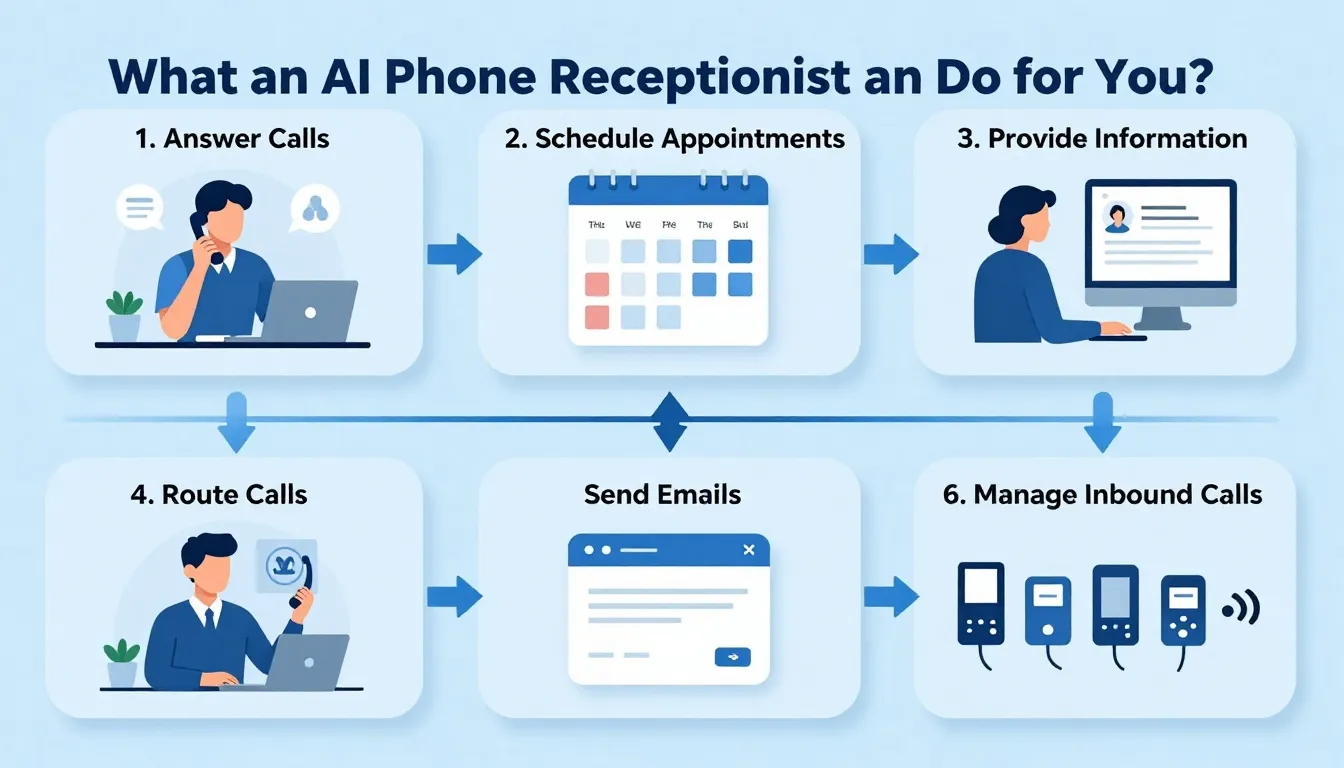
Businesses don’t lose revenue because they lack demand—they lose it because they can’t respond fast enough. Calls go to voicemail, leads cool off, front-desk staff get interrupted mid-task, and the “quick question” turns into a multi-minute hold time. That’s how overhead climbs while customer experience (CX) drops.
An AI phone receptionist powered by conversational AI and AI is built for this exact problem. Using natural language processing (NLP) language models (Ms), it interprets user intent, speaks naturally with neural text-to-speech, and responds with human latency. The result: instant lead response, better lead qualification, and higher lead conversion without adding headcount.
What Is an Phone Receptionist?
An ai phone receptionist is a voice AI system that answers inbound calls, understands what the wants, and completes tasks—like appointments, routing calls, and capturing lead details—through natural conversation.
Unlike rigidpress 1 for sales” phone trees, it uses NLP and LLMs to understand user intent even when callers speak casually, change their mind mid-sentence, or ask multiple questions at once. It can also apply sentiment analysis to detect frustration or urgency and respond appropriately—either by calming the interaction or escalating it when needed.
At a functional level, an AI phone receptionist typically includes:
- Conversational AI for multi-turn dialog
- voice AI with neural text-to-speech for natural speaking
- intent detection to capture and classify user intent
- lead qualification logic to separate serious leads from low-fit callers
- bi-directional calendar sync to book without double-entry
- CRM integration (Salesforce, HubSpot, GoLevel) to keep records updated
- controls for data privacy, GDPR/HIPAA compliance needs when applicable
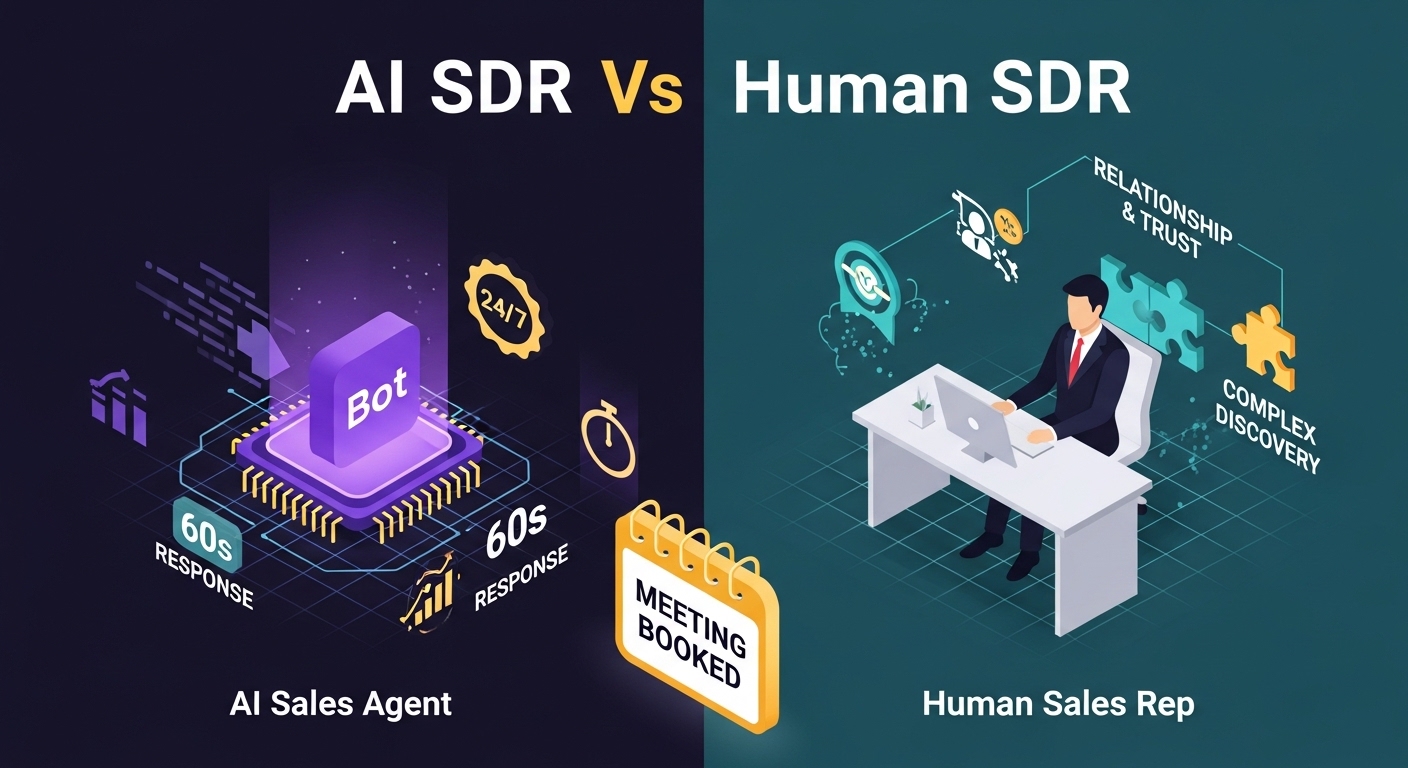
AI vs. Traditional Phone Handling (what changes in practice)
| Area | Traditional receptionist / call center | AI phone receptionist |
|---|---|---|
| Availability | Limited hours, breaks, sick days | 24/7 coverage with concurrency |
| Speed to answer | Delays during peaks | Instant lead response with human-like latency |
| handling consistency | Varies by person and training | Standardized workflows based on user intent |
| Scheduling Manual entry, errors | bi-direction calendar sync + booking | |
| Routing | based on guesswork | intelligent call routing by intent + sentiment analysis |
| Data handling | Notes may be incomplete | Structured logs + CRM (Salesforce, HubSpot, GoHighLevel) |
| Compliance | Depends on staff training | data privacy workflows aligned to GDPR/HIPAA compliance |
15 Ways an AI Phone Receptionist Helps You and Your Business
1) Answer every call, including after-hours
If your pipeline depends on inbound calls, unanswered rings create silent churn. Many teams start with an AI phone answering service to stop losing leads outside business hours.
2) Book appointments while the caller is still engaged
Booking speed directly impacts lead conversion. With AI appointment booking, callers can secure a slot immediately through bi-directional calendar sync, instead of waiting for a callback.
3) Reduce hold time and prevent abandonment during peaks
When multiple calls arrive at once, human teams bottleneck. An online phone answering service can handle concurrency you don’t lose the “third caller” who never waits.
4) Route calls by intent, not guesswork
Intelligent call routing uses user intent to send the inquiry to the right person. Routing is a pain point; an ated call routing system reduces misroutes and internal transfers.
5) Filter out low-quality inquiries with lead qualification
Not every caller is a fit, and your team shouldn’t spend time treating every inquiry equally. An AI receptionist can set the right, lead qualification rules and pass only qualified opportunities forward.
6) Capture lead details accurately (and consistently)
Instead of “sticky note intake,” the AI can collect name, reason for calling, preferred time, urgency, and more—then structure it for your follow-up workflows. This is where operational overhead drops because staff isn’t rewriting details.
7 Improve customer experience (CX) with human conversation
Neural text-to-speech and human-like latency reduce the “robotic hotline” feel. Combined with NLP-based understanding, customer experience (CX) improves because callers feel heard and guided.
8) Escalate the right calls using sentiment analysis
Sentiment analysis can detect frustration, urgency, or dissatisfaction, then route accordingly. In practice: calm routine requests stay automated, while “I’m upset” callers get fast escalation to a human.
9) Reduce repetitive front-desk interruptions
Every “What are your hours?” call breaks focus and slows real work. A practical AI auto attendant handles FAQs while preserving your time for revenue-driving tasks.
10) Act like an always-on AI phone assistant for your business
When you want one system to answer, qualify, and schedule, an AI phone assistant helps unify those steps into one caller journey.
11) Create a more reliable scheduling process with bi-directional calendar sync
Double-bookings and “calendar ping-pong” happen when scheduling isn’t connected. A strong setup uses bi-directional calendar sync so any booking updates availability instantly across tools.
12) Improve follow-up speed with CRM integration
Lead conversion often depends on minutes, not days. With CRM integration (Salesforce, HubSpot, GoHighLevel), every call can generate a record, assign ownership, and trigger follow-ups without manual entry; see how integrations work in The DBT AI app integration options.
13) Standardize your intake workflow across locations or teams
If different staff ask different questions, your data messy. AI workflows keep intake consistent across locations, which reduces operational overhead and improves reporting quality.
14) Support agencies or multi-brand operators with white labeling
If you sell services under your brand, a white label answering service allows you to deliver AI reception without exposing a third-party identity.
15) Measure impact with clearer attribution and conversion reporting
Because calls are logged and structured, you can track which campaigns generate qualified calls, which scripts convert, and where drop-offs occur—making lead conversion improvements a repeatable process instead of guesswork.
What Industries Benefited By AI Phone Receptionist?
Any business that relies on inbound calls, scheduled appointments, or fast response times can benefit—especially when missing a call means losing a customer to a competitor.
Here are common high-ROI fits:
- Legal intake and consultations: In legal services & law firms, speed and consistency matter because callers often contact multiple offices; AI can capture case type, urgency, and route appropriately.
- Healthcare scheduling and reminders: For private healthcare clinics, GDPR/HIPAA compliance considerations and appointment reminders make structured workflows especially valuable.
- Aesthetic bookings and high-volume inquiries: med spas & aesthetic clinics benefit from instant lead response for price questions, availability checks, and treatment scheduling.
- On-site estimates and urgent requests: home services teams win AI emergencies quickly and books estimate windows without back-and-forth.
- Inbound lead capture for service providers: coaches & consultants often need lead qualification before scheduling, so time isn’t wasted on low-fit calls.
- Lead generation operations: marketing agencies can manage concurrency during campaigns and CRM integration clean across multiple clients.
Which AI Phone Receptionist Provider Should Choose?
Choosing the right provider isn’t about “who sounds the most human.” It’s about whether the system consistently books appointments, protects data, and reduces operational overhead.
Provider qualities that actually matter
- Intent accuracy and natural: Strong NLP + LLM behavior that identifies user intent without forcing callers into rigid.
- Real scheduling and routing capability: Bi-directional calendar sync and intelligent call routing should be core, not add-ons.
- Production-grade scaling: Concurrency must hold during peak call spikes without degrading human-like latency.
- CRM integration that matches your stack: Support for CRM integration with Salesforce, HubSpot, and GoHighLevel so your pipeline stays current.
- Data privacy readiness: Clear handling for GDPRIPAA compliance needs, permissions, and retention controls.
Where The DBT AI Fits?
The DBT AI is built specifically for AI-powered voice automation and appointment setting—so the focus stays on outcomes: instant lead response, lead qualification, and measurable lead conversion gains while keeping customer experience (CX) strong.
If you want to evaluate the exact workflow components (intake, routing, scheduling, logging), The DBT AI features page breaks down how the system handles real call scenarios with voice AI and conversational AI logic.
Conclusion
The next wave of phone automation isn’t “press 1 to talk to sales.” It’s AI that understands user intent, speaks naturally via neural text-to-speech, and completes tasks across calendars and CRMs in real time. As LLMs improve and businesses demand faster response, AI reception will keep shifting fromcost center coverage” to “revenue protection and growth.”
If you’re evaluating an ai phone receptionist, the best next step is to validate it against your real call patterns: peak volume routing needs, scheduling complexity, CRM integration, and data privacy requirements To see how The DBT AI performs in your exact workflow, you can schedule a trial and review real call-to-booking outcomes.
Frequently Asked Questions (FAQS)
How does an ai phone receptionist improve lead conversion?
By answering instantly, identifying intent through NLP and LLMs, and completing on the call using bi-directional calendar sync; it also applies lead qualification so your team spends time on higher-fit opportunities.
Can an ai phone receptionist integrate with Salesforce, HubSpot or GoHigh?
Yes—most business-ready platforms support CRM integration, including Salesforce, HubSpot, and GoHighLevel, so call data and outcomes are captured automatically instead of being retyped by staff.
Is an ai phone receptionist compliant with GDPR or HIPAA?
It can be, depending on provider controls around data privacy, access, retention, and logging; if you operate in healthcare or handle sensitive data, confirm GDPR/HIPAA compliance expectations before launch.
AI handle multiple calls at the same time?
Yes—concurrency is one of the main advantages, allowing the system to manage high call volume without long waits, while still maintaining human-like latency.
What should I look for when choosing an ai phone receptionist provider?
Prioritize accuracy in user intent detection, scheduling depth (bi-directional calendar sync), intelligent call routing, CRM integration (SalesforceHubSpot/GoHighLevel), strong data privacy posture, and proof of impact on operational overhead and lead conversion.