Every missed call is a missed revenue opportunity. In a landscape where 80% of callers hang up rather than leave a voicemail, reliance on traditional phone lines or limited human availability acts as a silent killer for growth. The modern consumer demands immediacy, and businesses that fail to provide instant gratification lose out to competitors who do.
AI for customer experience is the strategic implementation of intelligent automation to eliminate friction, ensuring zero lead leakage and seamless interactions. It shifts the paradigm from reactive support—waiting for a human to pick up—to proactive, always-on engagement. By 2026, the businesses dominating their markets will be those leveraging voice AI to capture, qualify, and convert leads the moment interest is piqued, rather than hours later.
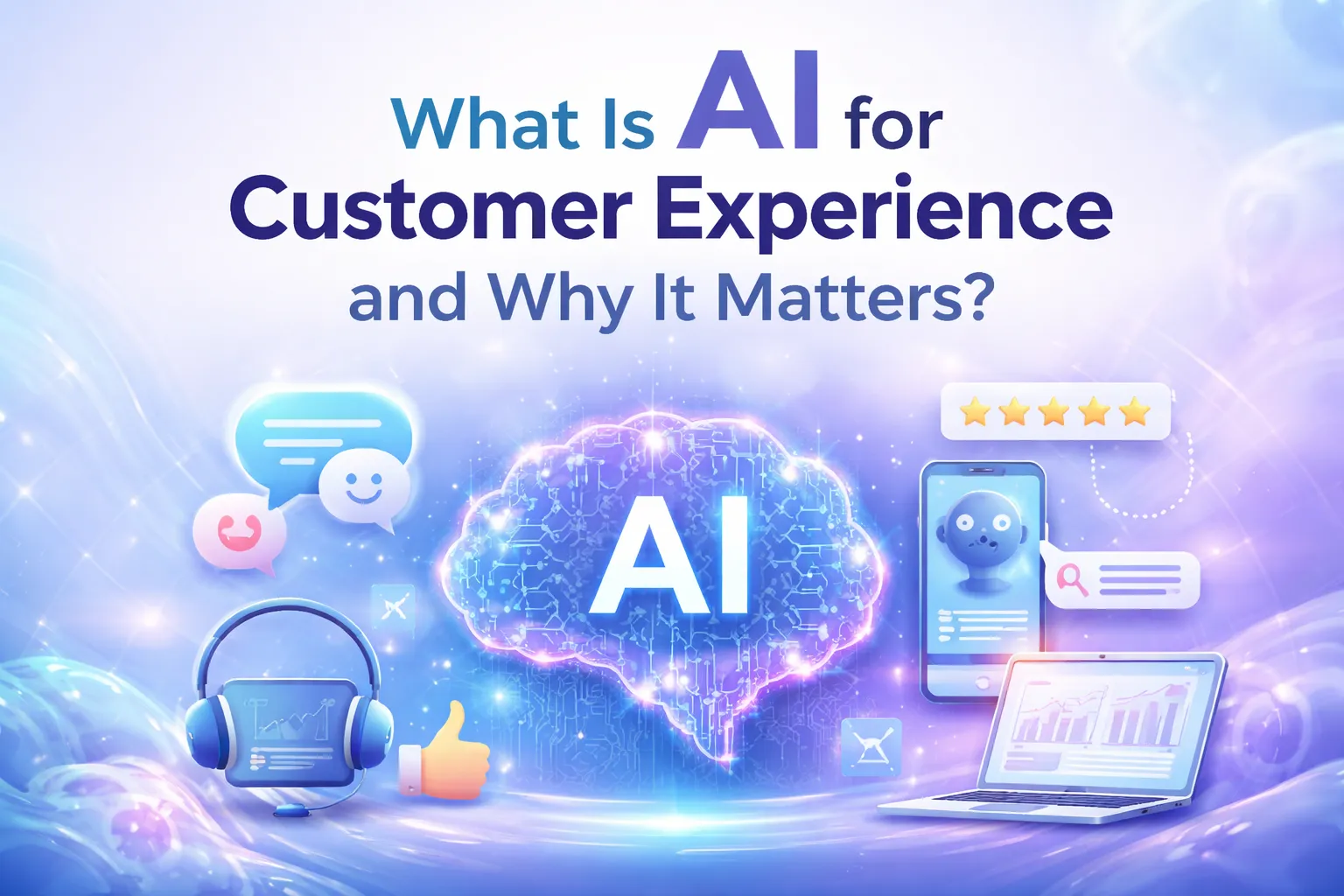
What Is AI for Customer Experience?
AI for customer experience refers to the suite of technologies—including conversational AI, natural language processing (NLP), and large language models (LLMs)—designed to automate and optimize interactions between a business and its clientele. Unlike basic chatbots of the past, modern solutions utilize neural text-to-speech and sophisticated sentiment analysis to understand not just what a customer is saying, but how they are saying it.
This technology allows businesses to scale their operations without increasing operational overhead. By accurately decoding user intent, these systems can handle complex scheduling, qualify leads, and resolve inquiries with human-like latency. For a deeper understanding of the foundational technology, it is helpful to explore what is an ai receptionist is to see how the software architecture supports these interactions.
The Efficiency Gap: AI vs. Traditional Methods
To understand the ROI potential, we must compare the metrics of an AI-driven approach against traditional human-reliant models.
| Metric | Traditional Receptionist | AI Receptionist Solution |
|---|---|---|
| Response Time | 15–60 seconds (if not busy) | < 2 seconds (Instant) |
| Concurrency | 1 call at a time | Unlimited simultaneous calls |
| Availability | 8 hours/day (Business hours) | 24/7/365 |
| Data Accuracy | ~61% (Prone to human error) | 99% (CRM integrated) |
| Cost Efficiency | High salary + benefits overhead | Low fixed subscription cost |
| Lead Capture | Misses after-hours calls | 100% Capture rate |
How AI for Customer Experience Works For Your Business in 2026?
As we look toward 2026, the technology driving AI for customer experience has evolved from simple automated responses to complex, autonomous agents capable of managing entire business functions. Below are the key mechanisms and benefits that define a high-performing system.
1. Instant Lead Response and Zero Latency
Speed is the currency of conversion. When a potential client calls, AI for customer experience ensures the phone is answered within the first ring. This immediacy prevents the “dial-next” behavior common in competitive industries like legal or home services. By utilizing a 24/7 call answering service, businesses ensure that even leads calling at 2 AM are greeted, qualified, and booked immediately.
2. Conversational AI and Natural Language Processing (NLP)
Modern systems move beyond robotic menu trees. They utilize NLP and LLMs to hold fluid, non-linear conversations. A caller can interrupt, change the subject, or speak colloquially, and the AI adapts instantly. This capability allows an [AI phone assistant](https call routing** analyzes the caller’s voice input to determine if they are a high-value lead, a current client with a support issue, or a spam caller. Using an automated call routing system, the AI can direct specific queries to human departments while autonomously handling routine tasks like scheduling or FAQs, optimizing your human team’s focus.
4. Bi-Directional Calendar Sync for Real-Time Booking
One of the most critical operational entities is the ability to manage time without human intervention. The DBT AI employs bi-directional calendar sync to read your team’s availability in real-time and write new appointments directly to the calendar. This AI appointment booking capability removes the back-and-forth friction of scheduling, significantly increasing the conversion rate from inquiry to booked meeting.
5. Seamless CRM Integration (HubSpot, Salesforce, GoHighLevel)
Data is only valuable if it is accessible. AI for customer experience automatically logs call transcripts, contact details, and appointment metadata directly into your CRM. By checking The DBT AI features, you can see how automation ensures that no lead data is lost to sticky notes or forgotten emails, keeping your sales pipeline pristine and actionable.
6. Sentiment Analysis and Emotional Intelligence
Understanding user intent goes beyond keywords; it involves detecting frustration, urgency, or hesitation. Sentiment analysis allows the AI to adjust its tone—becoming more empathetic if a caller is distressed or more concise if a caller is in a rush. To understand how this impacts retention, read about ai receptionists operation and how emotional detection improves call outcomes.
7. Unlimited Concurrency and Scalability
Human receptionists can only handle one conversation at a time, creating a bottleneck during peak hours. AI offers infinite concurrency, meaning it can handle 5, 50, or 500 simultaneous calls without a drop in performance. This is particularly vital for handling volume surges, which is why learning how 247 ai receptionist handles volume is essential for growing agencies and clinics.
8. Lead Qualification and Filtering
Marketing budgets are often wasted on unqualified leads. An AI system can ask specific pre-qualifying questions (e.g., budget, timeline, insurance type) before booking an appointment. This ensures that your sales team only speaks to prospects who are ready to buy. Implementing a virtual receptionist service acts as a rigorous filter, increasing the efficiency of your sales floor.
9. Omnichannel Experience Consistency
Customers engage across multiple touchpoints—phone, SMS, and web. AI for customer experience unifies these interactions. If a user interacts with a web chatbot and later calls via phone, the context should transfer. An automated call answering service that integrates with SMS follow-ups ensures a cohesive journey, reducing the need for the customer to repeat themselves.
10. Predictive Modeling and Data Analytics
Every interaction generates data. AI systems analyze these patterns to provide predictive modeling—forecasting call volumes, identifying peak lead times, and highlighting common customer objections. Businesses can use ai receptionist benefits to strategically adjust their marketing campaigns based on the concrete data gathered from voice interactions.
11. Reduction of Operational Overhead
Finally, the math of automation is undeniable. Replacing or augmenting a human front desk with AI slashes costs associated with hiring, training, and benefits. For small businesses, an AI virtual receptionist software AI solutions utilize encrypted logs and secure servers. Unlike humans, who may accidentally disclose sensitive info, a programmed ai phone receptionist adheres strictly to compliance protocols, reducing liability risks for the business.
What Industries Benefited By AI Receptionists?
While any business with a phone line benefits from AI for customer experience, certain industries see an immediate and drastic improvement in their bottom line.
Legal Services & Law Firms
Attorneys are often in court or meetings, missing critical intake calls. An AI receptionist ensures every potential client is screened and scheduled immediately. Implementing virtual receptionist for law firms captures high-value retainers that would otherwise go to the next firm on Google. For specific use cases, see how legal services & law firms automate intake.
Private Healthcare & Dental Clinics
Missed appointments cost the healthcare industry billions. AI handles rescheduling, insurance verification queries, and post-op check-ins. private healthcare clinics utilize voice AI to keep calendars full and reduce administrative burnout.
Home Services (Plumbing, HVAC, Electrical)
Emergencies don’t stick to business hours. A homeowner with a burst pipe at midnight needs an answer now. home services companies use AI to dispatch technicians and capture emergency revenue while competitors sleep.
Marketing Agencies
Agencies generate leads for clients but often fail to follow up instantly. AI bridges the gap between ad click and contact. marketing agencies use AI appointment setters to guarantee their clients see a higher ROI on ad spend.
Which AI Receptionist Provider Should You Choose?
Selecting the right provider is critical. You need a platform that prioritizes neural text-to-speech quality, robustness of CRM integration, and ease of use. Many generic solutions lack the nuance required for high-stakes business calls.
The DBT AI stands out by focusing specifically on lead conversion and appointment setting. Our infrastructure is built on advanced LLMs that ensure human-like latency—meaning no awkward pauses that reveal the caller is speaking to a robot. We offer deep app integration with major platforms like Zapier, GoHighLevel, and Salesforce, ensuring your tech stack remains unified.
If you are looking for the best AI answering service, prioritize one that offers transparency, security, and proven conversion metrics. You can see how our specific logic works by reviewing our ai receptionist customer service methodology.
Conclusion
The evolution of AI for customer experience is not just about saving money; it is about respecting your customers’ time and maximizing your business’s potential. By 2026, the gap between businesses that use conversational AI and those that rely on voicemail will be insurmountable. The combination of predictive modeling, instant lead response, and bi-directional calendar sync creates an engine for growth that runs 24/7.
The mathematical advantage of AI implementation can be summarized by the increase in Lead Conversion Rate (Lcr):
Lcr = (Instant Response + Unlimited Concurrency) ÷ (Missed Calls × 0)
Don’t let another lead slip through the cracks. Experience the power of a fully automated front desk today. Schedule a trial to see The DBT AI in action, or get started with a **[DBT AI free trial](https salary, benefits, and training, an ai virtual receptionist software operates on a subscription basis, providing 24/7 coverage for a fraction of the price of a 9-to-5 employee.
Is the AI voice indistinguishable from a human?
Yes, modern neural text-to-speech technology has advanced significantly. The DBT AI utilizes top-tier voice synthesis to create human-like latency and intonation. Most callers do not realize they are speaking to an AI until the end of the call, or at all. For more details on voice quality, read about ai automated receptionist voice.
Can the AI handle complex scheduling and rescheduling?
Absolutely. Through bi-directional calendar sync, the AI can view your team’s availability in real-time. It can propose times, book slots, and even handle rescheduling requests without human interference, ensuring your calendar is always optimized.
Can AI for customer experience work on phone calls, not just?
Yes. Voice AI uses voice recognition neural text-topeech for-time support on calls, and concurrency means can handle multiple callers at once—important when hours would missed calls.
What integrations should require before choosing a provider?
At minimum: bi-direction calendar and CRM integration (force, HubSpot GoHighLevel Without, you double bookings, manual updates, and poor data analytics that weaken customer insights.