Your phone rings. It represents a qualified lead with high intent, ready to solve a problem. But your front desk is busy, or perhaps it’s 8:00 PM. The call goes to voicemail. Statistics suggest that 85% of people whose calls are not answered will not call back; they simply move to the next competitor on Google.
This creates a massive operational overhead for businesses relying solely on human availability. You are essentially paying marketing dollars to generate leads that burn out because no one is there to answer them. The solution is not necessarily hiring more staff, which increases fixed costs, but rather implementing intelligent automation.
Choosing the right ai receptionist software is the most efficient way to close this gap. However, the market is flooded with tools ranging from basic IVR menus to advanced neural networks. How do you distinguish a tool that frustrates customers from one that actually converts revenue?
This guide breaks down the technical and functional requirements you must evaluate to ensure your voice AI solution drives ROI rather than headaches.
What Is An AI Receptionist Software?
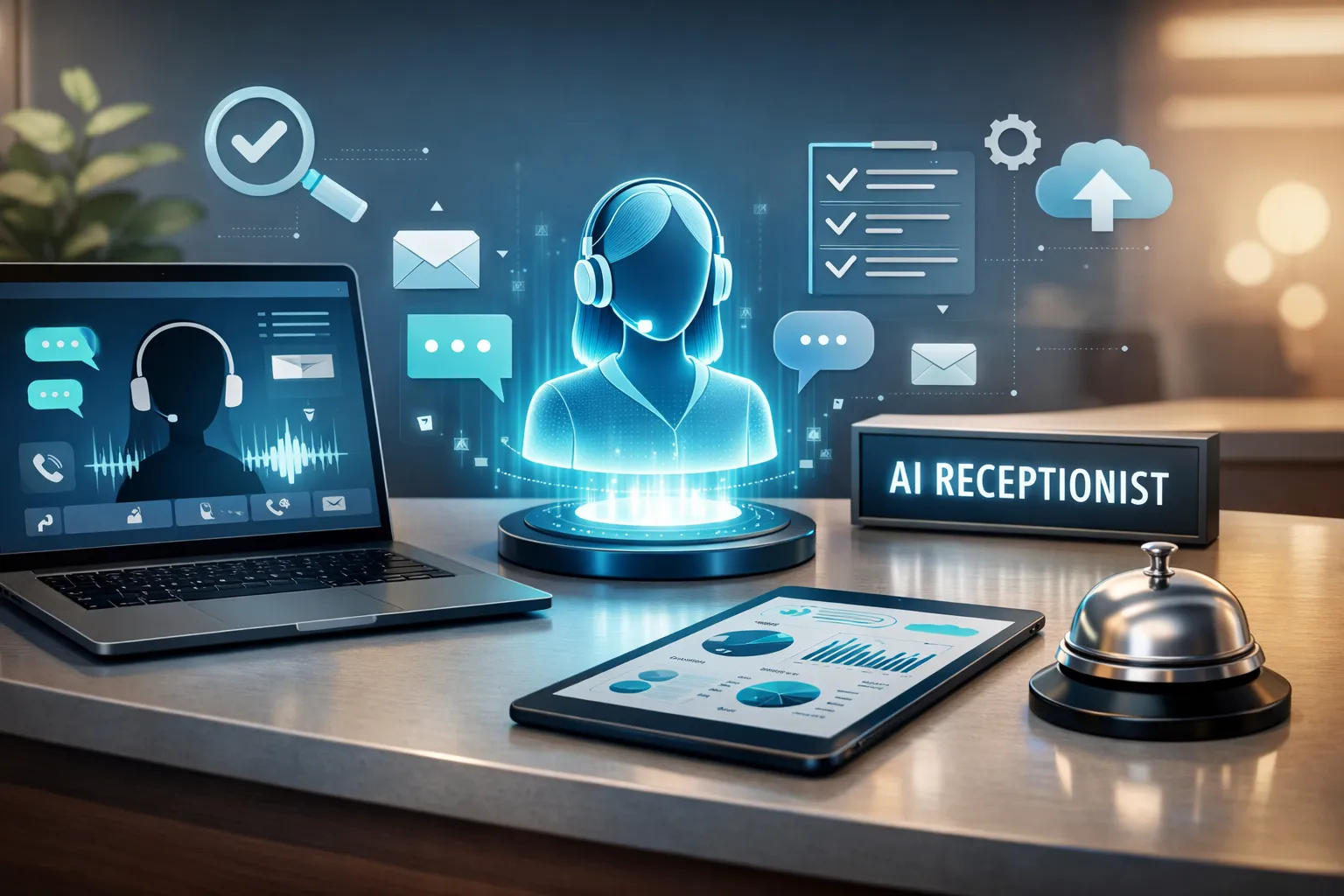
AI receptionist software is a voice automation solution driven by large language models (LLMs) and natural language processing (NLP). Unlike legacy phone trees that force callers to “press 1 for sales,” these systems understand spoken language, context, and user intent.
They function as a first line of defense for your communication channels. An effective system can answer calls 24/7, handle lead qualification, manage bi-directional calendar sync, and route calls to specific departments without human intervention. The goal is to replicate the empathy and logic of a human operator while maintaining the infinite scalability of software.
AI Receptionist vs. Traditional Solutions
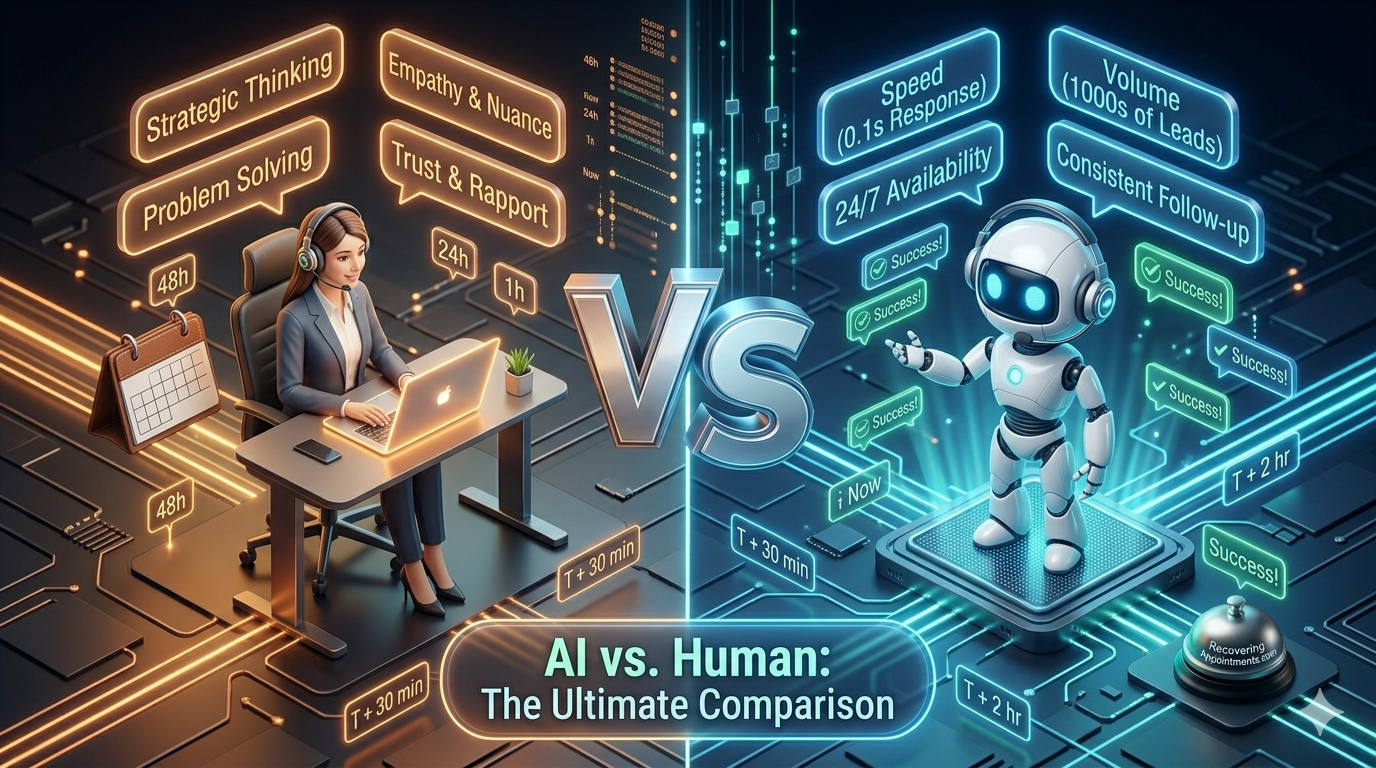
Before investing, it is crucial to understand how modern Voice AI compares to traditional staffing or answering services.
| Feature | The DBT AI / Advanced Software | Traditional Call Center | Human Receptionist |
|---|---|---|---|
| Availability | 24/7/365 | 24/7 (Shift based) | 9 AM – 5 PM |
| Concurrency | Infinite (No busy signals) | Limited by staff count | 1 call at a time |
| Response Time | Instant (<1s latency) | Variable hold times | Variable |
| Cost Structure | Fixed / Usage-based (Low) | High monthly retainer | Salary + Benefits |
| CRM Entry | Automated & Instant | Manual (Prone to error) | Manual |
| Learning Curve | Instant Access to Knowledge Base | Requires Training | Requires Training |
Top 12 Qualities To Look for in AI Receptionist Software
When auditing vendors, you need to look past the marketing claims and analyze the underlying capabilities. Here are the 13 essential features that define a high-performance system.
1. Advanced Natural Language Processing (NLP)
The ability of the software to understand “messy” human speech is non-negotiable. Customers do not speak in scripts; they stutter, change subjects, and use slang. Superior software utilizes advanced NLP and large language models (LLMs) to decipher user intent regardless of phrasing.
If a caller says, “I’m not sure if I need a consultation or just a quote,” the AI must parse that ambiguity. It should facilitate a conversation, not just a transaction. If you are looking for a virtual receptionist service, ensure the underlying model is trained on conversational data, not just text, to prevent robotic interactions.
2. Low-Latency Voice Response
In voice conversations, latency—the delay between a user speaking and the AI responding—is the primary “tell” that someone is talking to a robot. To maintain the illusion of a human-like conversation, the AI phone assistant must process audio, generate a text response, and synthesize speech in under 1,000 milliseconds.
When evaluating software, test the “interruption” capability. Can you cut the AI off mid-sentence? A high-quality system handles interruptions gracefully, stopping its audio immediately to listen, just as a human would.
3. Bi-Directional Calendar Sync
For service-based businesses, the primary KPI is often “appointments booked.” The software must offer true bi-directional synchronization. This means it reads your calendar in real-time to offer availability and writes new bookings instantly to prevent double-booking.
If you are using an AI appointment booking system, the logic should look like this: if it is actionable. The software must integrate with your Customer Relationship Management (CRM) platforms like Salesforce, HubSpot, or GoHighLevel.
When a call concludes, the system should automatically update the contact record, log the call recording, and trigger post-call workflows. If you are interested in how this connects to your stack, review our app integration capabilities. This removes the need for manual data entry and ensures your sales team has full context before their follow-up.
5. Intelligent Call Routing
Not every call should be handled by AI from start to finish. Some inquiries require a human touch immediately. A robust system includes an automated call routing system that acts as a gatekeeper.
You should be able to set logic tiers:
- Tier 1: General FAQs and Scheduling (Handled by AI).
- Tier 2: Complex Technical Support (Routed to Tech Team).
- Tier 3: High-Value VIP Clients (Routed immediately to Senior Partners).
6. Sentiment Analysis
Understanding what a customer says is important; understanding how they say it is vital for customer experience (CX). Advanced systems utilize sentiment analysis to detect frustration or anger.
If the AI detects a negative sentiment score, it should have a protocol to de-escalate or immediately transfer the call to a human supervisor. This functionality effectively bridges the gap between cold automation and empathetic service, which is often a key differentiator in a white label answering service.
7. Custom Knowledge Base Training
Your business has unique policies, pricing structures, and value propositions. A “plug-and-play” solution that cannot learn your specific data is useless. Look for software that allows you to upload documents, URLs, and past call logs to train the bot.
The AI should be able to answer specific questions like, “Do you offer financing for HVAC installation?” or “What is your cancellation policy?” accurately. This level of customization is what separates a generic bot from a true AI business phone system.
8. Scalability and Concurrency
A human receptionist can handle one call at a time. If three people call simultaneously, two are lost. AI receptionist software should offer infinite concurrency.
Whether you receive 5 calls an hour or 500 calls during a marketing blitz, the software should answer every single one instantly. This is particularly crucial for marketing agencies running high-volume ad campaigns where lead response time dictates conversion rates.
9. Outbound Calling Capabilities
While inbound handling is critical, the ability to execute outbound campaigns is a force multiplier. Look for an AI auto attendant that can also perform lead reactivation.
The system should be capable of calling through a list of old leads to ask if they are still interested in your services, and if so, book them directly into the calendar. This turns a static database into an active revenue source.
10. Security and Compliance (GDPR/HIPAA)
Data privacy is not optional. If you are in healthcare or legal sectors, the software must be compliant with relevant regulations like HIPAA or GDPR.
Ensure the vendor encrypts data both in transit and at rest. When deploying a virtual receptionist for law firms, client confidentiality is paramount. The platform should offer clear data retention policies and the ability to purge records upon request.
11. Multi-Channel Follow-Up
A voice conversation should often trigger a text or email confirmation. The best platforms do not operate in a silo.
If a caller books an appointment, the AI scheduling assistant should immediately send an SMS confirmation with a calendar link. This multi-touchpoint approach significantly reduces no-show rates and improves the overall customer journey.
12. Detailed Analytics and Reporting
You cannot improve what you do not measure. The software dashboard should provide granular insights: average call duration, booking conversion rates, peak call times, and common drop-off points.
Reviewing these metrics allows you to refine the AI’s script and logic. For example, if you notice calls dropping when price is mentioned, you can adjust how the AI presents pricing information.
What Industries Benefited By AI Receptionist Software?
While almost any business with a phone line can benefit, certain industries see a compounding ROI due to high transaction values and appointment-based models.
Legal Services
Attorneys lose billable hours every time they pick up the phone for a non-billable administrative task. However, missed calls often mean missed retainers. By utilizing legal services & law firms automation, practices can ensure instant intake 24/7. The AI can screen cases based on practice area (e.g., “Do you handle personal injury?”), collect case details, and schedule consultations, allowing lawyers to focus solely on legal work.
Healthcare and Medical
Patient experience is critical in private practice. Administrative staff are often overwhelmed with appointment reminders and rescheduling requests. Private healthcare clinics utilize AI to handle HIPAA-compliant appointment setting and answer routine questions about preparation for procedures. This reduces operational overhead and improves patient satisfaction by eliminating hold times.
Home Services
Plumbers, electricians, and HVAC technicians are often in the field, unable to answer phones. Yet, a homeowner with a burst pipe will not leave a voicemail; they call the next number. Home services companies use AI to capture emergency jobs instantly, route them to the on-call technician, and secure the revenue that would otherwise go to a competitor.
Real Estate
Speed to lead is the defining metric in real estate. Real estate agents often juggle showings and closings, leaving them unavailable to take new inquiry calls. An AI receptionist can qualify buyers (budget, location, timeline) and schedule showings immediately, ensuring the agent wakes up to a calendar full of qualified appointments.
Which AI Receptionist Software Provider Should You Choose?
Selecting a provider comes down to balancing technical sophistication with ease of use. You need a platform that understands the nuances of human conversation while integrating deeply with your business operations.
The DBT AI was engineered specifically to solve the friction points of lead conversion. We don’t just record messages; we actively move the sales process forward. Our proprietary architecture ensures that every caller is greeted by a 24/7 call answering service capable of complex reasoning, instant booking, and seamless CRM updates.
We combine neural voice technology with rigorous business logic to ensure your brand is represented perfectly, every time.
Conclusion
The era of the unanswered call is over. Modern ai receptionist software is no longer a luxury for enterprise corporations; it is a necessity for any business that values growth and efficiency. By focusing on NLP capabilities, integration depth, and latency speed, you can deploy a system that not only cuts costs but actively generates revenue.
To see how this technology can transform your operational efficiency, let us demonstrate The DBT Ai and show you the future of voice automation.
Frequently Asked Questions (FAQS)
How much does AI receptionist software typically cost?
Costs vary significantly based on usage and features. Unlike hiring a full-time employee which can cost thousands per month, AI solutions usually operate on a subscription basis or per-minute usage model, often costing a fraction of a human salary while providing 24/7 coverage.
Will an AI receptionist sound robotic to my callers?
High-end solutions utilize neural text-to-speech engines that are nearly indistinguishable from human speech. They incorporate natural pauses, intonation, and latency management to create a fluid conversational experience.
Can the AI software integrate with my specific calendar?
Yes, premium AI receptionists offer bi-directional sync with major platforms like Google Calendar, Outlook, and iCloud. This ensures that the AI only offers times that are actually open and instantly blocks off booked slots.
Is AI receptionist software compliant with HIPAA?
Not all software is compliant. If you are in the healthcare sector, you must specifically look for vendors that offer HIPAA-compliant data handling, encryption, and Business Associate Agreements (BAA).
How long does it take to set up and train the AI?
With modern platforms, basic setup can take as little as an hour. However, fine-tuning the knowledge base and integrating it with your CRM for a specific online phone answering service workflow may take a few days to perfect.