Recent data indicates that medical practices and clinics miss approximately 60% of inbound patient calls due to high volume, after-hours inquiries, or limited staffing. For a private practice, every missed call represents a potential leak in revenue and a significant drop in patient satisfaction. In an industry where trust and speed are paramount, relying solely on traditional phone lines is no longer a viable strategy for growth.
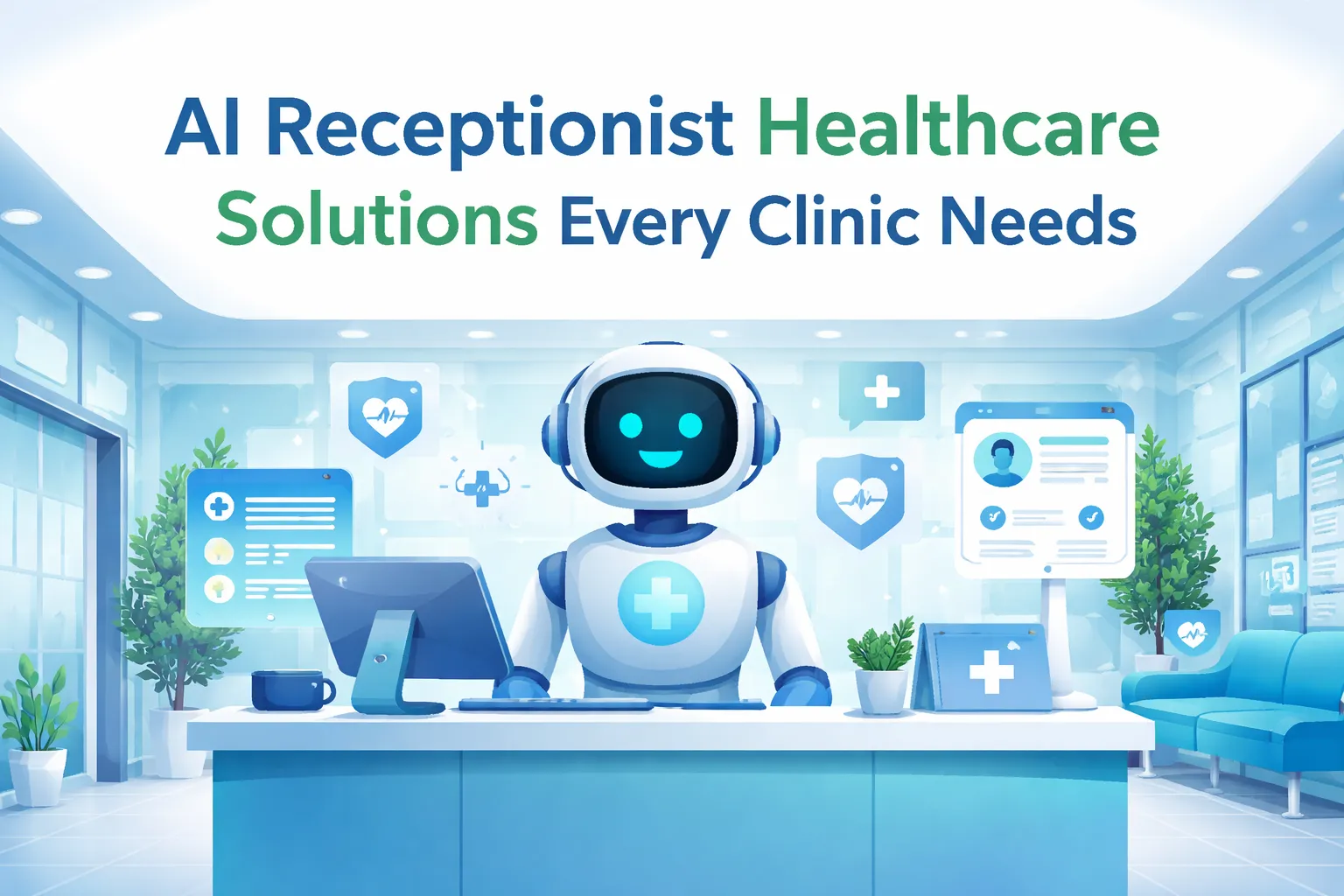
Implementing an AI receptionist healthcare solution solves this bottleneck immediately by guaranteeing that every patient inquiry is answered, qualified, and scheduled instantly. Beyond simple answering services, these systems utilize advanced conversational AI and natural language processing (NLP) to understand user intent, distinguishing between a prescription refill request and an urgent appointment need. This article examines the critical solutions AI offers to modern clinics, ensuring operational overhead decreases while patient engagement rises.
What Is An AI Receptionist Healthcare?
An AI receptionist healthcare system is a sophisticated voice automation tool designed specifically for the medical and wellness sectors. Unlike basic healthcare chatbots that are limited to text-based website interactions, an AI receptionist functions as a voice AI agent capable of holding natural, fluid conversations over the phone. Powered by large language models (LLMs), these systems process spoken language with human-like latency, allowing patients to speak naturally without robotic pauses or keyword rigidity.
The core function of this technology is to automate clinical workflow optimization by handling tasks such as patient scheduling, medical data entry, and appointment management. Crucially, these systems are built with data privacy (GDPR/HIPAA compliance) at the forefront, ensuring that sensitive patient health information (PHI) is handled securely. By integrating neural text-to-speech, the AI provides a comforting, professional voice that enhances healthcare customer service standards.
AI vs. Traditional Receptionist: The Efficiency Gap
To understand the Return on Investment (ROI), we must compare the capabilities of an AI solution against traditional human workflows.
| Feature | Traditional Receptionist | AI Receptionist Healthcare |
|---|---|---|
| Availability | Limited to business hours (approx. 40 hours/week) | 24/7/365 availability with zero downtime |
| Concurrency | Can handle 1 call at a time; others go to hold/voicemail | Unlimited simultaneous calls; zero hold times |
| Response Time | Average 4-6 minutes (including hold time) | Instant pickup (within 2 seconds) |
| Cost Efficiency | High salary, benefits, and training costs | Fixed monthly cost; reduces overhead by up to 60% |
| Data Entry | Prone to manual errors and fatigue | Automated, error-free sync via CRM integration |
| Multilingual | Limited to the staff’s specific language skills | Fluent in multiple languages instantly |
Top 11 AI Receptionist Healthcare Solutions Every Clinic Needs
The modern medical landscape demands more than just someone to pick up the phone; it requires intelligent lead qualification and seamless appointment management. Below are the eleven essential solutions provided by AI receptionist healthcare systems that are transforming how clinics operate.
1. Instant 24/7 Patient Access and Response
Illness and medical anxiety do not adhere to a 9-to-5 schedule. A significant portion of patient calls occur before the clinic opens or after the staff has left for the day. An AI solution ensures instant lead response regardless of the time, capturing value that would otherwise be lost to voicemail. By utilizing a 24/7 call answering service, clinics can capture after-hours appointments, ensuring that the calendar is full before the staff even arrives in the morning. This constant availability significantly boosts patient trust, as they know they can reach their provider’s office at their convenience, not just during banking hours.
2. Bi-Directional Calendar Sync for Real-Time Booking
One of the most powerful features of medical automation is the ability to read and write to the clinic’s schedule in real-time. Through bi-directional calendar sync, the AI checks provider availability instantly and books the appointment directly into the system, eliminating double-bookings. This capability transforms the system into a robust AI appointment booking engine that works autonomously. The AI can navigate complex scheduling rules—such as different durations for initial consultations versus follow-ups—ensuring the calendar remains optimized without human intervention.
3. Proactive No-Show Reduction and Reminders
No-shows are a massive drain on revenue, with some clinics reporting rates as high as 18-20%. AI systems mitigate this by sending automated, conversational reminders via voice or text, allowing patients to confirm or reschedule effortlessly. An simply not showing up, allowing the practice to recover that lost time slot immediately.
4. Intelligent Call Routing and Triage
Not all calls require a receptionist; some require a nurse, a billing specialist, or immediate emergency direction. Utilizing intelligent call routing, the AI analyzes the caller’s request and routes them to the correct department or individual instantly. This acts as a highly efficient automated call routing system that filters out routine administrative questions from urgent medical inquiries. This ensures that high-value clinical staff are only interrupted for calls that truly require their medical expertise, significantly reducing burnout.
5. Seamless CRM and EMR Integration
Manual data entry is a primary source of administrative error in healthcare. Advanced AI systems integrate directly with platforms like Salesforce, HubSpot, or specific Electronic Medical Records (EMR) systems like DrChrono. By leveraging our app integration capabilities, the AI automatically updates patient files with call summaries, appointment details, and action items. This creates a unified view of the patient journey and ensures that the AI phone assistant has access to relevant history during the conversation, providing a personalized experience.
6. Sentiment Analysis for Empathetic Engagement
Healthcare interactions are often emotionally charged. Unlike basic IVR systems, modern AI utilizes sentiment analysis to detect nuances in the patient’s voice, such as stress, urgency, or frustration. If a patient sounds distressed, the system can prioritize the call or flag it for immediate human review, ensuring customer experience (CX) remains high. This level of empathy is crucial for maintaining the reputation of a practice, as it ensures vulnerable patients feel heard and understood rather than processed by a machine.
7. Multilingual Support for Diverse Demographics
In an increasingly globalized world, language barriers can prevent patients from accessing necessary care. AI receptionists can switch between languages fluently, offering neural text-to-speech capabilities in Spanish, French, Mandarin, and more. A bilingual AI receptionist ensures that non-native speakers receive the same quality of care and clarity regarding their appointments as English speakers. This inclusivity expands the clinic’s market reach and ensures compliance with equitable care standards.
8. Scalability and Concurrency Management
During flu season or following a marketing campaign, call volumes can spike unpredictably, overwhelming front desk staff. AI systems possess unlimited concurrency, meaning they can answer hundreds of calls simultaneously without a busy signal. You can read more about how 24/7 AI receptionist handles volume to understand the technical capacity of these systems. This scalability ensures that lead conversion rates remain stable even during peak operational hours, maximizing the ROI of marketing spend.
9. Pre-Call Qualification and Insurance Verification Basics
Before an appointment is booked, specific criteria must often be met, such as insurance type or symptom duration. The AI acts as a filter, performing lead qualification by asking prerequisite questions before offering a calendar slot. This mimics a virtual receptionist service that ensures the doctor’s time is reserved for qualified patients who fit the clinic’s operational profile. By gathering preliminary insurance information, the AI speeds up the check-in process and reduces administrative bottlenecks at the front desk.
10. Automated Telehealth Coordination
As telemedicine becomes a staple of modern healthcare, coordinating virtual links and technical instructions is a new administrative burden. An AI receptionist can manage telehealth support by booking the virtual slot and automatically emailing the secure connection link to the patient. This is particularly valuable for private healthcare clinics looking to streamline their hybrid care models. The AI ensures patients are tech-ready for their appointment, reducing the time providers spend troubleshooting connection issues.
11. Advanced Analytics and Operational Insights
Beyond answering calls, AI provides deep insights into why patients are calling. The system tracks metrics such as peak call times, common patient queries, and appointment conversion rates. This data allows clinic owners to perform clinical workflow optimization based on hard evidence rather than guesswork. Using a sophisticated AI receptionist platform, administrators can identify trends—such as a high demand for specific procedures—and adjust their staffing or marketing strategies accordingly.
What Industries Benefited By AI Receptionist?
While general healthcare is the primary beneficiary, specific niches within the industry see compounded benefits due to their high-volume, appointment-based business models.
Private Healthcare & Dental Clinics
For private practices, the correlation between phone responsiveness and revenue is direct. Patient engagement tools provided by AI ensure that recall appointments (e.g., 6-month checkups) are automated. Learn how private healthcare clinics are utilizing these tools to keep their chairs full and reduce administrative drag.
Med Spas & Aesthetic Clinics
This industry is highly competitive and consumer-driven; a missed call is almost certainly a lost client to a competitor. An AI receptionist healthcare solution provides immediate consultation booking and answers FAQs about procedure pricing. Med spas & aesthetic clinics use these systems to capture high-intent leads instantly, securing revenue that relies on discretionary spending.
Home Health Services
Coordinating nurses and caregivers requires immense logistical precision. AI helps by managing inbound requests for home visits and coordinating with field staff schedules. Home services benefit from the 24/7 nature of AI, as care requirements often arise outside of standard office hours.
Coaches & Consultants
Health coaches and wellness consultants often operate with lean teams or as solo practitioners. An AI receptionist allows them to focus entirely on client sessions while the AI fills their future pipeline. Coaches & consultants utilize these tools to maintain a professional “front office” presence without the cost of hiring a full-time assistant.
Which AI Receptionist Provider Should You Choose?
When selecting a provider, clinics must prioritize data privacy (GDPR/HIPAA compliance), low latency, and ease of integration. The market is flooded with generic tools, but healthcare demands a specialized approach. You need a system that offers intelligent call routing, robust CRM integration, and a voice that reflects the professionalism of your medical practice.
The DBT AI is engineered specifically to meet these rigorous demands. We provide a comprehensive AI receptionist solution that combines industry-leading voice AI with the security required for medical environments. Our platform offers seamless app integration with your existing tech stack, ensuring that patient scheduling is fully automated and error-free.
Unlike generic answering services, The DBT AI focuses on lead conversion and operational overhead reduction. Our system is designed to understand the nuance of medical data entry and patient interaction. To see the difference a dedicated AI phone assistant can make for your clinic, you should review our features or explore what is an ai receptionist in greater depth.
Conclusion
The adoption of AI receptionist healthcare solutions is shifting from a competitive advantage to an operational necessity. As patient expectations for speed and convenience rise, clinics that rely on voicemail and manual callbacks will continue to lose market share. By implementing conversational AI, clinics can achieve higher patient engagement, reduced operational overhead, and a streamlined workflow that allows medical professionals to focus on what matters most: patient care.
Future trends suggest that large language models (LLMs) will soon offer predictive scheduling, anticipating patient needs before they even call. Now is the time to modernize your front desk.
Schedule a trial today and let us demonstrate how The DBT AI can transform your clinic’s efficiency.
Frequently Asked Questions (FAQs)
Is AI receptionist healthcare technology HIPAA compliant?
Yes, reputable AI solutions for healthcare utilize encryption and strict data governance protocols to ensure full GDPR/HIPAA compliance. This ensures that all medical data entry and patient interactions are secure and private.
Can an AI receptionist handle complex scheduling requests?
Absolutely. Modern AI appointment booking systems utilize advanced NLP to understand complex variables, such as provider availability, specific procedure durations, and even rescheduling needs without human assistance.
How does the AI integrate with my current practice management software?
Through API connectivity and CRM integration, the AI acts as an extension of your existing software. It provides bi-directional calendar sync, ensuring that any appointment booked by the AI is immediately reflected in your main schedule.
Will an AI receptionist sound robotic to my patients?
No. Leading platforms utilize neural text-to-speech and voice AI to generate voices that are indistinguishable from humans. They include natural pauses and intonations, ensuring a high quality of healthcare customer service.
How much can a clinic save by using an AI receptionist?
Clinics can reduce their front-desk operational overhead by 40% to 60%. By replacing or supplementing traditional staffing with a fixed-cost AI virtual receptionist software, practices save on salaries, benefits, and training while gaining 24/7 coverage.