Imagine a guest calling your front desk at 2:00 AM. They want to book a suite for next weekend, but the night auditor is currently checking in a late arrival. The phone rings, goes to voicemail, and the potential revenue vanishes. In the hospitality industry, missed calls translate directly to missed revenue and a degraded customer experience (CX). This is where the implementation of an AI hotel receptionist shifts the operational dynamic from reactive to proactive.
What Is an AI Hotel Receptionist?
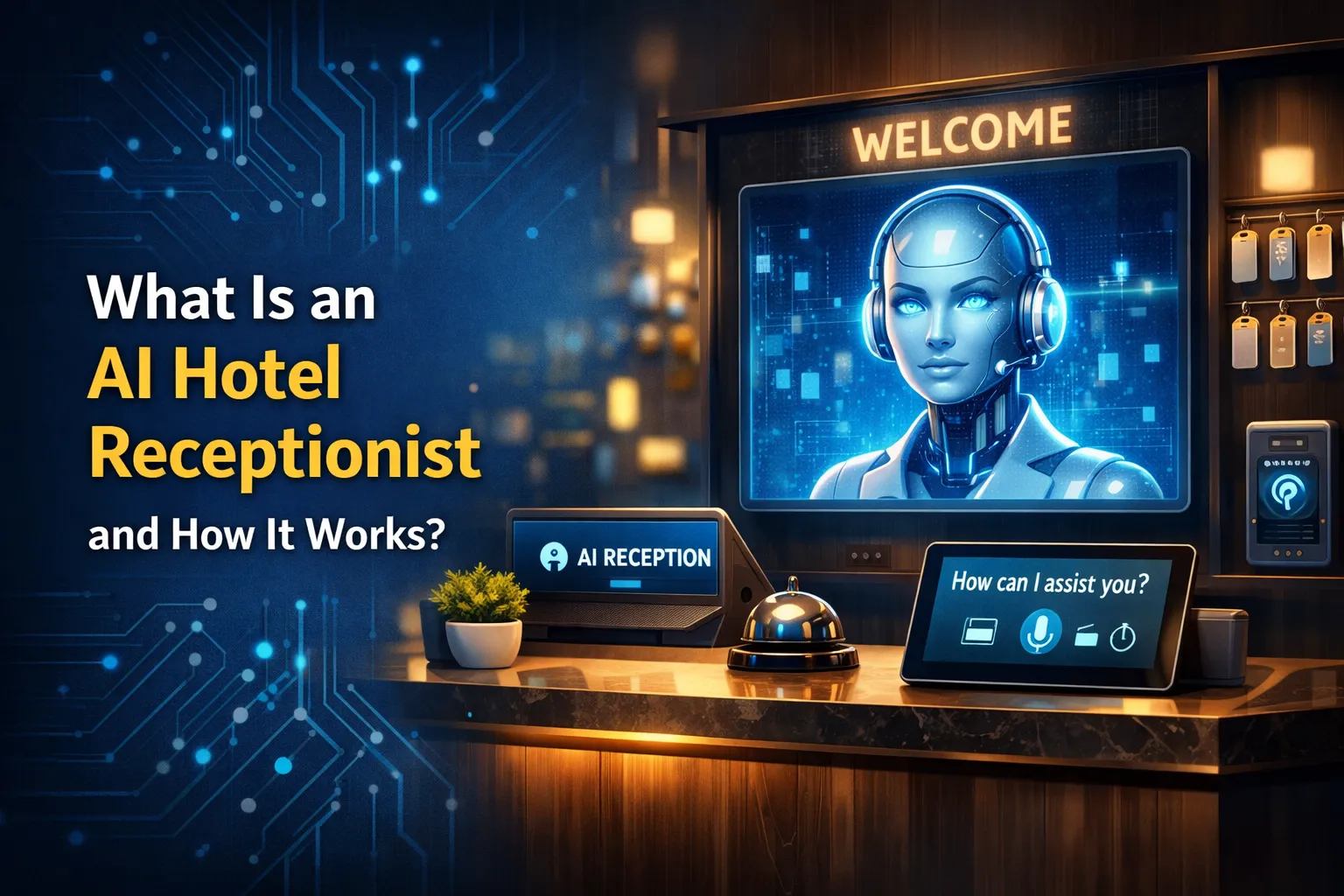
An AI hotel receptionist is not merely a digital answering machine; it is a sophisticated voice AI solution driven by conversational AI, natural language processing (NLP), and large language models (LLMs). Unlike legacy IVR systems that force callers to press numbers, these systems understand user intent, speak with human-like latency using neural text-to-speech, and manage complex tasks like booking management and guest check-in without human intervention. By automating these interactions, hotels can significantly reduce operational overhead while maintaining 24/7 availability.
AI Receptionist vs. Traditional Methods
To understand the value proposition, we must compare the technical capabilities of AI solutions against human staff and traditional call centers.
| Feature | Human Receptionist | Traditional IVR | AI Hotel Receptionist |
|---|---|---|---|
| Availability | Limited by shifts/breaks | 24/7 | 24/7 |
| Concurrency | One call at a time | Limited lines | Unlimited simultaneous calls |
| Response Time | High (hold times common) | Medium (menu navigation) | Instant (0 wait time) |
| Cost Efficiency | High ($15-$30/hour) | Low (fixed cost) | Very Low ($0.05-$0.20/min) |
| Intent Recognition | Excellent | None (Keypad only) | High (NLP & Sentiment Analysis) |
| Data Entry | Manual (prone to error) | None | Automated CRM integration |
16 Ways AI Hotel Receptionist Works
The modern AI hotel receptionist functions through a complex layering of voice recognition and backend automation. Below are 16 specific ways this technology operates to streamline hotel management.
1. Instant 24/7 Call Handling
The primary function of this technology is to eliminate hold times entirely. Whether it is peak check-out time or the middle of the night, the AI picks up immediately. It utilizes neural text-to-speech to provide a natural, conversational experience. By deploying a 24/7 call answering service, hotels guarantee that no guest inquiry goes unanswered, capturing leads that would otherwise be lost to competitors.
2. Intelligent Booking Management
The system integrates directly with your Property Management System (PMS) to handle reservations. It checks real-time availability, quotes rates, and confirms dates. Through ai appointment booking capabilities, the AI can negotiate times, handle modifications, and finalize the reservation without a human ever picking up the phone. This automation reduces the administrative burden on front-desk staff, allowing them to focus on in-person guest interactions.
3. Voice-Activated Guest Check-In
Advanced setups allow for streamlined arrival processes. While physical interaction is often preferred in luxury settings, efficiency models benefit from voice AI that can verify identity and reservation details. The system processes the guest’s information against the database, and in some advanced hardware integrations, works alongside facial recognition to issue digital keys, expediting the arrival process significantly.
4. Multilingual Guest Support
Hospitality is a global industry, and language barriers can impede service quality. Utilizing large language models, the AI can detect the caller’s language and switch instantly to their native tongue. When you consider can ai receptionists handle multiple languages effectively, the answer lies in real-time translation layers that allow a French-speaking guest to converse naturally with an AI that responds in fluent French, improving accessibility and comfort.
5. Automated Call Routing
Not every call is a booking request. Some are for housekeeping, room service, or maintenance. The AI uses natural language processing to understand the context of the request. If a guest asks for extra towels, the automated call routing system instantly tags the housekeeping department or creates a ticket in the internal management software, bypassing the front desk entirely and speeding up service delivery.
6. Virtual Concierge Services
Guests often have repetitive questions about local amenities, pool hours, or restaurant recommendations. Acting as a virtual receptionist service, the AI acts as a concierge. It can access a curated database of local attractions and hotel amenities to provide accurate, personalized recommendations, enhancing the guest’s stay without tying up human staff.
7. Real-Time Sentiment Analysis
Understanding guest frustration is vital for reputation management. As the guest speaks, the AI analyzes tone and vocabulary to gauge sentiment. If the system detects anger or distress, it can prioritize the call or flag it for immediate human intervention. This capability allows managers to address potential negative reviews before they happen, a key advantage of a high-quality ai phone assistant.
8. CRM and PMS Integration
Data is only valuable if it is synchronized. The DBT AI excels in connecting with major platforms like Salesforce, HubSpot, and hospitality-specific CRMs. When a booking occurs, the system updates the central database immediately. For hotels looking to modernize, understanding app integration is critical to creating a unified ecosystem where voice data informs marketing and operational decisions.
9. Personalized Guest Recommendations
By accessing guest history stored in the CRM, the AI can offer tailored upgrades. If a returning guest previously booked a spa treatment, the AI can suggest a similar package during the booking call. This level of ai receptionist customer service drives upsells and revenue per available room (RevPAR) by making offers that are statistically likely to convert based on past behavior.
10. Data Security and Privacy Compliance
Handling credit card details and personal identification requires strict adherence to standards like GDPR and HIPAA (for medical hospitality). The AI processes sensitive data using encrypted channels, masking information where necessary. This automated compliance reduces the risk of human error in data handling, a critical component when selecting an ai receptionists operation strategy for high-profile venues.
11. Automated Confirmations and Reminders
No-shows are a significant cost to hotels and restaurants within them. The AI system automates the confirmation process. By acting as an ai scheduling assistant, it sends voice or text reminders to guests regarding their upcoming stay or dining reservation, allowing them to confirm or reschedule instantly. This proactive communication stabilizes revenue forecasting.
12. Handling Frequently Asked Questions (FAQs)
A massive portion of front desk traffic consists of simple questions: “What is the Wi-Fi password?” or “When does breakfast end?” An automated call answering service offloads these repetitive queries. The AI provides instant, accurate answers, freeing up human staff to handle complex guest needs or physical check-ins.
13. Managing High Call Concurrency
During seasonal peaks or local events, call volume can overwhelm a standard switchboard. An AI system has no upper limit on concurrency; it can handle 10, 50, or 100 calls simultaneously. Implementing a 24/7 ai receptionist guarantees that even during a marketing blitz or a local crisis, every caller receives immediate attention.
14. Post-Stay Feedback Collection
Gathering feedback is essential for improvement. After checkout, the AI can initiate a brief call or message to solicit feedback on the stay. This immediate data collection helps operational teams adjust quickly. It is a proactive use of an ai voice receptionist to monitor quality assurance standards across different hotel branches.
15. Reducing Operational Overhead
The financial logic for AI adoption is grounded in mathematics. By replacing outsourced call centers or reducing overtime hours for night staff, hotels see a sharp drop in costs. $$ \text{Cost Savings} = (\text{Human Hourly Rate} \times \text{Hours}) – (\text{AI Minute Rate} \times \text{Call Volume}) $$. Many venues find that an ai virtual receptionist software pays for itself within the first month of operation by recapturing lost bookings alone.
16. Emergency Escalation Protocols
While AI handles 90% of tasks, human judgment is sometimes required. The system is programmed to recognize keywords related to emergencies (medical, fire, security). In these instances, it executes an immediate hand-off to security personnel or on-site management. This hybrid approach allows the ai phone receptionist to act as a first line of defense while maintaining safety protocols.
Industries Benefiting from AI Receptionist Technology
While the AI hotel receptionist is transforming hospitality, the underlying technology is industry-agnostic and highly effective in other service-based sectors.
- Med Spas & Aesthetics: Similar to hotels, these businesses rely on booking management and high-touch service. An ai receptionist for med spas & aesthetic clinics manages appointments and answers pre-procedure questions, improving lead conversion.
- Real Estate: Agents are often in the field and miss calls from potential buyers. Implementing AI for real estate agents guarantees that every inquiry about a property listing is captured and qualified instantly.
- Private Healthcare: Clinics face high volumes of appointment requests. An AI solution for private healthcare clinics handles patient engagement and reminders while adhering to data privacy standards.
- Legal Services: Law firms require professional, discreet call handling. Using a virtual receptionist for law firms allows attorneys to focus on casework while the AI screens potential clients and manages the calendar.
Which AI Receptionist Provider Should You Choose?
Selecting the right provider depends on three critical factors: latency, integration, and voice quality. You need a system that does not sound robotic and can update your specific CRM in real-time.
The DBT AI stands out as a premier solution for businesses demanding high performance. Unlike generic chatbots, The DBT AI specializes in voice automation with human-like latency and robust bi-directional calendar sync.
- Lead Qualification: The system doesn’t just book; it qualifies leads based on your custom criteria.
- Integration Ecosystem: We connect seamlessly with Salesforce, HubSpot, GoHighLevel, and various industry-specific tools. Check our app integration page to see full compatibility.
- Customization: From script logic to voice selection, The DBT AI adapts to your brand identity.
If you are ready to see how this technology can lower your operational overhead, we invite you to let us demonstrate The DBT Ai.
Conclusion
The AI hotel receptionist is no longer a futuristic concept; it is a present-day necessity for hotels aiming to maximize occupancy and streamline operations. By automating guest check-in, booking management, and customer service inquiries, hotels can achieve a level of efficiency that human-only teams cannot match. Future trends suggest we will see even deeper integration with facial recognition and predictive analytics, making the guest experience even more tailored.
For hospitality leaders focused on ROI, the path forward is clear. Stop losing revenue to missed calls and start automating your front desk today.
Ready to transform your guest experience? Schedule a trial with The DBT AI and witness the power of voice automation firsthand.
Frequently Asked Questions (FAQs)
How much does an AI hotel receptionist cost compared to human staff?
AI solutions generally cost a fraction of human labor. While a full-time receptionist may cost $3,000+ per month, an AI solution typically operates on a usage basis or a lower monthly subscription, often resulting in 60-70% savings on front-desk operational costs.
Can the AI system integrate with my existing Hotel Property Management System (PMS)?
Yes, advanced providers like The DBT AI offer API integrations that allow the voice assistant to read and write data directly to your PMS. This enables real-time availability checks and automatic reservation entry without manual data transfer.
Is the AI voice natural enough for high-end hotel guests?
Modern systems utilize neural text-to-speech technology and large language models to produce voices that are nearly indistinguishable from humans. They include natural pauses, intonation, and can even be customized to match the brand’s specific tone and formality.
What happens if the AI cannot understand a guest’s request?
If the AI encounters a complex scenario or a strong accent it cannot process, it utilizes “human hand-off” protocols. The call is intelligently routed to a specific human staff member, ensuring the guest never hits a dead end.
Is guest data secure with an AI receptionist?
Reputable AI providers adhere to strict data privacy regulations, including GDPR and PCI-DSS for payment processing. Data is encrypted during transmission and storage, often providing higher security than manual note-taking at a busy front desk.