A single missed call during business hours is frustrating, but a missed call after hours is often a lost client forever. In an era where 78% of customers buy from the company that responds first, relying on voicemail or limited human availability is a distinct competitive disadvantage. Businesses today face a critical challenge: maintaining instant, high-quality communication without exploding operational overhead. This is where an AI customer service platform shifts the paradigm from reactive support to proactive revenue generation.
By integrating voice AI and conversational AI, these platforms do not just answer phones; they understand context, resolve issues, and book revenue-generating appointments in real-time. For decision-makers focused on ROI and efficiency, understanding the mechanics of these systems is the first step toward modernizing their customer journey.
What is an AI Customer Service Platform?
An AI customer service platform is a comprehensive software ecosystem that utilizes large language models (LLMs) and natural language processing (NLP) to automate and improve interactions between a business and its clients. Unlike static IVR menus that frustrate callers, these platforms understand spoken language, decipher user intent, and execute complex tasks such as scheduling or data entry.
Unlike traditional scripts, it uses natural language processing and LLMs to interpret user intent, respond in natural language and complete tasks such as:
- Booking and rescheduling appointments with bi-directional calendar sync.
- Updating records via CRM integration (Salesforce, HubSpot, GoHighLevel).
- Urgent issues through intelligent call routing.
- Improving quality with sentiment analysis.
- Handling voice conversations with neural text-to-speech and human-like latency.
- Supporting peak demand via concurrency (handling many conversations at once).
- Meeting compliance needs through data privacy controls (GDPR/HIPAA compliance).
At its core, the technology moves beyond simple script reading. It incorporates automated support, ticket management, and CRM integration to function as a fully capable member of your team. Whether handling a simple query or a complex scheduling request, the system ensures that customer engagement remains high, regardless of the time of day or call volume.
AI vs. Traditional Support: The Efficiency Gap
To understand the impact, we must compare the operational metrics of human-led support versus AI-driven solutions.
| Feature | Traditional Human Support | AI Customer Service Platform |
|---|---|---|
| Response Time | 2-5 minutes (plus hold times) | Instant (< 500ms latency) |
| Availability | 8-10 hours/day (Business hours) | 24/7, 365 days a year |
| Scalability | Linear (Requires hiring more staff) | Infinite (Unlimited concurrency) |
| Cost Per Interaction | High ($1.50 – $2.50 per minute) | Low (Fraction of human cost) |
| Data Accuracy | Prone to manual entry errors | 100% accurate CRM syncing |
| Lead Capture | ~60% capture rate | Near 100% capture rate |
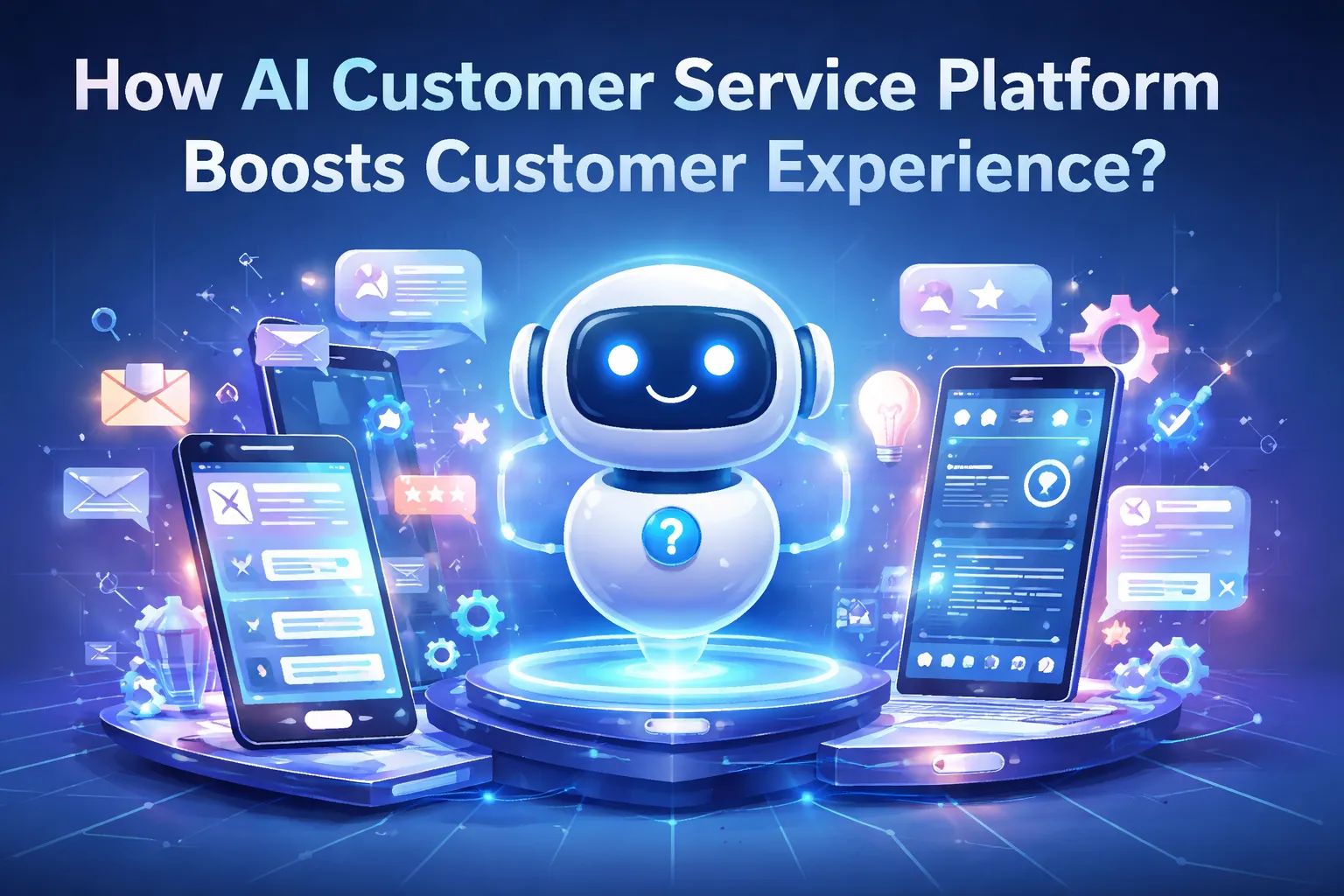
How an AI Customer Service Platform Boosts Customer Experience?
Implementing an AI customer service platform does more than cut costs; it fundamentally restructures how value is delivered to the client. By removing friction and wait times, businesses see an immediate improvement in Net Promoter Scores (NPS) and lead conversion rates. Below are the specific mechanisms through which these platforms drive results.
1. Eliminating Hold Times with Instant Response
The greatest friction point in customer service is the wait time. Human agents can only handle one conversation at a time, creating bottlenecks during peak hours. An AI platform eliminates this by answering every call immediately. There is no queue, no hold music, and no “all agents are busy” messages.
By utilizing advanced voice AI, the system processes the caller’s voice and generates a response in milliseconds, creating a fluid conversation. This immediacy signals respect for the customer’s time. Implementing a reliable 24/7 call answering service ensures that every lead is captured the moment they express interest, drastically reducing the bounce rate to competitors.
2. Intelligent Call Routing for Faster Resolution
Traditional phone systems rely on clunky keypad menus (“Press 1 for Sales”) that often misroute customers. An AI customer service platform uses natural language processing to understand exactly what the caller needs effectively bypassing the menu maze.
The system analyzes the spoken request—whether it is a billing question, a scheduling need, or a technical issue—and directs the data or the call flow accordingly. If the query requires human intervention, intelligent call routing ensures it goes to the exact specialist needed, accompanied by a transcript of the interaction so the client never has to repeat themselves. An automated call routing system reduces average handle time (AHT) significantly, respecting the efficiency that modern consumers demand.
3. Seamless Appointment Booking via Bi-Directional Sync
For service-based businesses, the primary goal of a call is often to secure an appointment. Human receptionists must toggle between screens, ask for dates, and manually input data, which leaves room for double-booking errors.
AI platforms utilize bi-directional calendar sync to read availability in real-time from platforms like Google Calendar or Outlook. The AI negotiates a time with the caller (“I have Tuesday at 2 PM available”) and instantly books it into the CRM. This capability transforms the system into a high-performing AI appointment booking engine that works autonomously.
The reduction in friction during the booking process directly correlates with higher show rates and revenue, or allows users to check the status of an existing order without requiring an account number. This level of context retention creates a sense of familiarity and care. By deploying an AI phone assistant that has access to historical data, you transform a cold transaction into a warm, personalized relationship builder.
5. Multi-Channel Support and Consistency
Modern customers move fluidly between email, web chat, and phone calls. A robust platform offers multi-channel support, ensuring the experience is consistent regardless of the medium. The AI maintains the context of the conversation; if a customer asks a question via chat and later calls to follow up, the system understands the history.
This creates an omnipresent support structure where virtual assistants and chatbots share the same brain. For businesses utilizing an online phone answering service, this consistency prevents the frustration of disjointed communication and builds trust in the brand’s operational competence.
6. Managing High Concurrency Without Degradation
Scalability is a massive challenge for human teams. A marketing campaign might generate 50 simultaneous calls, overwhelming a standard front desk. An AI platform handles unlimited concurrency, meaning it can speak to 50, 100, or 1,000 people simultaneously without a drop in quality or speed.
This is critical for businesses with seasonal spikes or aggressive marketing strategies. The ability to scale up instantly ensures that the customer experience remains excellent even during a viral moment. An automated call answering service guarantees that your capacity to sell is never limited by your capacity to answer the phone.
7. Lead Qualification and Filtering
Not every caller is a qualified prospect. Spending human capital on spam calls or low-value inquiries wastes resources. An AI platform acts as a sophisticated gatekeeper, asking qualifying questions to determine user intent before passing a lead to a sales representative.
The AI can identify budget, timeline, and specific needs using sentiment analysis and logic flows. It filters out solicitors and prioritizes high-value prospects for immediate attention. This strategic AI auto attendant function ensures your expensive human sales talent only speaks to people ready to buy, optimizing operational overhead and improving team morale.
8. Proactive Engagement via Predictive Analytics
Advanced platforms are moving beyond reactive answering to proactive service. By utilizing predictive analytics, the AI can anticipate why a customer might be calling based on recent triggers (e.g., a shipped order or a missed payment).
Furthermore, the system can initiate outbound calls for appointment reminders or follow-ups on inquiries, reducing no-show rates. An AI scheduling assistant that proactively manages the calendar ensures that the customer feels supported throughout their journey, rather than just when problems arise.
9. 24/7 Self-Service Portals for Routine Queries
A significant percentage of business calls are routine questions: “What are your hours?” “Where are you located?” or “What is the status of my ticket?” AI-driven helpdesk features and self-service portals handle these queries without human involvement.
This empowers customers to get answers instantly, even at 2 AM, without navigating complex websites. By offloading these Tier-1 queries to an AI business phone system, you free up human agents to deal with complex, high-empathy situations that actually require emotional intelligence.
10. Data-Driven Insights for Continuous Improvement
Every conversation effectively becomes a data point. AI platforms transcribe and analyze calls to identify trends, complaints, and bottlenecks in the customer journey. This provides management with actionable intelligence that is often missed in manual call logging.
If the AI notices a spike in questions about a specific pricing tier, management can adjust the website copy or training materials immediately. Utilizing a virtual receptionist service allows for this continuous feedback loop, ensuring the business strategy evolves in lockstep with actual customer needs.
What Industries Benefited By AI Receptionists?
While any business with a phone line benefits from automation, specific industries see a higher ROI due to the nature of their client interactions and appointment dependencies.
Legal Services & Law Firms
Attorneys are often in court or meetings, making them inaccessible to new clients. A missed call here is a lost retainer. A virtual receptionist for law firms ensures intake forms are completed via voice and consultations are booked immediately, projecting professionalism and capturing high-value cases 24/7.
Med Spas & Aesthetic Clinics
For aesthetic clinics, the booking process involves specific questions about treatments and recovery times. An AI receptionist creates a private, judgment-free zone for clients to ask questions. Med spas & aesthetic clinics use these systems to reduce no-shows through automated reminders and deposits, securing revenue streams.
Home Services (Plumbing, HVAC, Electrical)
Emergencies happen outside of business hours. If a pipe bursts at midnight, the customer calls the first plumber who answers. Home services companies utilize AI to capture these emergency jobs instantly, dispatching information to on-call technicians without waking up an office manager.
Marketing Agencies
Agencies drive leads for clients, but if those leads aren’t answered, the campaign fails. Marketing agencies implement AI solutions to ensure every lead generated by their ads receives an instant follow-up call, proving ROI to their clients and increasing retention.
Which AI Receptionist Provider Should You Choose?
Selecting the right provider is critical. You need a solution that balances technical sophistication with ease of use. Key factors include the latency of the voice AI (it must sound natural), the depth of CRM integration, and compliance with data standards like HIPAA or GDPR.
The DBT AI excels in these areas by focusing specifically on the conversion aspect of the call. We are not just a voicemail replacement; we are an active growth engine.
The DBT AI features a proprietary conversational engine designed to sound indistinguishable from a human agent. Our system offers deep app integration with major CRMs like HubSpot and GoHighLevel, ensuring your data flow is completely automated.
Whether you need a white label answering service to resell to your own clients or a dedicated AI receptionist to to provide instant, personalized, and accurate support 24/7 is the differentiator that separates market leaders from the rest. As predictive analytics and neural voice models continue to advance, the gap between businesses using AI and those relying on traditional methods will only widen.
The future of customer experience is proactive, instant, and data-driven. To see how this technology can transform your appointment setting and lead management, schedule a trial with The DBT AI today and stop leaving revenue on the table.
Frequently Asked Questions (FAQs)
How is an AI customer service platform different from a chatbot?
Chatbots are typically text-based interfaces found on websites that follow simple decision trees. An AI customer service platform, specifically an AI voice receptionist, manages complex voice interactions over the phone. It utilizes advanced speech synthesis and recognition to hold natural conversations, manage interruptions, and perform tasks like booking meetings, which simple chatbots cannot do.
Will the AI sound robotic to my customers?
Modern platforms utilize neural text-to-speech technology that mimics human intonation, pacing, and emotion. The goal of a best AI answering service is to provide an experience so fluid that the caller often forgets they are speaking to a machine. The DBT AI specifically optimizes for low latency to prevent the awkward pauses typical of older systems.
Can the system integrate with my existing calendar?
Yes. Integration is a core feature of effective automation. Systems like The DBT AI offer bi-directional sync with Google Calendar, Outlook, and others. This allows the AI scheduling assistant to read your real-time availability and add new appointments directly to your schedule without any manual data entry.
Is my customer data secure with AI?
Data privacy is paramount. Reputable AI platforms are built with enterprise-grade security protocols, including encryption for data in transit and at rest. If you are in a regulated industry like healthcare, it is vital to choose a provider that supports compliance standards. You can read more about software qualities in our guide on ai receptionist software.
How difficult is it to set up an AI receptionist?
Setup time has decreased significantly with modern no-code solutions. You can typically configure your business knowledge base, connect your calendar, and go live within a short period.