Every missed call represents a fracture in your revenue pipeline. Statistics suggest that businesses lose between 30% to 50% of potential leads simply because no one was available to answer the phone. In an era where consumers demand instant gratification, sending a high-intent prospect to voicemail is essentially handing them over to a competitor.
The AI receptionist market has evolved rapidly from basic auto-attendants to sophisticated neural networks capable of complex negotiation. As we look toward 2026, the technology is moving beyond simple call routing into the realm of total workflow automation. This shift is not just about replacing a front desk agent; it is about deploying an always-on, infinite-capacity system that captures revenue 24/7. Businesses adopting these solutions are seeing drastic reductions in operational overhead while simultaneously increasing lead conversion rates.
What Is AI Receptionist Market?
The AI receptionist market consists of advanced voice AI solutions designed to manage inbound and outbound business communications without human intervention. At its core, this technology utilizes large language models (LLMs) and natural language processing (NLP) to understand user intent, context, and nuance. Unlike traditional IVR systems that require customers to “press 1 for sales,” modern conversational AI engages in fluid, human-like dialogue.
This market sector focuses on solving the latency and scalability issues inherent in human staffing. By leveraging neural text-to-speech and bi-directional calendar sync, these systems qualify leads and book appointments in real-time. The trajectory of this market indicates a move toward autonomous agents that do not just answer calls but actively manage customer relationships through deep CRM integration.
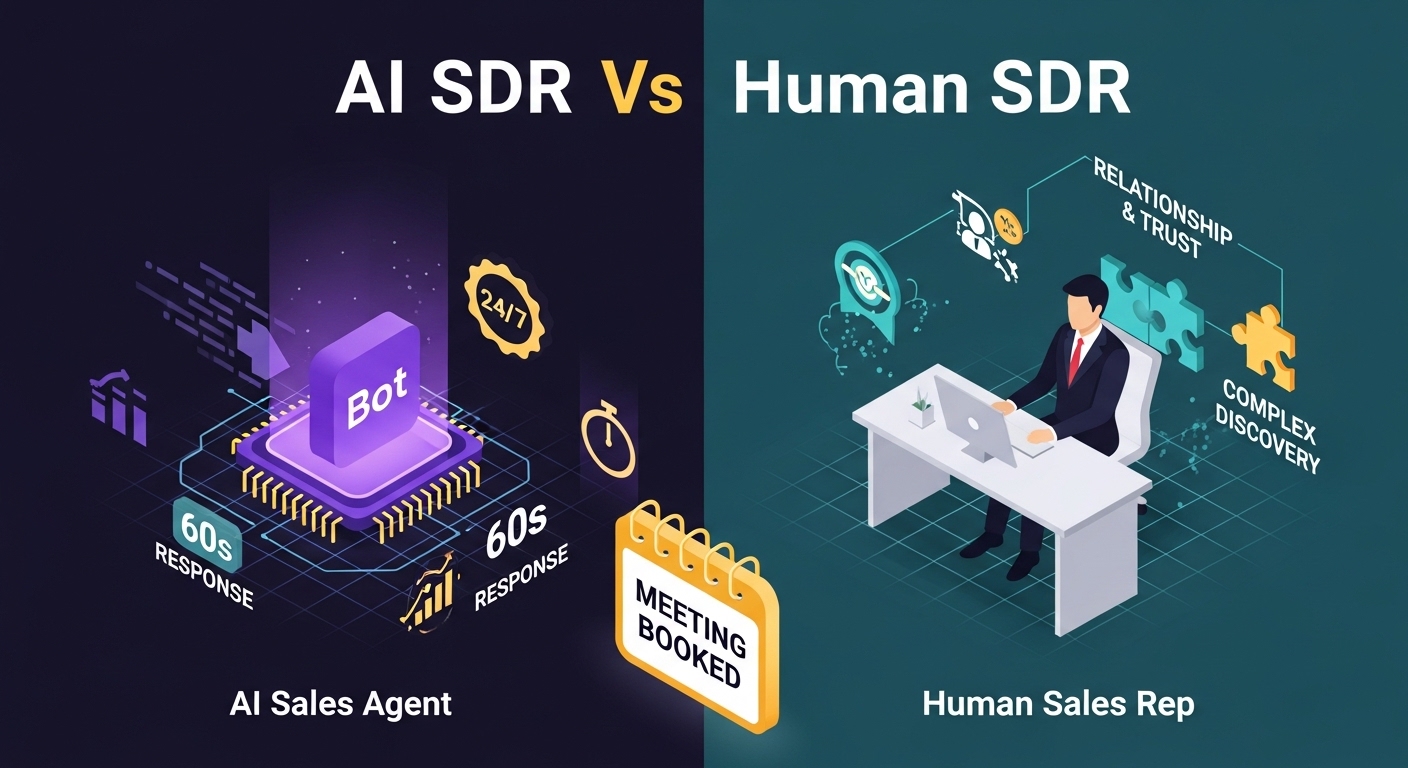
| Feature | Traditional Human Receptionist | AI Receptionist Solution |
|---|---|---|
| Availability | Limited to 8-hour shifts | 24/7 availability with zero downtime |
| Concurrency | Handles 1 call at a time | Unlimited concurrent calls simultaneously |
| Response Time | High latency (hold times common) | Instant lead response (sub-200ms latency) |
| Cost Efficiency | High salary + benefits overhead | Up to 90% reduction in operational costs |
| Data Entry | Prone to human error | Automated, error-free CRM entry |
| Lead Conversion | ~65% appointment confirmation | 80-85% confirmation via instant booking |
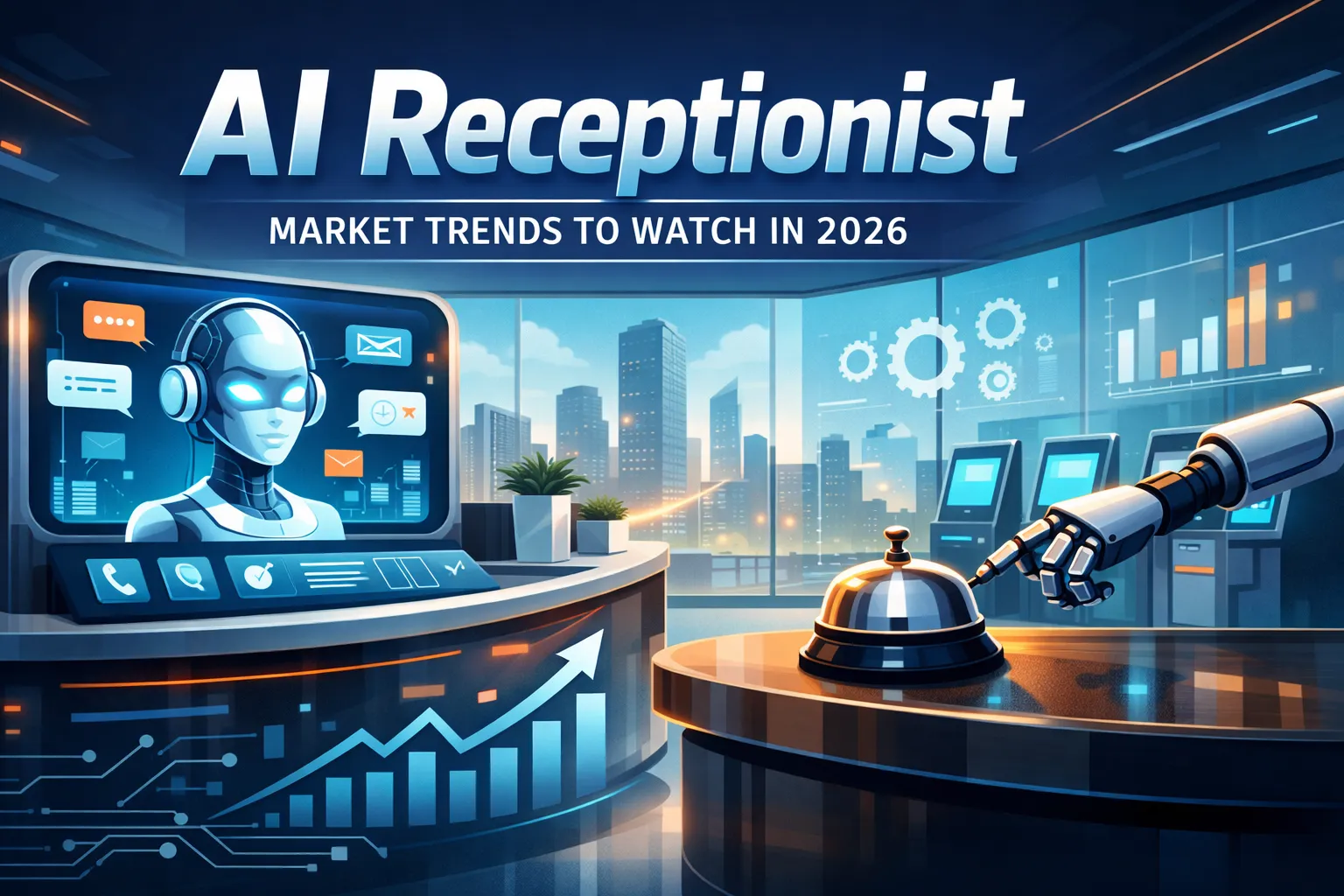
AI Receptionist Market Trends to Watch in 2026
The landscape of voice automation is shifting from novelty to necessity. By 2026, the technology will be indistinguishable from human interaction in 99% of use cases. Below are the critical trends defining the future of the AI receptionist market.
1. Hyper-Realistic Neural Voice Engines
The primary barrier to entry for voice AI has historically been robotic intonation. By 2026, neural text-to-speech models will have advanced to the point where distinguishing an AI from a human will be nearly impossible. These models will include pauses, breath intakes, and filler words (“um,” “uh”) to mimic natural human cadence. This reduction in “robotic” feel is crucial for building trust during the first few seconds of a call. When you deploy an AI automated receptionist voice, the focus shifts from the novelty of the tech to the quality of the conversation. This results in higher engagement rates and fewer hang-ups.
2. Predictive User Intent Analysis
Future iterations of conversational AI will not just react to what is said; they will predict user intent based on historical data and real-time context. Using advanced NLP, the system will analyze the caller’s phone number against existing CRM data to anticipate the reason for the call before the customer finishes their sentence. If a client calls a private healthcare clinic, the AI will know they are due for a check-up and proactively offer appointment slots. This predictive capability significantly reduces call duration and friction, leading to a smoother customer experience (CX).
3. Real-Time Sentiment Analysis and Adaptation
Emotional intelligence is becoming a standard feature in high-end AI models. In 2026, AI receptionists will utilize live sentiment analysis to detect frustration, urgency, or hesitation in a caller’s voice. If a caller sounds agitated, the AI will automatically adjust its tone to be more empathetic and apologetic, or intelligently route the call to a human specialist if the sentiment score drops below a certain threshold. This capability ensures that AI receptionist customer service maintains high satisfaction scores even during difficult conversations.
4. Deep Bi-Directional CRM Integration
The days of siloed communication tools are ending. The standard for 2026 involves deep, bi-directional integration where the AI acts as a direct interface for platforms like Salesforce, HubSpot, and GoHighLevel. When an AI phone assistant books a meeting, it doesn’t just block a calendar slot; it creates a contact, logs the transcript, tags the lead source, and triggers automated follow-up workflows. This eliminates manual data entry, ensuring that your sales team wakes up to a calendar full of qualified appointments rather than a list of unvetted leads.
5. Autonomous Outbound Lead Reactivation
While inbound handling is critical, the 2026 market trend emphasizes aggressive outbound capabilities. AI Appointment Setters will autonomously mine old lead databases to reactivate dormant prospects. By scanning the CRM for leads that haven’t engaged in 90 days, the AI can initiate calls to offer special promotions or check-ins. This turns a static database into a dynamic revenue source. Companies using an AI appointment booking system for reactivation campaigns often see an immediate ROI by monetizing leads they had previously written off.
6. Zero-Latency Edge Computing
Human-like latency is the holy grail of conversational AI. To achieve natural back-and-forth conversation, the delay between a user speaking and the AI responding must be under 300 milliseconds. The trend for 2026 involves moving processing power closer to the edge (Edge AI) rather than relying solely on centralized cloud servers. This reduction in latency prevents the awkward “talking over each other” phenomenon. A faster, more responsive 24/7 call answering service feels more professional and keeps the conversation flowing naturally.
7. Multilingual and Dialect Adaptability
Global business requires global communication. Future AI models will not only speak multiple languages but will switch between them fluently within a single conversation based on the caller’s preference. Furthermore, these systems will understand regional dialects and accents with high precision. For businesses operating in diverse markets, a bilingual AI receptionist eliminates language barriers, ensuring that non-native speakers receive the same level of service and lead qualification as native speakers.
8. Enhanced Data Privacy and Compliance
As AI deployment scales, so does scrutiny regarding data privacy. The 2026 market will demand rigorous adherence to GDPR and HIPAA compliance standards. AI receptionists will feature automated PII (Personally Identifiable Information) redaction in call transcripts and secure, encrypted storage for voice data. This is particularly vital for sectors like law and healthcare. Implementing a compliant virtual receptionist for law firms ensures that client confidentiality is maintained without sacrificing the efficiency of automation.
9. Omni-Channel Context Retention
Voice is just one touchpoint. The trend for 2026 is the seamless handover of context between voice, SMS, and email. If a caller agrees to an appointment over the phone, the AI immediately sends an SMS confirmation and an email calendar invite. If the user replies to the SMS later to reschedule, the system recognizes the context from the previous call. This unified approach transforms a standard AI phone answering service into a holistic communication hub that manages the entire customer journey.
10. Self-Correcting Knowledge Bases
AI systems in 2026 will possess the ability to “learn” from corrections instantly. If a business updates its pricing or hours, the AI won’t need complex reprogramming. It will ingest the new information from a connected knowledge base or website update and apply it to the very next call. This dynamic learning capability is essential for AI receptionists operation, as it ensures the information provided to callers is always accurate, preventing the frustration of outdated answers.
11. Expansion of White-Label Solutions
Agencies are increasingly looking to resell voice AI as part of their service suite. The market is seeing a surge in demand for white label answering service platforms that allow marketing agencies to brand the technology as their own. This allows agencies to offer lead nurturing as a service, increasing client retention. It effectively democratizes access to enterprise-level AI, making it available to small businesses through their trusted agency partners.
12. Intelligent Call Routing and Triage
Finally, the “receptionist” aspect will evolve into intelligent triage. Rather than just taking a message, the AI will use logic trees to determine if a call constitutes an emergency or a high-value sales opportunity. It will then use intelligent call routing to patch the call through to specific departments or on-call staff immediately. This ensures that while low-level queries are automated, high-stakes interactions are prioritized for human connection.
What Industries Benefited By AI Receptionist?
While almost any business with a phone line can benefit, specific verticals are seeing outsized ROI from this technology.
Legal Services
Law firms are notoriously busy, and missing a client intake call can cost thousands in billable hours. An AI solution acts as a virtual receptionist for law firms, performing initial legal intake, checking for conflicts of interest via CRM data, and scheduling consultations directly into the partners’ calendars.
Healthcare and Med Spas
For med spas & aesthetic clinics, the front desk is often overwhelmed with rescheduling requests and pricing queries. AI handles these repetitive tasks while maintaining HIPAA compliance, ensuring that staff can focus on patient care rather than the phone.
Home Services
Plumbers, electricians, and HVAC technicians are often in the field and cannot answer the phone. A missed call here is an immediate lost job. Using automation for home services ensures that every emergency service request is captured, quoted, and booked instantly, regardless of the time of day.
Marketing Agencies
Agencies spend heavily to generate leads for clients, but those leads often go cold due to slow follow-up. Marketing agencies use AI receptionists to instantly qualify inbound traffic and execute outbound speed-to-lead campaigns, proving ROI to their clients effectively.
Which AI Receptionist Provider Should You Choose?
Selecting the right provider in a saturated market requires looking beyond basic answering capabilities. You need a partner that prioritizes ROI, semantic understanding, and integration depth.
The DBT AI positions itself as a market leader by focusing on the metrics that matter: appointment setting and lead conversion. Unlike generic bots, The DBT AI utilizes advanced sentiment analysis and human-like latency to ensure conversations feel natural. Our platform offers robust app integration with major CRMs like Salesforce and HubSpot, ensuring that data flows seamlessly into your existing ecosystem.
For businesses needing a robust AI business phone system, The DBT AI provides a turnkey solution that includes bi-directional calendar sync and intelligent call routing. Whether you need a virtual receptionist service for inbound support or an aggressive outbound setter, our logic is built to convert.
To understand the full scope of what is possible, you can review our features or read specifically about how 24/7 AI receptionist handles volume.
Conclusion
The AI receptionist market in 2026 is defined by speed, intelligence, and seamless integration. The trends point toward a future where businesses operate with zero operational drag, capturing every lead and optimizing every interaction through data. Adopting these technologies now places your business ahead of the curve, ensuring you never miss a revenue opportunity again.
To see these capabilities in action and understand how they apply to your specific workflow, let us demonstrate The DBT Ai for you today.
Frequently Asked Questions (FAQs)
How much can an AI receptionist save my business?
Businesses typically see a reduction in operational overhead by up to 90% compared to hiring full-time staff. By using an online phone answering service powered by AI, you eliminate costs associated with salaries, benefits, and training while gaining 24/7 coverage.
Is the voice quality realistic enough for professional use?
Yes. Modern solutions utilize neural text-to-speech technology that includes natural pauses and intonations. This low-latency, high-fidelity audio ensures that callers often do not realize they are speaking to an AI automated receptionist voice.
Can the AI system integrate with my existing calendar?
Absolutely. Top-tier providers offer bi-directional calendar sync. This means the AI scheduling assistant can read your availability in real-time to avoid double bookings and instantly write new appointments to your Google, Outlook, or system will warm-transfer the call to a designated human staff member, passing along the call context and transcript.
Is customer data secure with AI receptionists?
Yes, enterprise-grade AI solutions prioritize data privacy. They comply with major regulations like GDPR and HIPAA, ensuring that call logs and customer details handled by the AI receptionist platform are encrypted and stored securely.