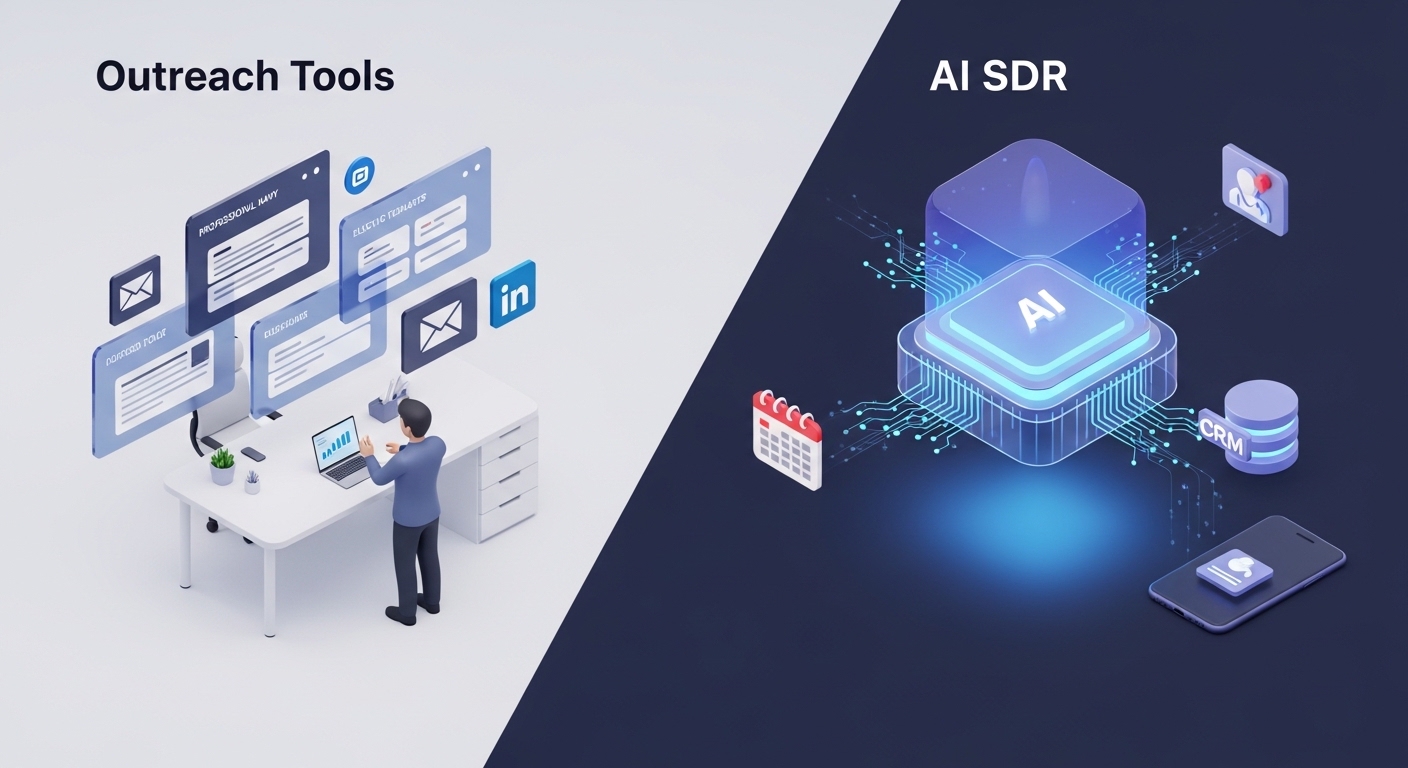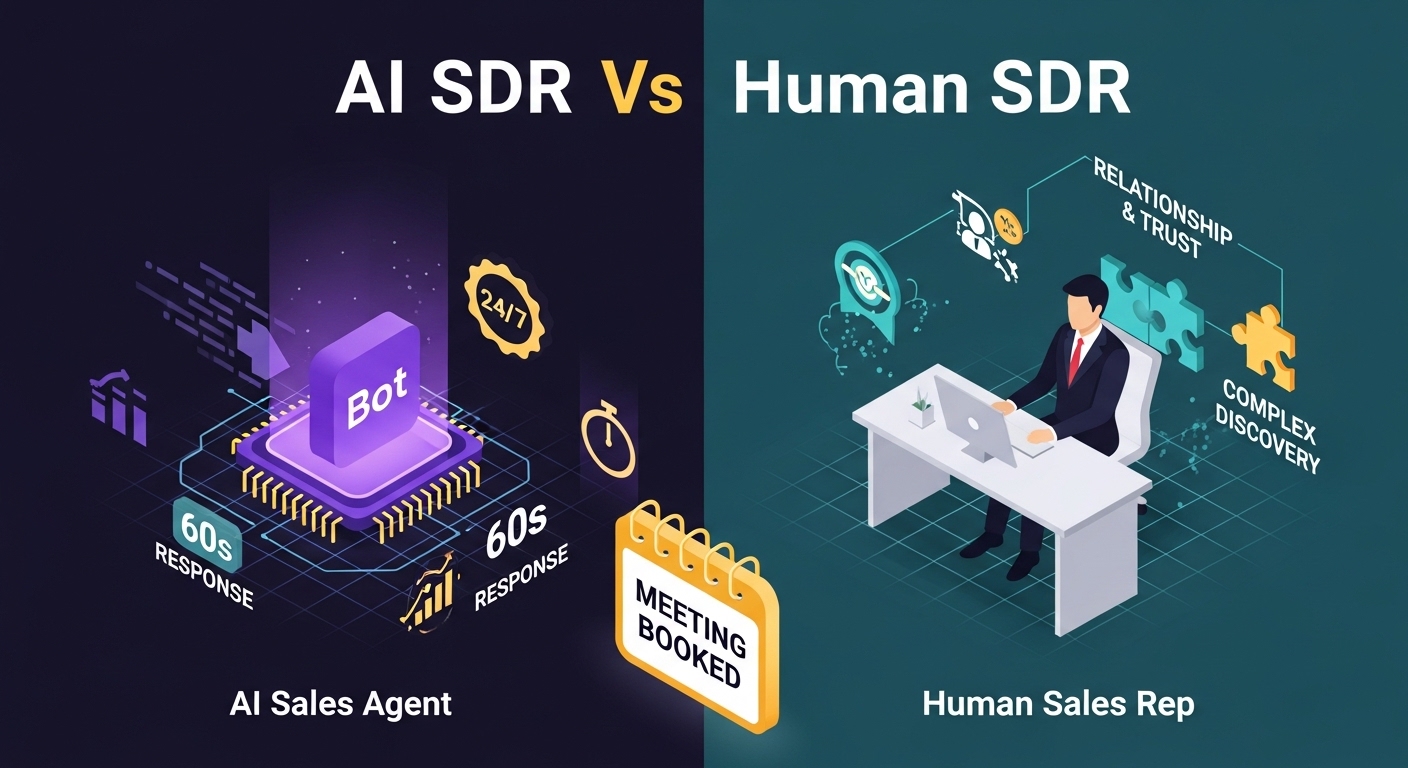
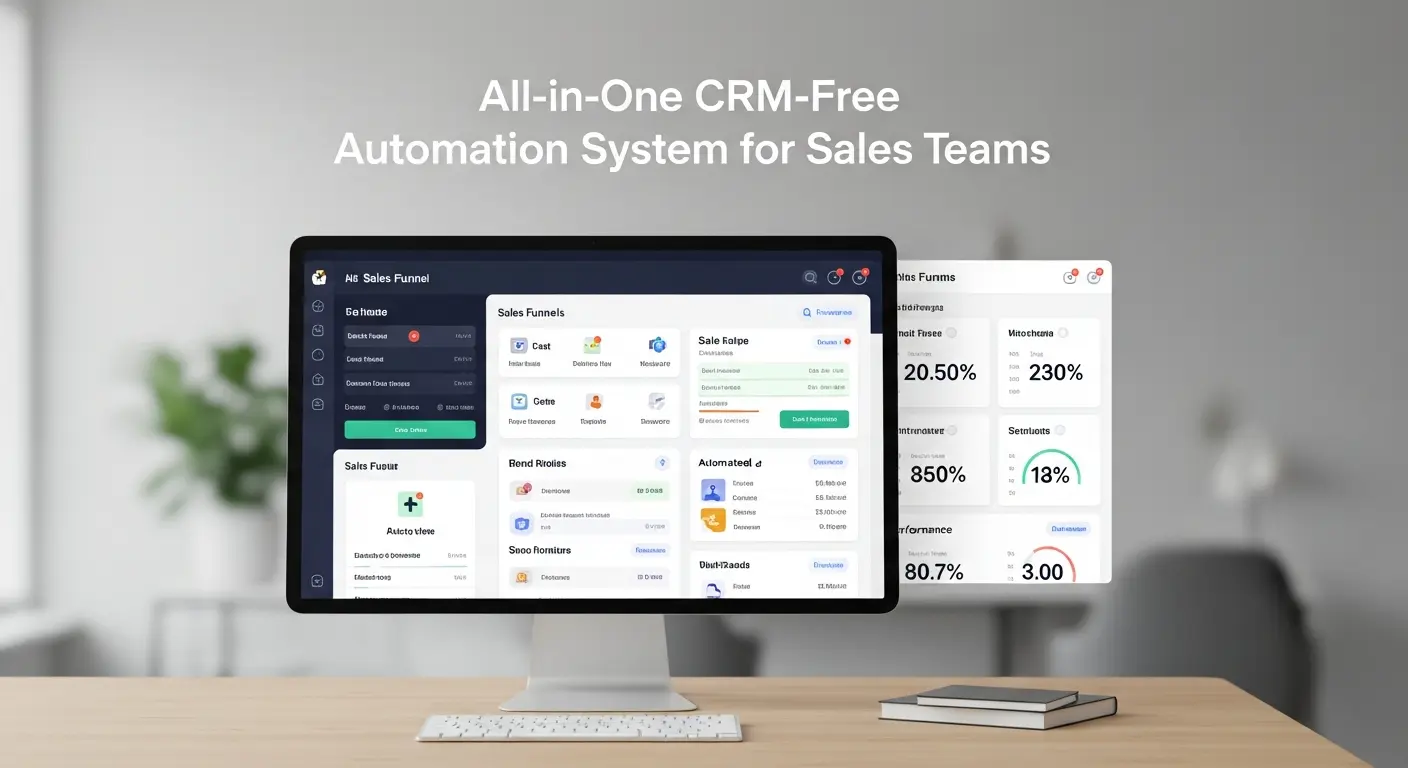
Sales teams nowadays are surrounded by tools. CRMs, dialers, schedulers, email trackers, spreadsheets, each all promising control, visibility and growth. Yet despite the pile of this stack, many sales teams are still plagued by slow follow-ups, missed opportunities, and low productivity.
The problem isn’t in the area of software. It’s the dependency upon systems that focus on record keeping over revenue. This is why many modern sales teams are moving towards an all-in-one, CRM-free system of automation, a setup designed to run sales operations in an automated way, without forcing reps to manage software instead of selling.
What Does “CRM-Free Automation” Even Mean?
CRM-free automation doesn’t mean running around willy-nilly and blindly. It means eliminating the need for a traditional CRM as the main operating system for sales.
In a CRM-free model, the workflow automation operates behind the scenes, and sales teams focus on having conversations and closing.
At a high level, in this way, this approach substitutes manual CRM tasks with:
- Automated capturing and enrichment of leads.
- Provided qualification logic is inbuilt.
- Automatic follow-ups and scheduling of appointments.
- Passive data tracking (No rep involved).
The system works whether or not someone remembers to “update the CRM.”
Why Traditional CRMs Often Slow Sales Teams Down?
CRMs were first designed to store customer information and keep track of deals. Over time, they had become complex systems that required constant manual input, configuration and maintenance. For many sales teams, this causes the CRM to become a bottleneck and not a growth engine.
Sales reps don’t wake up feeling passionate about updating fields or making calls. When tools create friction, adoption falls and when adoption falls, the data is not reliable.
Challenges of using traditional CRMs tend to include:
- Heavy setup and customization before they’re usable.
- Manual data entry that robs you of selling time.
- Low usage by sales reps, particularly in fast moving teams.
- Disconnected tools for calling, scheduling and follow-ups.
Instead of becoming a way to help things get faster, CRMs can create an administrative overhead that slows things down.
How an All-in-One CRM Free System Works?
Dashboards are secondary to outcomes, an all-in-one CRM-free automation system is outcome-based. The goal is simple – get a lead from first contact to booked meeting or next sales action with minimal human intervention.
Rather than having reps control the steps, the system is in charge of the flow automatically.
A typical workflow is as follows:
- A lead comes in from inbound calls, forms, or other inbound channels.
- The system uses predefined rules to qualify the lead.
- Sales conversations are triggered or routed automatically.
- Appointments are scheduled through direct calendars.
- Activity data is captured in a silent manner for the sake of visibility and reporting.
Sales teams remain focused on selling and the system takes care of the rest.
Core Components of a CRM Free Sales Automation System
While all platforms are different, the best CRM-free systems have some basic components. These elements are a replacement for the traditional CRM without forfeiting control or insight.
1. Automated Lead Management
Leads are automatically captured, enriched and organized. Sales reps never have to manually create or update records, with less friction and data loss.
2. Workflow and Automation Logic
Workflow automation rules are defined as to what occurs next, who is to be contacted, when follow-ups occur, how leads are routed, etc. This helps to provide uniformity to the entire sales team.
3. Scheduling and Automation of Calendar
Meetings are booked on real-time basis as per the availability. This eliminates coordination back and forth and improves show up rates. The system functions as an automated appointment maker, ensuring your calendar stays full without manual coordination.
4. Centralized Communication Handling
Calls, messages, and handoffs are handled in a single flow and the context is maintained without having to manually log the call.
Together, these parts form a system without constant human input to carry out sales operations.
CRM Free Automation vs Traditional CRM
The difference between CRM free automation and traditional CRMs isn’t about features; it’s a difference of philosophy.
Traditional CRMs are documentation oriented. The execution focus of automation-first systems. One is asking sales reps to report what happened, the other is making things happen automatically.
In practice, this results in:
- Increased speed in response rather than improved reports.
- Fewer tools as opposed to deeper configurations.
- Increased rep productivity rather than increased admin accuracy.
CRMs still make sense in a complex enterprise environment. But for many sales teams, especially inbound lead-driven and appointment-based teams, automation-first systems are simply more practical.
Which Sales Teams Benefit Most from CRM Free Systems?
CRM-less automation is not for all organizations. It is best used by teams that are more interested in speed, simplicity, and efficiency of conversion than in extensive data modeling.
These are the top industries that can benefit the most from a CRM-free system:
- Marketing, AI automation agencies, and service-based business companies.
- Coaches & consultant teams in which reps don’t like manual CRM updates.
- Appointment-driven businesses like aesthetic clinics or dental healthcare providers.
Sales teams that benefit the most include:
- Inbound sales teams are dealing with a lot of leads.
- Appointment-driven businesses.
- Agencies and service-based business companies
- Teams in which reps don’t like manual CRM updates.
For these teams, eliminating CRM friction directly improves performance.
Where The DBT AI Fits In?
The DBT AI is developed as an all-in-one and CRM-free automation system built especially for inbound sales and appointment-based workflows. Instead of being a passive database, it acts as an active sales assistant to take care of conversations, qualification and booking automatically.
It functions as:
- An AI-powered lead handler.
- A qualification and routing engine.
- An automated appointment maker.
By eliminating CRM dependency, The DBT AI enables sales teams to have more time for high-intent conversations, rather than software maintenance.
Major strengths of The DBT AI are:
- No CRM required to function well.
- Real-time Automation across inbound channels.
- Built-in qualification and scheduling logic.
- Clean handoffs using structured data capture.
The effect of this is a system of selling that sells itself while teams sell.
Common Concerns about Going CRM-Free
Sales leaders are reluctant to abandon CRMs because of visibility and control issues. These are legitimate concerns that are usually made with outdated assumptions.
Modern-day automation systems still offer:
- Clear performance tracking without needing to input anything into the system.
- Visibility of calls, bookings, and outcomes.
- Scalable workflows as teams scale.
The difference is that the collection of data occurs automatically, not as a burden on the sales reps.
The Future of Sales Operations is Automation – First
Sales teams are under pressure to move faster, be able to respond instantly and even personalize their conversations at scale. Systems based on manual updates and dirty piece-meal tools simply can’t keep up.
Automation-first, CRM free systems are a move away from more tools, muddy workflows, and less efficient conversions. They don’t replace salespeople; they eliminate everything that slows them down.
Conclusion
Sales teams are not there to manage systems but to sell. When tools require constant attention, performance is affected.
An integrated CRM-free automated system enables sales teams to work at full speed, nailing leads, qualifying prospects, and scheduling meetings without friction. For businesses that are interested in growth, systems such as The DBT AI are a modern, practical alternative to traditional CRMs.
The less time your team has to spend updating software, the more time they have to make deals.