BB revenue is rarely lost because it is “bad.” More often, it’s lost in the gap between interest and follow-up. Someone downloads a whitepaper, requests pricing, visits the demo page twice, then… waits. Maybe your SDR team is in another time zone, maybe the lead routed incorrectly, or maybe the rep meant to follow up but got pulled into internal meetings. In 2026, that gap is exactly where AI appointment setters shine.
An AI appointment setter is more than a chatbot that drops a calendar link. The tools now manage the entire path from first response → qualification → routing → scheduling → reminders → rescheduling, while syncing everything into your CRM. They operate across channels (chat, email, SMS, and increasingly voice), and they do it instantly, 24/7, with consistent qualification logic.
For B2B sales teams, the ROI is straightforward:
- Faster speed-to-lead: high-intent buyers get an immediate response, not tomorrow’s follow-up.
- More consistent qualification: fewer “bad-fit” meetings clog your calendar.
- Higher booking throughput: AI handles volume spikes without fatigue.
- Cleaner CRM data conversations, answers, and next steps can be logged automatically.
Below are the top 10 AI appointment setters for B2B sales in 2026, chosen for real-world performance factors like calendar automation, qualification depth, integration ecosystem (Salesforce/HubSpot/etc.), and how well they support modern B2B buying behavior.
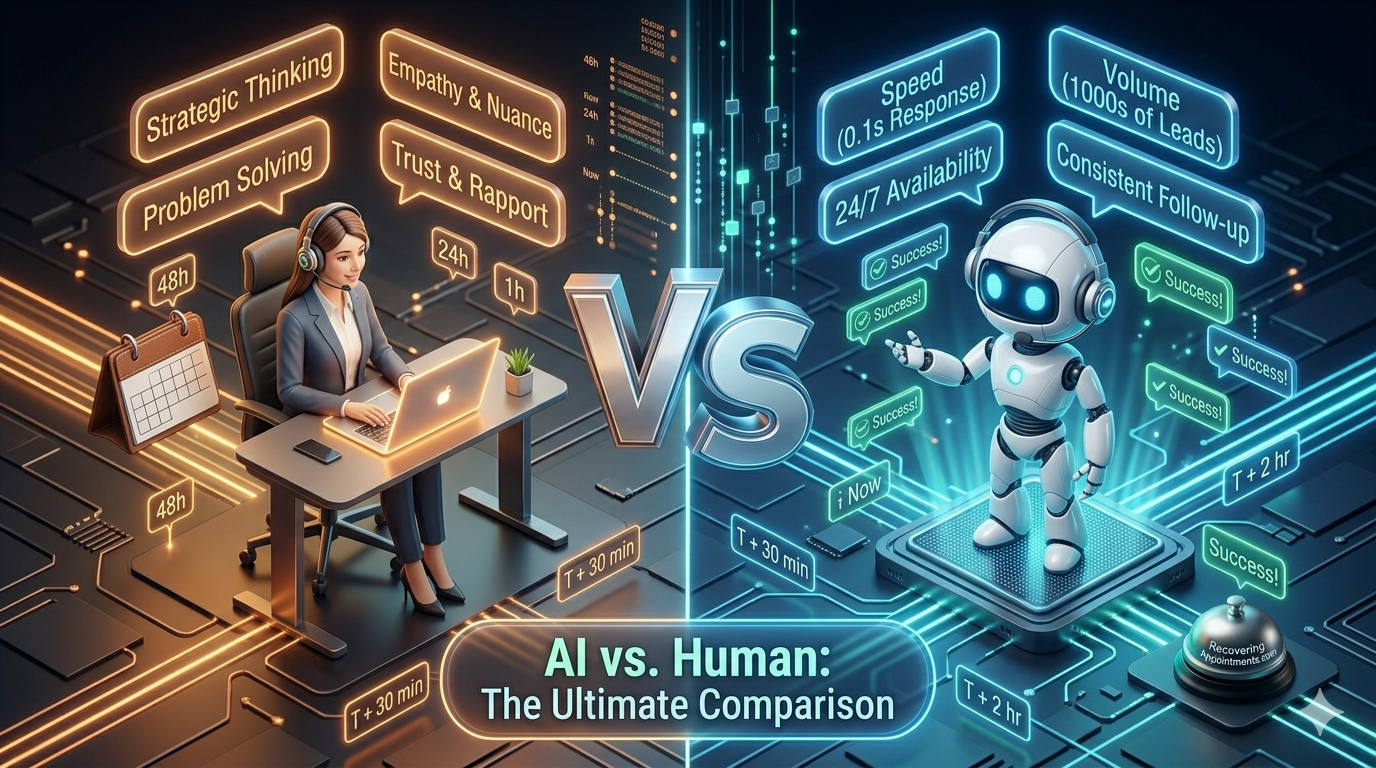
AI Appointment Setters vs Traditional SDR Scheduling
Before the rankings, here’s the practical difference between “people-only scheduling” and AI-supported scheduling.
| Metric | Traditional SDR scheduling | AI appointment setter approach |
|---|---|---|
| Availability | Business hours | 24/7 coverage and rapid response |
| Scheduling speed | hours/days | Seconds/minutes with calendar sync |
| Qualification consistency | Variable by rep | Rules + intent detection + structured flows |
| Data capture | Manual notes | Automatic CRM logging and tagging |
| Scalability | Limited by headcount | Handles high volume concurrently |
| Cost per booked meeting | Higher (labor-heavy) | Often lower (software-driven scale) |
The takeaway: AI doesn’t replace your sales team’s judgment for complex deals—it protects seller time by taking over the repetitive, high-volume parts of qualification and booking.
What Makes an AI Appointment Setter “Best” in 2026?
Not every tool that “books meetings” is built B2B reality. In 2026, the best platforms tend to excel in seven areas:
- True qualification (not just scheduling): Ability to ask ICP-specific questions (budget, timeline, role, use-case), score the lead, and decide whether to book, route, or nurture.
- Channel coverage: Chat + email + SMS are common; voice is increasingly important for inbound and missed-call conversion.
- Bi-directional calendar sync: Not just “pick a slot,” but real-time conflict checks, rescheduling, cancellation handling, and round-robin logic.
- Deep CRM integration: Create/update leads and contacts, log conversation context, set lifecycle stages, and trigger workflows.
- Routing and handoff: Smooth escalation to a human rep for edge cases, objections, or enterprise-specific needs.
- Concurrency & reliability: Supports sudden lead spikes (campaign launches, webinars, paid traffic bursts) without delays or downtime.
- Compliance and security posture: Especially relevant in regulated industries where call logs, consent, and data handling matter.
With those criteria in mind, here are the top tools.
Top 10 Best AI Appointment Setters for B2B Sales in 2026
We have evaluated the market leaders based on B2B performance metrics: meeting show-up rates, pipeline velocity, and return on investment (ROI).
1) The DBT AI — Best for full-cycle voice-led booking and qualification
If your business relies on inbound calls, voice conversations, or phone-first workflows, The DBT AI stands out as a full-cycle appointment setter that can handle the end-to-end flow: engage, qualify, route, and book with calendar synchronization.
Why it’s ranked #1 for B2B in 2026
- Voice-first conversations that feel natural, reducing drop-off during booking
- Custom qualification paths tailored to your ICP (e.g., decision-maker check, use case, urgency)
- Strong integration alignment with major CRMs and scheduling systems
- Built to handle high volume with minimal wait, ideal for lead surges
Best for: SaaS, agencies, consultancies, and service businesses where speed-to-lead and phone coverage directly impact pipeline.
When you want a provider that ties these pieces together into an operational system, The DBT AI is built specifically for AI receptionist and appointment-setting outcomes—so you can capture leads, qualify them, and book meetings in seconds using production integrations and workflow controls. You can review how the platform is structured in The DBT AI features and see how it fits your current stack through CRM integration.
2) Conversica — Best for multi-touch follow-up that converts “stalled” leads
Conversica has built its reputation on automated two-way conversations that keep following up until the prospect responds, qualifies, or opts out. In B2B, that consistency is often the between “lead captured” and “meeting booked.”
Strengths
- Excellent at re-engaging leads that didn’t respond to a human sequence
- Works well across email/SMS-style and nurturing
- Strong CRM logging and lead status updates
Watch-outs
- If you need heavy voice automation, you may pair it with a phone-focused system.
Best for: Mid-market and enterprise teams with large lead databases and long nurture cycles.
3) ZoomInfo (with AI functionality) — Best for data-driven outbound meeting creation
ZoomInfo is primarily known for its B2B contact and company intelligence. In 2026, its AI layers help teams identify likely-to-con targets personalize outreach, improve timing—critical ingredients for outbound meeting generation.
Strengths
- Market-leading database depth for account targeting Helpful intent signals and enrichment for segmentation- Strong fit for outbound-heavy motions
Watch-outs
- Often part of a broader outbound stack; scheduling automation may require additional workflow tooling.
Best for: Outbound prospecting teams that win on targeting and timing.
4) Callbox — Best hybrid model for complex B2B appointment setting
Some B2B categories (cybersecurity, fintech, enterprise IT) benefit from a hybrid approach: AI-supported processes combined with human expertise for nuance. Callbox leans into that model, aiming for reliable appointment delivery with global reach.
Strengths
- Good for qualification scenarios and multi-stakeholder deals
- Multi-channel support (phone/email/LinkedIn-style touches depending on program)
- Useful if you want “done-for-you” pipeline assistance, not just software
Watch-outs
- Less “pure automation”; cost and setup can be more program-based than self-serve.
Best for: Teams that want meetings delivered with structured oversight.
5) CIENCE — Best for intent-aware outbound programs with scheduling outcomes
CIENCE operates in the sales development and appointment setting arena with a blend of AI, data, and human execution. It tends to work well for teams wanting predictable outbound tied to qualification and booked meetings.
Strengths
- Strong reporting and outbound program structure
- Incorporates intent and targeting to improve conversion likelihood
- Helpful for teams without internal SDR capacity
Watch-outs
- Not purely autonomous; it’s more of an operational solution than a lightweight AI bot.
Best for: B2B organizations buying meetings as an outcome, not just tooling.
6) MagicBlocks — Best for persistent, relationship-style follow-up across channels
MagicBlocks stands out for maintaining context over time, which matters in B2B where a buyer might go dark for weeks, then resurface. Instead of restarting the, the system can continue with continuity.
Strengths
- Persistent memory-style engagement for longer sales cycles
- Useful for account-based selling where context matters
- Supports cross-channel follow-up and scheduling
Watch-outs
- Fit depends on how complex your routing and compliance needs are.
Best for: ABM and multi-threaded deals where follow-up consistency drives meetings.
7) Scheduler AI — Best scheduling automation for demos and discovery
Scheduler AI focuses on reducing the friction of booking, rescheduling, and preventing calendar conflicts. It’s ideal when your main bottleneck is calendar logistics, not deep qualification.
Strengths Streamlined scheduling and rescheduling
- Works well for demo requests and inbound “book a call” flows
- Cost-effective for smaller teams
Watch-outs
- Typically less robust for complex qualification compared to dedicated conversational AI platforms.
Best for: SMB and mid-market teams that need clean demo booking at scale.
8) Drift — Best for inbound website chat to meeting conversion
Drift remains a strong choice for B2B companies with significant website traffic and an inbound motion. In 2026, its AI-led chat flows focus on identifying intent quickly, qualifying in the moment, and pushing qualified prospects to book.
Strength
- Excellent for converting “right now” website intent into meetings
- Good routing for territories, segments, and lifecycle stages
- Strong ecosystem in B2B marketing and sales stacks
Watch-outs
- Can be premium-priced; ROI is best when you have meaningful traffic volume.
Best for: Inbound-led B2B teams, especially SaaS with high-value demos.
9) Apollo (with AI capabilities) — Best for outbound sequences that lead to booked calls
Apollo is widely used for outbound due to its contact database and sequencing. Its AI features help with personalization and prioritization, making it easier to drive replies then convert those replies into meetings (often via integrated scheduling workflows).
Strengths
- Strong value for outbound teams on a budget
- Helpful automation around sequencing and prioritization
- Pairs well with scheduling tools for end-to-end booking
Watch-outs
- You may still need a specialized appointment-setting layer for complex qualification.
Best for: High-activity outbound teams optimizing cost per meeting.
10) Fireflies — Best for capturing meeting outcomes and accelerating follow-up
Fireflies is best known for transcription, summaries, action items, and CRM updates after meetings. While it’s not a classic “front-end appointment setter,” it’s valuable in the meeting-to-next-meeting loop—where many B2B deals slow down.
Strengths
- Strong conversation intelligence: notes, action items, searchable calls
- Improves follow-up speed and consistency
- Helps managers coach teams and reduce admin load
Watch-outs
- Not typically the system that books the first meeting; it strengthens what happens after.
Best for: Teams that already book meetings but want better conversion and follow-through.
Quick Comparison: Which One Should You Pick?
| If your priority is… | Strong starting point |
|---|---|
| Voice-led qualification + booking | The DB AI |
| Nurturing leads until they respond | Conversica |
| Outbound targeting with rich data | ZoomInfo |
| Hybrid “done-for-you” appointment setting | Callbox / CIENCE |
| Website chat to meeting conversion | Drift |
| Budget outbound sequences | Apollo |
| Better post-meeting follow-up + CRM hygiene | Fireflies |
Industries Seeing the Biggest Gains in 2026
AI setters perform well in industries where leads are, response matters, and qualification is non-trivial:
- Marketing and growth agencies: turning traffic into booked strategy calls quickly
- Saa and BB software: routing by persona, use-case, and company size for higher demo quality
- Consulting and professional services: filtering low-intent inquiries before they take calendar space
- Legal, finance, and regulated services: structured intake, compliant handling, and consistent routing
Conclusion
In 2026, the “best” AI appointment setter isn’t just the one that schedules fastest—it’s the one that books the right meetings, captures clean data, and protects your reps’ time without damaging the buyer experience.
If your business is phone-heavy or needs true end-to-end qualification and booking, start with a voice-capable built for full-cycle appointment setting. If your motion is inbound web chat, prioritize real-time intent routing. If you’re outbound-driven, combine strong data and sequencing with reliable scheduling workflows. The winning teams are the ones treating appointment setting as a system—not a calendar link.
Frequently Asked Questions (FAQs)
Are AI appointment setters only for inbound leads?
No. Many are effective for outbound, especially when paired with prospect data, sequencing, and intent signals. The key is aligning the tool to your outbound motion and compliance requirements.
Do these tools replace SDRs?
They reduce SDR time spent on repetitive work (follow-up, qualification basics, scheduling). SDRs crucial for personalization, multi-threading accounts, and handling complex objections.
What integrations matter most?
For most B2B teams: CRM (Salesforce/HubSpot) + calendar (Google/Microsoft) + routing/automation (workflows, lead scoring, enrichment). Bi-directional sync is the difference between “nice” and “reliable.”
How do I evaluate ROI quickly?
Track: speed-to-lead, booking rate, show-up rate, percent of meetings that become qualified opportunities, and rep saved per week. A good pilot should show movement in 2–6 weeks.