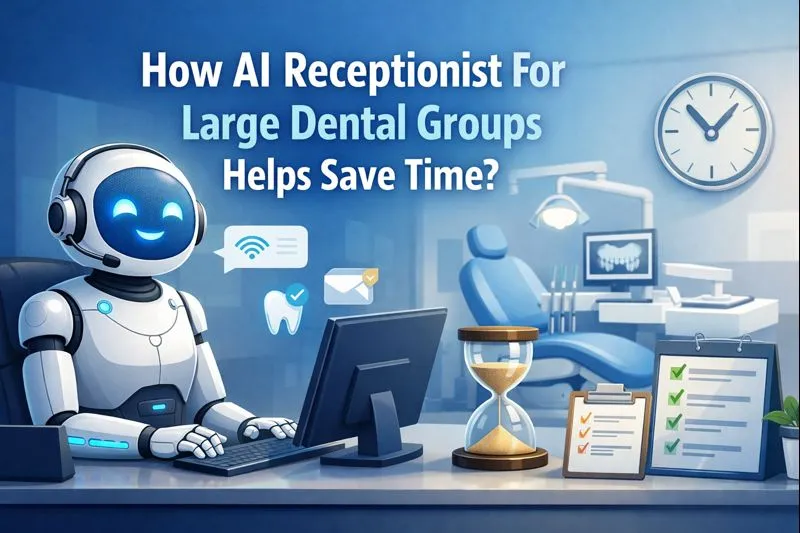
Running a multi-location dental practice involves a delicate balance between clinical excellence and operational efficiency. For large dental groups, the front desk is often the bottleneck. Phones ring incessantly during peak hours, patients are placed on hold, and valuable appointment opportunities vanish into voicemail inboxes. This operational friction results in missed revenue and frustrated staff. Implementing an AI receptionist for large dental groups is no longer a futuristic concept—it is a critical strategy to reclaim time, streamline dental clinic workflow optimization, and ensure every patient inquiry is handled instantly.
In a high-volume dental group, time is the most expensive commodity. When receptionists are tied up manually entering patient data or juggling three lines at once, the in-office customer experience (CX) suffers. More and executing dental office automation, these systems allow your human staff to focus on the patients standing in front of them. This article analyzes exactly how an AI receptionist for large dental groups saves hundreds of operational hours monthly while improving patient acquisition.
What Is AI Receptionist for Dental Hospitals?
An AI receptionist for dental hospitals is a sophisticated voice interface powered by large language models (LLMs) and natural language processing (NLP). Unlike the frustrating, robotic “press 1 for scheduling” menus of the past, this technology functions as a 24/7 call answering service. It listens, understands context, and engages in natural answer frequently asked questions about insurance or procedures, and route calls based on urgency.
By leveraging neural text-to-speech technology, The DBT AI ensures human-like latency, meaning the pause between the patient speaking and the AI responding is indistinguishable from a natural conversation. This builds trust and ensures patients feel heard, not processed.
AI vs. Traditional Receptionist: A Time & Efficiency Comparison
To understand the magnitude of time saved, we must compare the workflow of a human receptionist against an AI solution.
| Feature | Traditional Receptionist | AI Receptionist |
|---|---|---|
| Availability | 40 hours/week (Business Hours) | 24/7/365 (24/7 call answering service) |
| Concurrency | 1 call at a time | Unlimited simultaneous calls |
| Response Time | 2-5 minutes (including hold time) | Instant (< 1 second) |
| Booking Speed | 4-6 minutes per appointment | 90-120 seconds |
| Data Entry | Manual (prone to errors) | Automated via CRM integration |
| Cost Efficiency | High operational overhead (Salary + Benefits) | Fraction of the cost (SaaS model) |
11 Ways AI Receptionist For Large Dental Groups Helps Save Time?
The transition to voice AI is driven by the need for speed and accuracy. Below, we break down the specific mechanisms by which an AI receptionist for large dental groups removes administrative burdens and accelerates practice growth.
1. Eliminating Hold Times and Call Abandonment
In a busy dental group, the “lunch rush” is notorious. When multiple calls come in simultaneously, receptionists are forced to triage, often placing high-value new patients on hold. Statistics show that most callers hang up after 45 seconds on hold. The DBT AI utilizes unlimited concurrency, meaning it can answer 5, 50, or 500 calls simultaneously. There is no queue. Every patient receives an instant lead response, ensuring that booking momentum is never lost to a busy signal. This saves the reception team the stress of juggling lines and eliminates the time spent apologizing to frustrated callers.
2. Automating the Appointment Booking Process
The core function of a scheduler is to find a white space in the calendar that matches the patient’s need. For a human, this involves clicking through screens, asking about preferences, and manually typing details—a process taking 4 to 6 minutes. An AI receptionist accesses the calendar via bi-directional calendar sync. It knows the availability of every dentist in every location instantly. It negotiates a time with the patient and books it in under two minutes. This automated appointment booking capability frees up hours of staff time daily, allowing them to focus on high-value tasks like treatment presentation.
3. Streamlining Multi-Location Call Routing
Large groups often struggle with centralized communication. A patient might call the main line needing a specialist at a different branch. A human operator has to identify the need, find the extension, and transfer—often leading to dropped calls. Using intelligent call routing, The DBT AI identifies the caller’s intent and location preference immediately. If the patient asks for “Dr. Smith in the downtown office,” the AI routes the call or books the slot specifically for that provider without manual interference. This acts as a highly efficient automated call routing system that organizes patient flow across the entire network.
4. Reducing No-Shows with Intelligent Follow-ups
Chasing patients to confirm appointments is a massive time sink. Manual phone trees and leaving voicemails yield poor results. AI streamlines this through patient communication tools. It can send automated SMS or call reminders and, crucially, handle the response. If a patient texts back to reschedule, the AI handles the conversation and updates the calendar immediately. This reduces the operational overhead associated with schedule management and can reduce no-show rates by over 25%, directly impacting revenue.
5. Filtering and Qualifying Leads Automatically
Not every call is a booking opportunity; many are solicitors or general inquiries that distract staff. The DBT AI acts as a gatekeeper. Through lead qualification, it asks preliminary questions to determine if the caller is a Bookings Pain doesn’t respect office hours. A significant portion of dental inquiries occurs evenings and weekends. Traditionally, these go to voicemail, resulting in a game of phone tag the next morning—or the patient simply calls a competitor who answers. With a 24/7 call answering service, your practice is always open. The AI can use sentiment analysis to detect urgency (keywords like “severe pain” or “broken tooth”) and escalate these calls according to your protocols, while routinely booking standard cleanings for the next day. This dental practice technology ensures you capture 100% of the demand.
7. Instant CRM and EMR Data Entry
One of the hidden time costs in dental practices is data entry. After a call, a receptionist must type notes, update contact info, and log the interaction. The DBT AI automates this through CRM integration with platforms like Salesforce, HubSpot, or GoHighLevel, as well as dental-specific EMRs. The transcript and call summary are logged automatically. This ensures data accuracy and data privacy (GDPR/HIPAA compliance) while removing the manual data entry burden from your team.
8. Handling FAQ Overload
“Do you take Medicaid?” “Where are you located?” “Are you open Saturdays?” These repetitive questions consume a vast amount of front desk time. An AI phone assistant is programmed with your practice’s specific knowledge base. It answers these queries instantly and accurately every time. This creates a consistent brand voice and allows your human staff to reserve their energy for complex clinical discussions rather than reciting parking instructions.
9. Optimizing Recall and Reactivation Campaigns
Large dental groups have thousands of inactive patients. Manually calling them to schedule overdue hygiene appointments is tedious and often neglected. AI appointment booking capabilities extend to outbound functionality. The system can initiate contact with overdue patients, engaging them in natural conversation to find a convenient time to come in. This automated reactivation works in the background, filling your schedule without a single staff member lifting a phone.
10. Facilitating Multilingual Support
In diverse metropolitan areas, language barriers can extend call times and lead to miscommunication. A human receptionist may struggle to communicate with a non-English speaker, requiring a translator or causing frustration. Conversational AI models are often multilingual, capable of switching languages instantly to accommodate the caller. This inclusivity not only saves time but significantly expands the potential patient base for the dental group.
11. Providing Analytics for Workflow Optimization
You cannot improve what you do not measure. Traditional phone systems provide limited data. The DBT AI provides deep insights into call volume, peak times, common patient queries, and booking conversion rates. These analytics allow management to make data-driven decisions about staffing and marketing. Understanding ai receptionist benefits through hard data helps in fine-tuning operations the rewarding aspects of their job—patient care and interaction. A happier team is more productive, and reducing turnover is the ultimate time-saver for any large organization.
What Industries Benefited By AI Receptionist?
While dental groups see massive gains, the underlying technology of voice AI drives efficiency across various & law firms** use AI to screen potential clients, conduct initial intake interviews, and route calls to the appropriate attorney immediately.
- Home Services: HVAC, plumbing, and electrical companies deal with emergency dispatching. Home services businesses rely on AI to schedule technicians and provide instant quotes 24/7.
- Med Spas & Aesthetic Clinics: High-end electives require a premium booking experience. Med spas & aesthetic clinics use AI to handle consultation bookings and answer pricing queries without breaking the in-clinic ambiance.
Which AI Dental Receptionist Provider Should You Choose?
Selecting the right provider is critical. You need a partner that understands the nuances of dental practice efficiency, not just a generic software company.
Key Qualities to Look For
- Latency Speed: The AI must respond instantly. Delays cause patients to hang up.
- Integration Ecosystem: It must talk to your existing tools. Look for seamless app integration capabilities.
- Compliance: Strict adherence to data privacy (GDPR/HIPAA compliance) is non-negotiable in healthcare.
- Voice Quality: The voice should sound warm and professional, not robotic.
Why The DBT AI?
The DBT AI is engineered specifically for high-performance environments. We don’t just answer calls; we function as a comprehensive AI appointment booking engine. Our proprietary conversational AI is tuned for lead conversion, ensuring that inquiries turn into booked revenue. With advanced sentiment analysis and robust CRM integration (Salesforce, HubSpot, GoHighLevel), we offer a solution that scales with your dental group.
Whether you need a virtual receptionist service for a single clinic or a centralized automated call routing system for 50 locations, The DBT AI adapts to your workflow.
Conclusion
The era of missed calls and administrative bottlenecks is ending. As we look toward the future, dental office automation will become the standard, with patient scheduling software becoming increasingly predictive and autonomous. However, the immediate opportunity lies in solving the communication gap today.
Implementing an AI receptionist for large dental groups is the single most impactful operational change you can make to save time, reduce overhead, and improve patient satisfaction. It transforms your phone lines from a source of stress into a 24/7 revenue generator.
Don’t let another patient call go to voicemail. Let us demonstrate The DBT Ai and show you exactly how much time your practice can save.
Frequently Asked Questions (FAQS)
How does an AI receptionist handle insurance questions?
Advanced AI receptionists are trained on your specific practice data. They can answer general questions regarding accepted insurance providers and coverage. For complex, specific billing inquiries, the system utilizes intelligent call routing to transfer the call to a billing specialist, ensuring accuracy while filtering routine questions.
Will patients know they are talking to an AI?
While transparency is often best, the technology has advanced to the point whereutable providers like The DBT AI prioritize data privacy (GDPR/HIPAA compliance). All call data, transcripts, and patient information are encrypted and stored securely, meeting the strict standards required for dental practice technology.
Can the AI handle scheduling for multiple dentists with different hours?
Absolutely. The system relies on bi-directional calendar sync. It reads the specific rules, blocks, and shift patterns for each provider in your practice management software. It will only offer appointment slots that match the specific dentist’s availability and procedure time requirements.
Does an AI receptionist handle urgent dental calls like pain or swelling?
Using NLP and sentiment analysis, it can detect urgency from language and, then escalate through intelligent call routing to a live team member or the correct location.
Is an AI receptionist considered safe for patient data and compliance?
A healthcare-ready system should support data privacy (GDPR/HIPAA compliance) configurations, audit-friendly logging, and secure integration practices for patient tools.
Will AI replace my front desk staff at a large dental practice?
In most large groups, it reduces repetitive call workload and after-hours coverage needs, while escalating complex cases to humans— staff spend more time on-cl patient experience and less on routine phone tasks.