If team is missing calls during lunch, after-hours, or peak spikes, you’re not just missing conversations—you’re missing booked revenue. A caller who can’t reach you now often won’t try again, and the problem gets worse when your staff is busy filtering bad leads, answering repetitive questions, and manually doing appointment booking.
An AI receptionist for business is gaining popularity because it removes those bottlenecks with instant lead response, consistent lead qualification, and scheduling automation— adding headcount or increasing operational overhead.
What Is AI Receptionist for Business?
An AI receptionist for business is a digital receptionist that answers calls (and often texts or web requests) using conversational AI, voice AI, and natural language processing (NLP) to understand user intent and complete actions—like appointment booking, client management updates, and intelligent call routing.
basic chatbot technology that only works in text, an AI voice receptionist combines voice recognition, neural text-to-speech, and large language models (LLMs) to natural, goal-driven conversations with human-like latency. It can also connect to your systems through bi-directional calendar sync and CRM integration (Salesforce, HubSpot, GoHighLevel), so booked meetings and captured lead details don’t require manual data entry.
If you want a deeper baseline definition before into the “why,” this guide on what is an ai receptionist breaks it down clearly.
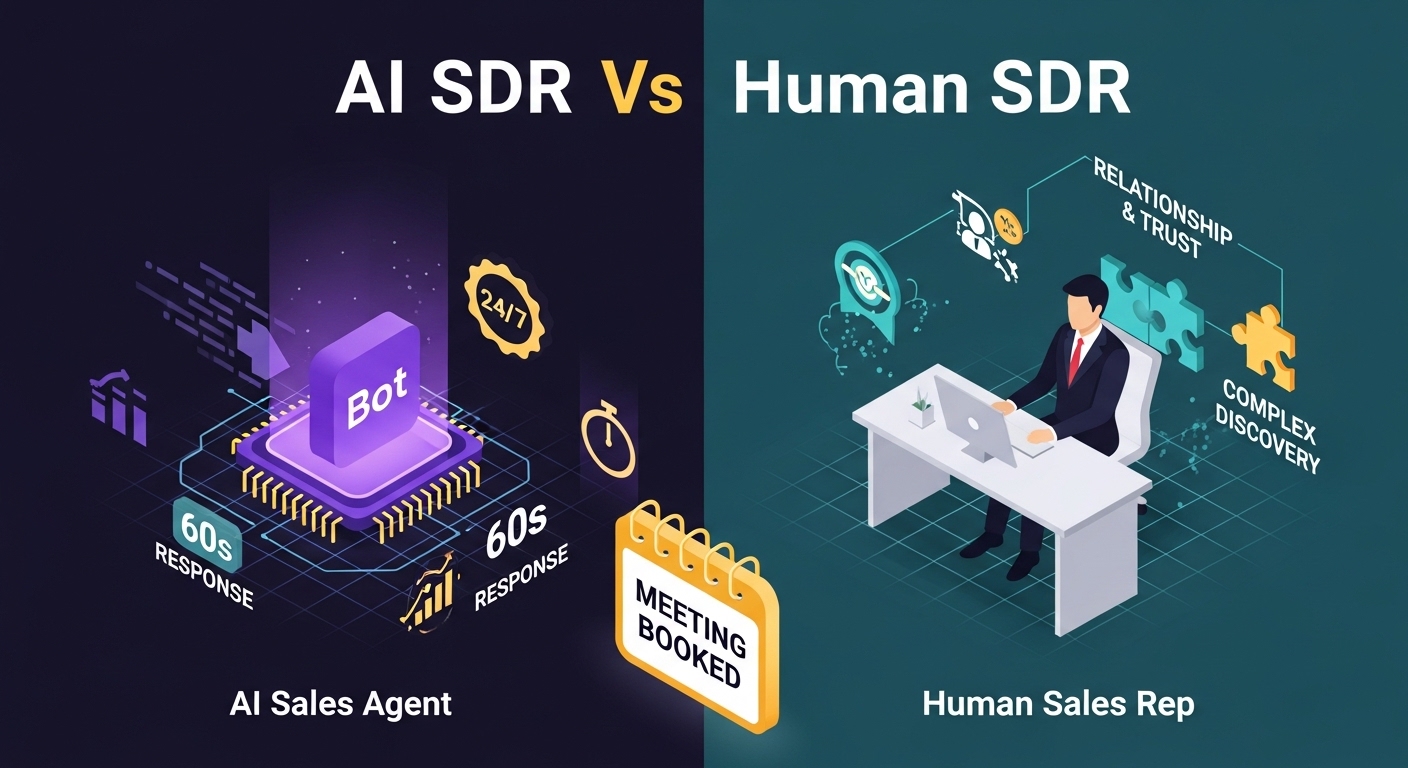
AI vs. Traditional Reception: A Practical
| Criteria | Traditional receptionist / answering | AI receptionist for business |
|---|---|---|
| Availability | Office hours, breaks, sick days | 24/7 automated customer service |
| Peak-hour capacity | One call at a time per person | High concurrency (multiple callers at once) |
| Speed-to-lead | Depends on queue and staffing | Instant lead response in seconds |
| Booking workflow | Manual scheduling + confirmations | Scheduling automation + bi-directional calendar sync |
| Call handling | Varies by person and | Standardized scripts + adaptive NLP |
| CX consistency | Can vary with stress and fatigue | Consistent customer experience (CX) |
| Lead | Depends on reps and notes | Structured lead qualification + sentiment analysis |
| Data entry | Manual notes, missed fields | CRM integration and auto-logging |
| Compliance | Policy-based | Configurable data privacy (GDPR/HIPAA compliance) support |
12 Reasons AI Receptionist for Business Is Gaining Popularity in 2026?
Adoption isn’t happening because “want AI.” It’s happening because buyer expectations moved: customers want answers now, and operators want measurable ROI. Below is what’s driving the shift—especially as voice AI and LLMs mature into reliable front-line automation.
1) It prevents revenue loss from missed calls (especially after-hours)
Missed calls are silent revenue leaks—particularly for service businesses where the first call often equals the first booking. An AI receptionist for business captures callers 24/7, collects key details, and books or routes the call without for staff. If you’re evaluating the real business impact, these ai receptionist benefits show how always-on coverage directly ties to lead conversion.
2) Instant lead response beats “we’ll call you back”
Speed wins. Instant lead response matters because intent decays fast—especially for price shoppers comparing providers. With conversational AI that can ask clarifying questions immediately, you don’t just “answer”—you move the caller toward an outcome (book qualify, route). This reduces operational overhead while improving customer engagement because callers feel helped, not delayed.
3) Better lead qualification without burning staff time
Most teams pay humans to do repetitive filtering: “What’s the issue?” “What’s your budget?” “What’s your location?” AI can handle that consistently using NLP and user intent detection, and it can add sentiment analysis to identify urgency or frustration signals When the caller is truly qualified, the AI escalates intelligently—this is the practical difference a tool and a layer, and it’s core to The DBT AI’s AI receptionist approach.
4) Scheduling automation removes back-and-forth and in seconds
Customers hate phone tag. A modern AI receptionist for business uses scheduling automation with bi-directional calendar sync to check availability, book the time, and confirm—without the “let me put you on hold.” If appointment setting is a primary goal, The DBT AI AI booking is designed specifically for fast conversion and fewer booking errors.
5) Concurrency: peak-hour call volume is no longer a staffing problem
A human receptionist can only speak to one person at a time. Voice AI can handle many concurrent calls without degrading the experience, which is why it’s becoming standard for businesses with seasonal spikes or heavy inbound campaigns. If you’ve ever lost leads because “all reps,” this is exactly what a 24/7 ai receptionist is built to solve.
6) It improves customer experience (CX) through consistency
CX isn’t just friendliness—it’s clarity, speed, and getting the right next step. AI systems follow your rules every time, reduce miscommunication, and can provide accurate answers to common questions without the variability of human fatigue. For teams that treat phone support a profit center, this link between CX and revenue is explained in ai receptionist customer service.
) Human-like latency makes voice automation feel natural now
Older “robotic” systems trained customers to press 1 and get frustrated. Modern neural text-to-speech and improved voice recognition reduce awkward pauses and mishears, creating human-like latency that feels closer to a competent virtual assistant than an IV maze. In practice, this increases customer engagement and decreases hang-ups—two direct drivers of lead conversion.
8) Intelligent call routing sends calls to the right place faster
Not every caller should be booked; some should be routed to billing, urgent support, or a specific location. Intelligent call routing uses user intent signals to route accurately and quickly—cutting transfers and lowering operational overhead. If routing is a core need, an automated call routing system becomes a measurable time-saver across the week.
9) CRM integration turns every conversation into trackable pipeline
Teams lose deals because call notes are incomplete,-ups are forgotten, or lead sources aren’t tracked. With CRM integration (Salesforce, HubSpot, GoHighLevel), an AI receptionist business can automatically log caller details, outcome, tags, and next steps—improving client management and attribution. The DBT AI supports this via itsapp integration](https://www.thedbt.ai/integration/) options so your pipeline updates don’t depend on manual effort.
10 It reduces training load and protects quality during staff turnover
A new receptionist often needs weeks to learn scripts, policies, edge, and tools. AI systems can be configured once and improved continuously, keeping quality stable even when your team. For businesses scaling fast, this directly reduces operational overhead while keeping automated customer service consistent across locations and campaigns.
11) Built safeguards for data privacy and regulated workflows
For industries handling personal or medical information, data privacy (GDPR/HIPAA compliance) isn’t optional. Modern AI reception workflows can be designed to collect only necessary fields, apply controlled access, and follow compliance-aligned scripts—while still delivering fast appointment booking. When done right, this improves CX because callers aren’t repeatedly asked for the same information.
12) 2026 expectations: callers will assume “instant service” by default
As LLMs get at context handling and voice AI becomes more common, customers will increasingly expect immediate answers and self-serve scheduling. The gap between businesses that answer instantly and those that “call back later” will widen—especially in competitive local markets. That’s why teams are choosing an AI receptionist for business now: to standardize lead conversion and protect response speed as volume grows.
What Industriesited By AI Receptionist?
AI reception isn’t “one size fits all,” but it’s especially effective where calls equal revenue and scheduling frequent.
- For legal services & law firms, AI can capture intake details, screen for urgency, and route based on matter type while improving responsiveness outside office hours.
- For private healthcare clinics, it supports patient engagement with reminders, rescheduling, and consistent booking flows while respecting privacy needs.
- Formed spas & aesthetic clinics**, it can handle high-intent inquiries fast, qualify leads, and book consults without front-desk overload.
- For home services, it captures job details, triages urgency, and books estimates during evenings/weekends when calls spike
- For coaches &, it acts like a virtual assistant that books discovery calls and filters out poor-fit inquiries.
Which AI Receptionist Provider Should You Choose?
When selecting a provider, prioritize capabilities that directly affect revenue, not just “AI features.”
Key qualities to look for
- Strong AI performance: accurate user intent handling and natural dialog flow
- Reliable voice AI stack: voice recognition quality and human-like latency
- automation: true bi-directional calendar sync (not “request only”)
- Lead qualification depth: configurable questions plus sentiment analysis where appropriate
- Intelligent call routing: rules-based and intent-based routing options
- CRM integration: Salesforce, HubSpot, GoHighLevel support with clean field mapping
- Security: clear data privacy approach and GDPR/HIPAA compliance alignment if needed
- Reporting: visibility into lead conversion, call outcomes, and missed-opportunity patterns
Why teams choose The DBT AI
TheT AI is built specifically to function as a 24/7 AI Receptionist and AI Appointment Setter that books meetings in seconds—without adding staff or slowing response times. It supports core automation needs through product-ready features and connects into your workflows through app integration. If you validate fit quickly, you can schedule a trial and see how it handles your real inbound calls.
Conclusion
The rise of AI receptionist for business adoption is being driven by practical outcomes: fewer missed calls, faster booking, better lead qualification, and lower operational overhead—while protecting customer experience (CX) through consistent, natural conversations.
Looking toward 2026, the winners will be businesses that treat phone answering as a conversion system: voice AI that understands user intent, books instantly via scheduling automation, and updates CRM records automatically. If you want to capture without expanding payroll a demo and let us demonstrate The DBT AI on your exact call flows.
Frequently Asked Questions (FAQs)
Can an AI receptionist for business replace a human receptionist completely?
In many businesses, yes for most routine calls—especially appointment booking, FAQs, and lead qualification. For complex exceptions, the best setups use intelligent call routing to escalate to a human with full context captured.
What does an AI for business cost compared to a receptionist or answering service?
Costs vary by call volume and features, but AI is typically priced predictably and often comes in well below the fully loaded cost of staffing—especially when you factor nights, weekends, training time, and missed opportunities.
callers know they’re speaking with AI?
Sometimes, depending on your disclosure preferences and the region. With modern neural text-to-speech and well-designed scripts, the experience feels natural, and most callers care more about getting help fast than the “type” of.
Does an AI receptionist for business work with my calendar and CRM?
It should—this is a must-have. Look for bi-directional calendar sync plus CRM integration with Salesforce, HubSpot, or GoHighLevel so your client management records update automatically.
Is an AI receptionist for business safe for healthcare or other regulated industries?
It can be, when implemented with strong data privacy controls and GDPR/HIPAA compliance-aligned handling. You should confirm what data is collected, how’s stored, and how access is controlled before live.