Every missed call represents a potential leak in your revenue stream. Statistics indicate that approximately 60% of customers will hang up immediately if their call goes to voicemail, and most of them will not call back. They simply move on to a competitor who answers the phone. For years, businesses believed the only solution was hiring more staff or outsourcing to expensive call centers. However, the emergence of the ai receptionist app has fundamentally shifted this dynamic.
By leveraging conversational AI and natural language processing (NLP), these applications allow businesses to capture every lead, regardless of the time of day. Despite the clear advantages regarding ROI and efficiency, skepticism remains. Business owners often hesitate due to outdated perceptions of voice technology. This article examines the reality of modern voice AI, dismantling prevalent myths to help you understand how this technology functions as a growth engine for your company.
What Is An AI Receptionist App?
An ai receptionist app is a sophisticated software solution driven by artificial intelligence designed to manage inbound and outbound voice interactions. Unlike basic IVR systems that force callers to press buttons, these apps utilize large language models (LLMs) and voice recognition to understand spoken language, decipher user intent, and respond with human-like latency.
The core function of this technology goes beyond simple message taking. A robust application acts as an intelligent digital worker capable of executing complex tasks. It handles lead qualification, answers specific questions about your services, and executes bi-directional calendar sync to book appointments directly into your schedule without human intervention. By integrating with your existing technology stack, such as CRM integration (Salesforce, HubSpot, GoHighLevel), the app ensures that data flows automatically, reducing the administrative burden on your team.
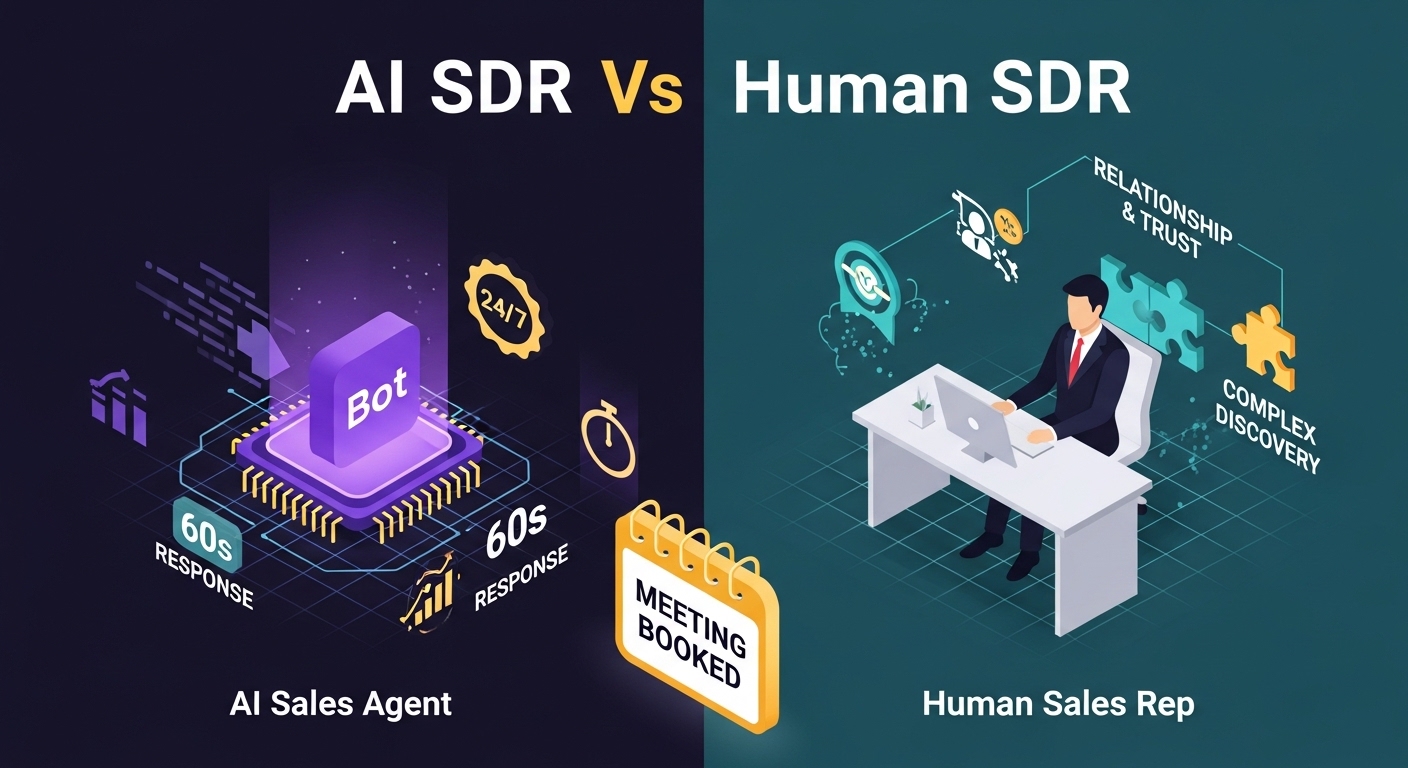
Below is a comparison of how an ai receptionist app stacks up against traditional human receptionists and answering services.
| Feature | Traditional Receptionist | Call Center Service | AI Receptionist App |
|---|---|---|---|
| Availability | 40 hours/week (9-5) | 24/7 (often with hold times) | 24/7 (Instant pickup) |
| Concurrency | 1 call at a time | Limited by agent availability | Unlimited simultaneous calls |
| Cost Per Month | $3,000+ (Salary + Benefits) | $500 – $1,000+ | Fraction of the cost |
| Response Speed | Variable | Variable | Instant lead response |
| Data Accuracy | Prone to human error | Varies by agent quality | Precise CRM data entry |
| Booking Capability | Manual entry | Often limited | Real-time bi-directional sync |
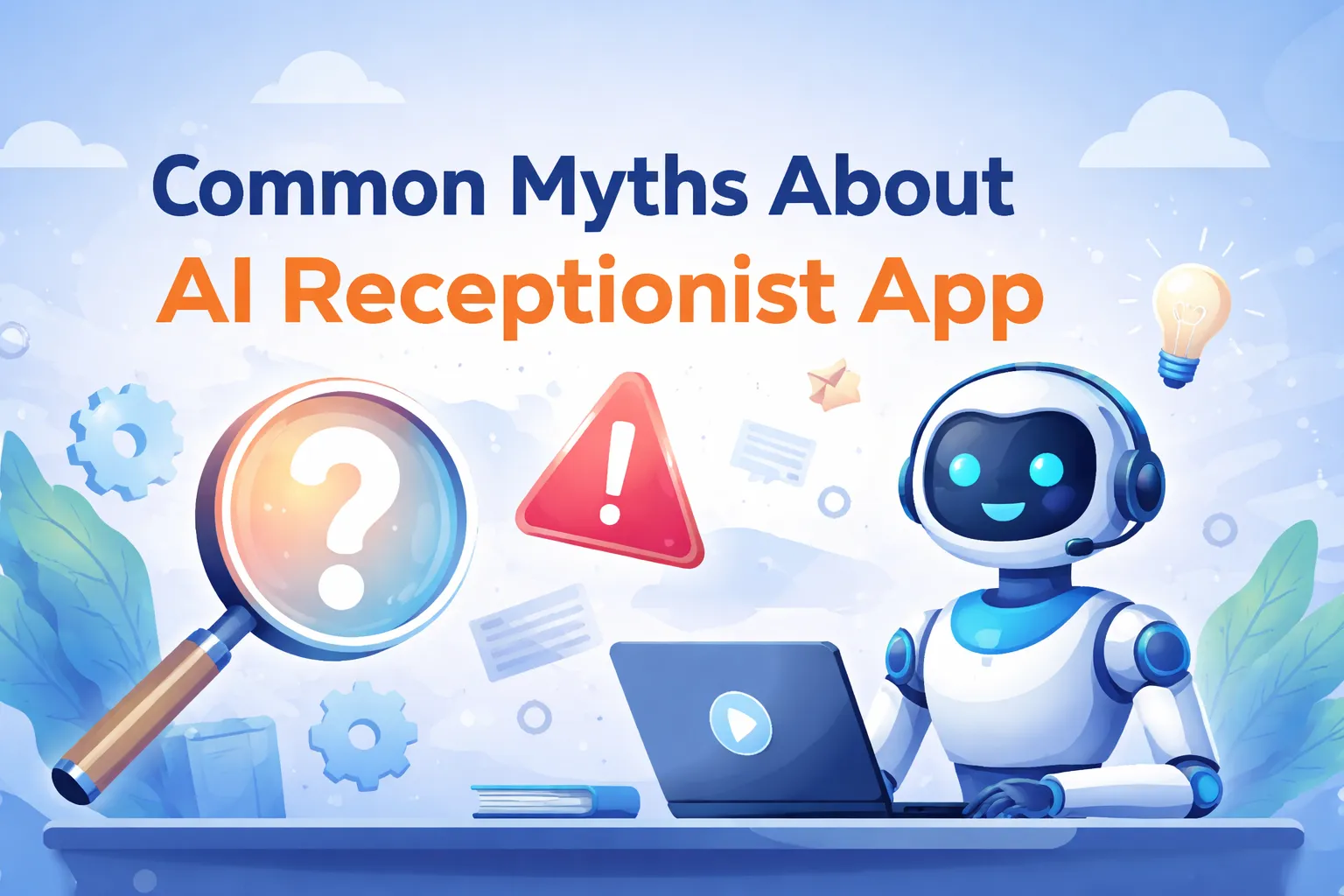
Top 10 Common Myths About the AI Receptionist App
There is a significant gap between the capabilities of early voice bots and the sophisticated neural networks powering today’s solutions. Many business owners cling to misconceptions that prevent them from reducing operational overhead. Here, we analyze and debunk the most common myths surrounding this technology.
1. AI Receptionist Apps Sound Like Robots
The most pervasive myth is that an ai receptionist app sounds mechanical, stilted, and obviously synthetic. This belief stems from early text-to-speech technology that lacked cadence and inflection. Modern solutions utilize neural text-to-speech engines that are virtually indistinguishable from human speakers. These systems incorporate natural pauses, intonation changes, and filler words to create a comfortable conversational flow. When you implement a high-quality ai voice receptionist, your callers often do not realize they are speaking to a machine until the appointment is already booked.
2. They Cannot Handle Complex Questions
Many assume that AI is limited to simple “yes” or “no” interactions. Critics argue that if a customer asks a nuanced question, the system will fail. In reality, modern applications rely on advanced large language models (LLMs) trained on vast datasets. This allows them to understand context, handle interruptions, and manage non-linear conversations. If a caller asks about pricing, then pivots to scheduling, and finally asks about parking availability, the AI tracks these changes effortlessly. You can read more about how ai receptionists operation manages these multi-layered interactions to ensure customer satisfaction.
3. Implementing AI Is Prohibitively Expensive
Business owners often associate “AI” with “enterprise-level budgets.” The assumption is that custom programming and setup will cost thousands of dollars. The opposite is true. An ai receptionist app is designed to lower costs, not increase them. By eliminating the need for salaries, benefits, and paid time off associated with human staff, the software reduces operational overhead significantly. Most platforms operate on a subscription or usage basis, making them accessible even to solopreneurs. When you compare this to the cost of a full-time employee, the ROI becomes immediately apparent.
4. AI Lacks Empathy and Customer Service Skills
A common fear is that automating the front desk will result in a cold, unfeeling customer experience (CX). However, advanced sentiment analysis allows the AI to detect the emotional tone of the caller. If a caller sounds frustrated or urgent, the system adjusts its responses to be more apologetic and supportive. Unlike a human receptionist who might be having a bad day or feeling fatigued, the AI maintains a consistent, professional, and helpful demeanor 100% of the time. This consistency is a key factor in why a ai-powered receptionist can actually improve your net promoter scores.
5. Setup Requires Technical Coding Knowledge
There is a misconception that you need an IT department to install and manage an ai receptionist app. Current platforms are built with a focus on user experience, offering “no-code” or “low-code” environments. You essentially provide the AI with your business knowledge base—such as hours, services, and pricing—and the system configures itself. Connecting it to your phone lines is often as simple as setting up call forwarding. For businesses worried about complexity, reviewing how app integration works reveals that the process is designed for quick deployment.
6. AI Cannot Effectively Book Appointments
Skeptics argue that while AI might answer calls, it cannot be trusted to manage a calendar without double-booking or making errors. This myth ignores the technical reality of API connections. The AI does not “guess” availability; it reads your calendar in real-time through bi-directional calendar sync. It only offers slots that are actually open. Once a client selects a time, the AI instantly locks that slot and sends a confirmation. This precision makes ai appointment booking more reliable than manual scheduling, where human error frequently leads to conflicts.
7. It Will Replace All Human Employees
The narrative that AI is here to steal jobs creates unnecessary resistance. The goal of an ai receptionist app is not to fire your staff but to liberate them from repetitive, low-value tasks. Answering the same FAQs and scheduling routine appointments distracts your team from high-value work like closing sales, managing complex client cases, or in-person service. By offloading the phone lines to AI, your human employees can focus on work that requires genuine human creativity and problem-solving. This hybrid approach optimizes your workforce rather than replacing it.
8. AI Apps Cannot Handle Foreign Languages
In an increasingly globalized market, language barriers can result in lost leads. Many believe AI is strictly English-centric. However, conversational AI excels at linguistics. Leading applications support dozens of languages and can switch between them instantly based on the caller’s input. This capability allows a local business to serve a diverse community without hiring multilingual staff. A bilingual ai receptionist ensures that non-English speaking callers receive the same level of service and qualification as anyone else.
###PII) is handled with the highest security protocols. For industries like healthcare and law, using a secure AI solution is often safer than having physical notes left on a desk.
10. AI Cannot Integrate with CRMs
Some believe that the data collected by the AI stays trapped in the app, creating data silos. This is false. A primary feature of a competent ai receptionist app is its ability to push data to your CRM integration (Salesforce, HubSpot, GoHighLevel). When the AI captures a lead’s name, email, and interest level, that information is instantly populated in your sales pipeline. This automation ensures that your sales team has immediate visibility into new opportunities without manual data entry.
11. Call Quality Suffers During High Volume
A human receptionist can only handle one call at a time. If three people call at once, two go to voicemail. The myth regarding AI is that it also has bandwidth limits or will crash under pressure. In reality, AI operates on cloud servers capable of massive concurrency. Whether you receive five calls or five hundred calls simultaneously, the AI answers every single one immediately. A 24/7 ai receptionist eliminates the concept of a “busy signal” entirely.
12. It Is Only For Large Enterprises
Finally, many small business owners believe this technology is “overkill” for their needs. They assume AI is for Fortune 500 companies. On the contrary, small businesses benefit the most. Large companies have call centers; small businesses often miss calls because they are busy working. An ai receptionist app levels the playing field, giving a small plumbing company or dental practice the same 24/7 presence as a major corporation. Using a virtual receptionist service is the most cost-effective way to scale a small operation’s professionalism.
What Industries Benefited By AI Receptionist App?
While almost any business with a phone line can see improvements, certain industries experience exceptionally high ROI due to their reliance on appointment setting and immediate lead response.
Legal Services
Law firms often deal with high client volumes and sensitive intake processes. An AI solution acts as a specialized virtual receptionist for law firms, handling initial client screening and scheduling consultations. This ensures that attorneys are not interrupted by non-billable calls while guaranteeing that potential clients feel heard immediately.
Healthcare and Dental
Clinics face a high rate of appointment cancellations and rescheduling requests. Utilizing AI for these tasks alleviates administrative strain. Private healthcare clinics use these systems to send reminders, answer patient FAQs about hours or insurance, and fill cancelled slots instantly, ensuring the schedule remains full and revenue is optimized.
Home Services
Plumbers, electricians, and HVAC technicians are often in the field and cannot answer the phone. However, a homeowner with a bursting pipe will not leave a voicemail; they call the next number. By implementing an AI solution, home services professionals capture these emergency jobs 24/7, significantly increasing their job win rate.
Marketing Agencies
Agencies spend heavily to generate leads for clients. If those leads are not contacted instantly, the conversion rate drops. Marketing agencies use AI receptionists to instantly qualify inbound leads and book demos, ensuring that the marketing spend translates directly into booked meetings.
Which AI Receptionist App Provider Should You Choose?
Selecting the right provider is critical. You need a solution that goes beyond basic chatbots and offers true voice AI capabilities. The ideal provider must offer low latency, robust CRM integration, and strict data privacy measures. It should be capable of understanding complex user intent and executing lead qualification protocols specific to your business logic.
The DBT AI establishes itself as the premier choice for businesses focused on growth and efficiency. Our platform is engineered specifically to function as an AI Appointment Setter and 24/7 AI Receptionist. We prioritize instant lead response and utilize advanced neural networks to ensure conversations are natural and productive. Unlike generic tools, The DBT AI focuses on the metric that matters most: booked meetings.
To see exactly how our features can transform your lead handling, you can let us demonstrate The DBT Ai for your specific use case.
Conclusion
The myths surrounding the ai receptionist app are rapidly fading as the technology demonstrates its value in the real world. From eliminating missed essential.
If you are ready to stop losing revenue to missed calls and start booking appointments on autopilot, it is time to take action.
Schedule a trial with The DBT AI today and experience the future of voice automation.
Frequently Asked Questions (FAQs)
How does an AI receptionist app handle after-hours calls?
An AI receptionist app operates 24/7 without fatigue. After business hours, it answers calls immediately, answers questions based on your knowledge base, and can schedule appointments for the following day using real-time calendar availability. This ensures you capture leads even when your office is closed.
Is the setup process for an AI receptionist app difficult?
No, modern solutions are designed for rapid deployment. You typically connect your calendar, upload your business information or scripts, and forward your phone lines. The DBT AI offers a streamlined onboarding process that gets you up and running quickly.
Can the AI receptionist really understand different accents?
Yes. Leveraging advanced Natural Language Processing (NLP) and vast training datasets, high-quality AI apps are proficient at understanding a wide variety of accents and dialects, ensuring accurate communication regardless of the caller’s speech patterns.
What happens if the AI cannot answer a caller’s question?
If the AI encounters a query that falls outside its training or knowledge base, intelligent call routing protocols engage. The system can transfer the call to a specific human department or take a detailed message to ensure the correct team member follows up.
Will using an AI receptionist save my business money?
Absolutely. By reducing the need for additional staffing, minimizing the cost of outsourced call centers, and capturing revenue from previously missed calls, the system lowers operational overhead while simultaneously increasing lead conversion rates.